Sweden brings a little sunshine and time to explore, but not huge warmth

It was still raining as we left Norway, but the road was heading downhill, promising warmer temperatures, and the rain eased as we passed through Sweden. The promised sunshine materialised, and we enjoyed the empty roads as we headed towards the Baltic Sea coast. The rural limit here was a heady 90 kph in most places, which just felt that little bit more realistic. The Swedes love their camper vans too, and they’re also dedicated to staying below the limit, but here at least there were many more overtaking opportunities. The scenery became less rugged, giving way to vast swathes of pine forest, which gets a bit boring after a while. I prefer the open vistas of Norway or the American west and mid-west, where you can see for what looks like 50 miles in all directions. We spent our first night in Sweden at a lakeside campsite in Bollnäs, eating barbecue and drinking great beer while a guitar-playing duo gave excellent renditions of hits from the 70s and 80s. We took a walk along the lake and found a Swedish pop group playing to a huge live seated audience in a nearby park, doing justice to an array of English and what I assume were Swedish classics. Out on the lake, a flotilla of about 30 small boats lay at anchor, each with its own concert party going on. Four people even had a dining table and chairs on a pontoon!
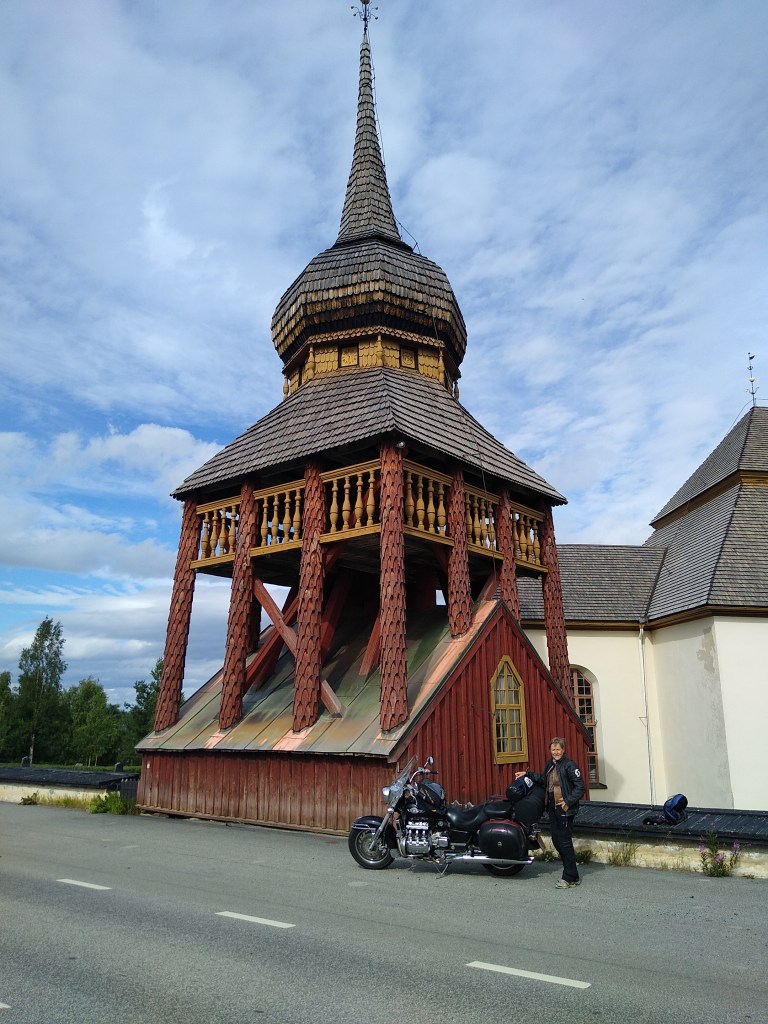
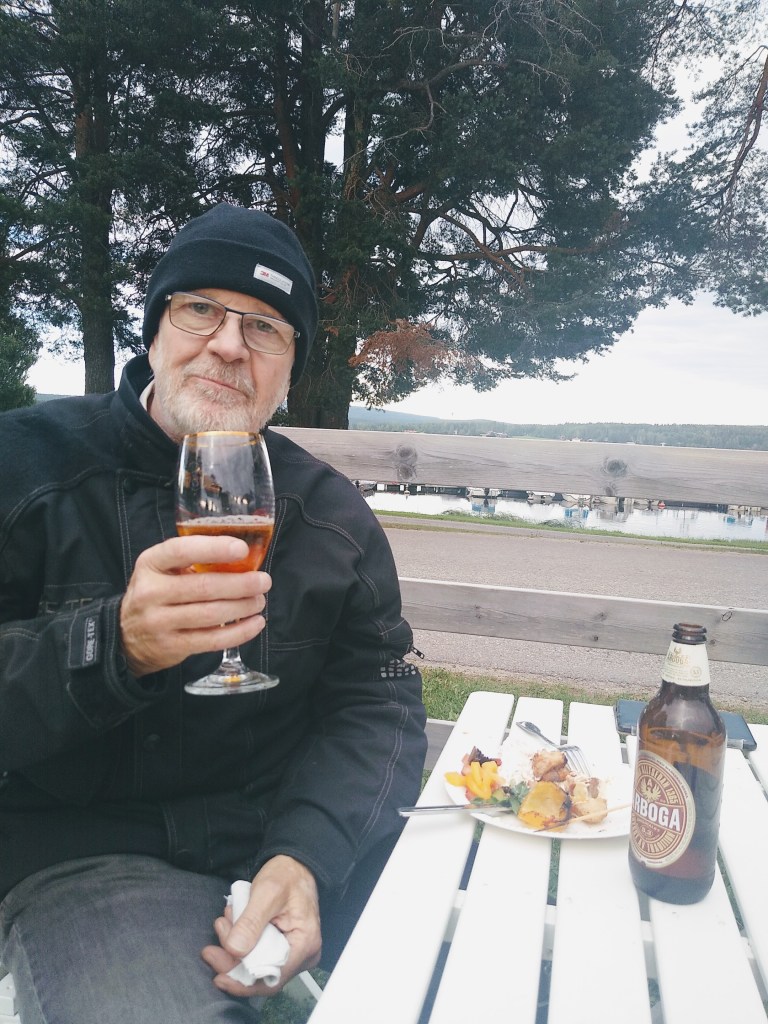
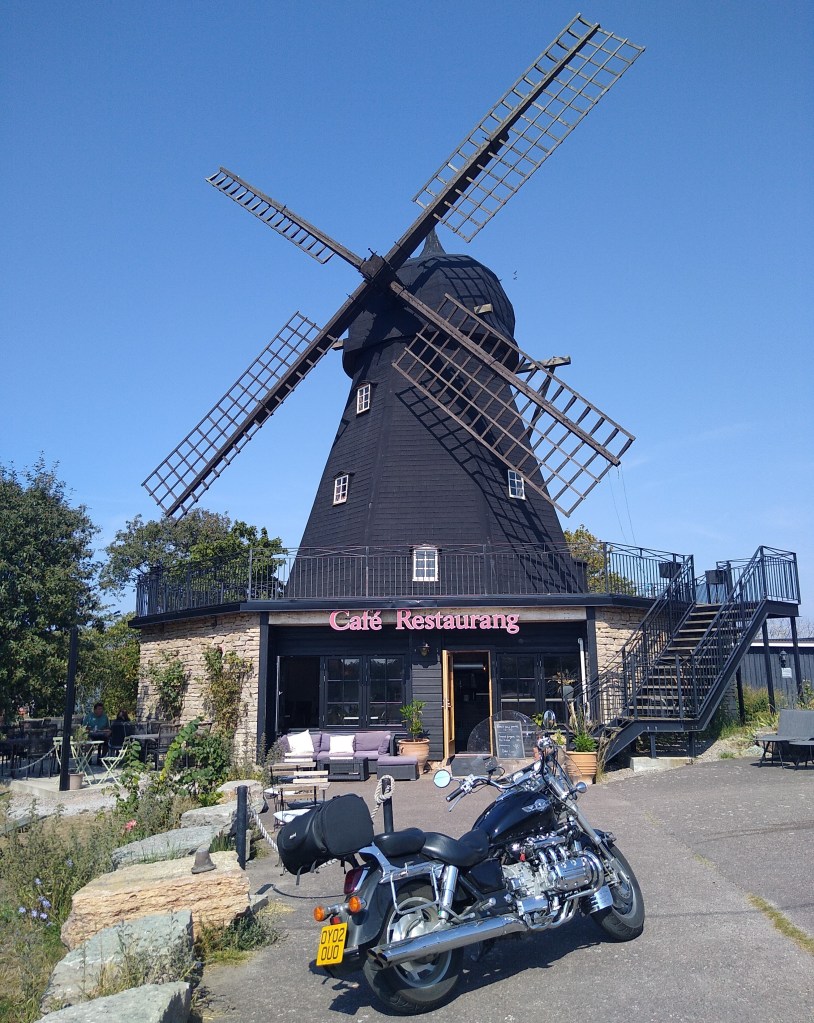
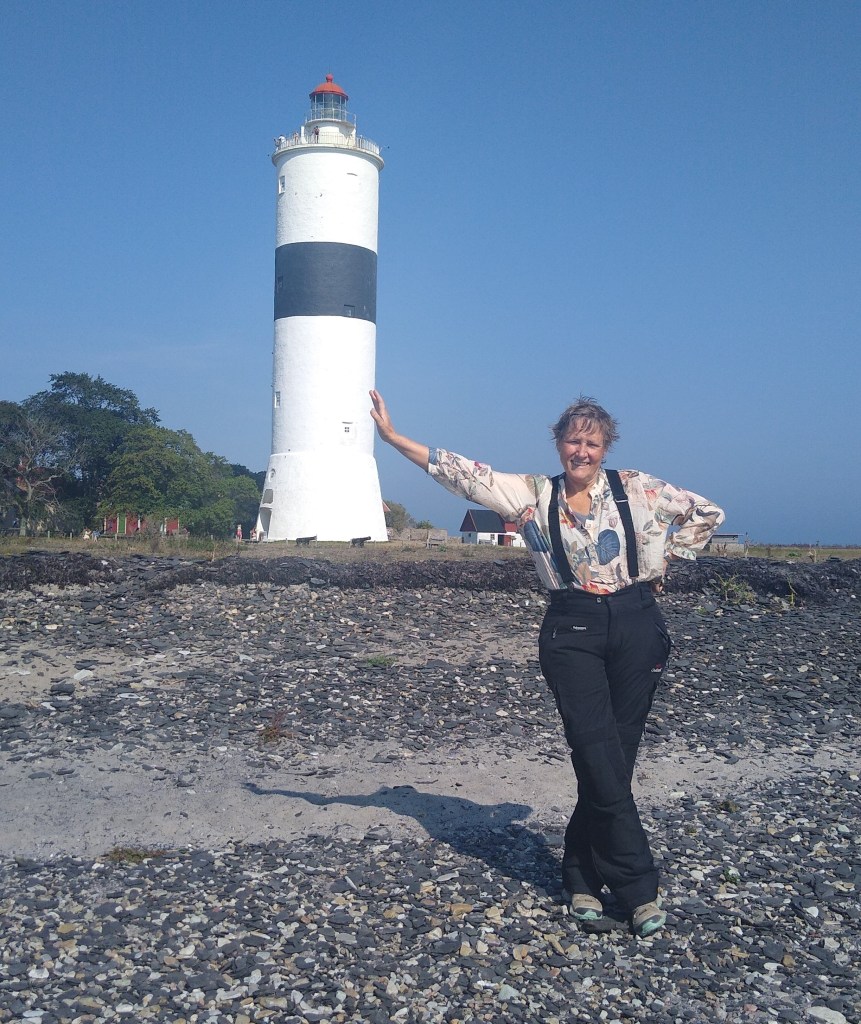
Having cut out the northern leg of our itinerary, we were now several days ahead of schedule. That was a first; on almost all previous trips, before we retired, there was a finite amount of time to reach our destination, get home again and head back to work. That led to sometimes more rigorous daily mileage targets than seemed ideal. Now, we considered various options, including riding north around the Baltic Sea to Finland, since we were in the area, but it looked a hell of a long way and maybe a bit too close to the dreaded Russia. We’d have to ride through Russia on the way back, or take a ferry to Estonia – way too much extra travelling. A gentle meander southward through Sweden, into Denmark and on to Germany seemed more appealing. Lunch next day with some Swedish friends in Uppsala brought the suggestion that we might enjoy the island of Öland on the east coast, so we spent a couple of nights there. You reach the island via a 6km bridge, which gave us a foretaste of the next stage of our journey.
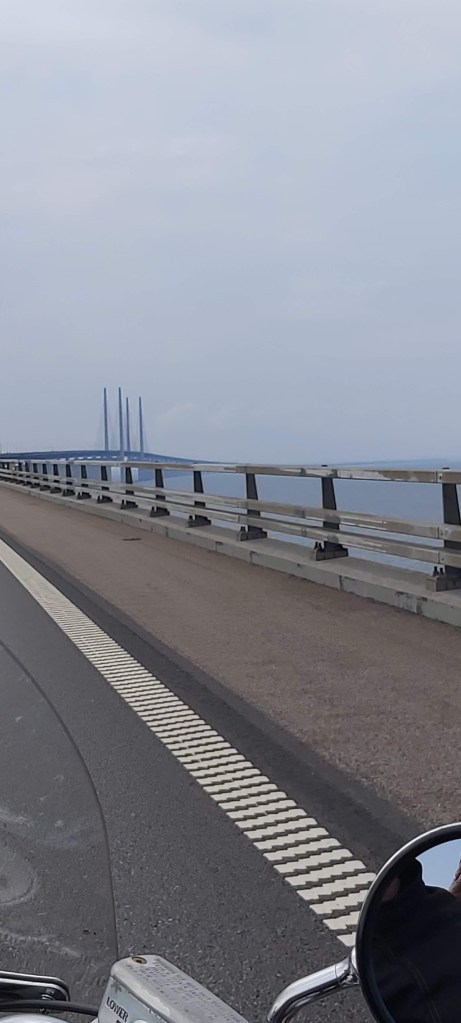
One of the highlights of the trip was always going to be crossing the impressive five-mile-long Öresund Bridge between Sweden and Denmark. We’d enjoyed the Nordic noir drama The Bridge a few years ago, in which the bridge played a central part (quite literally, if you’ve seen it). The bridge itself was actually a bit of a disappointment. For one thing, there are no stopping places on either side from which to take photos (credit for the one at the start goes to Julian Hochges and Unsplash); for another, the wind was very strong and it took most of my concentration to stop being blown off the structure, leaving little time for admiring the view. Indeed, we chatted to an Irish biker on the Eurotunnel train a few days later and he told us of his experience driving a 38-tonne truck across the bridge in similar winds, his foot braced against the side of the cab to help him keep everything in a straight line.
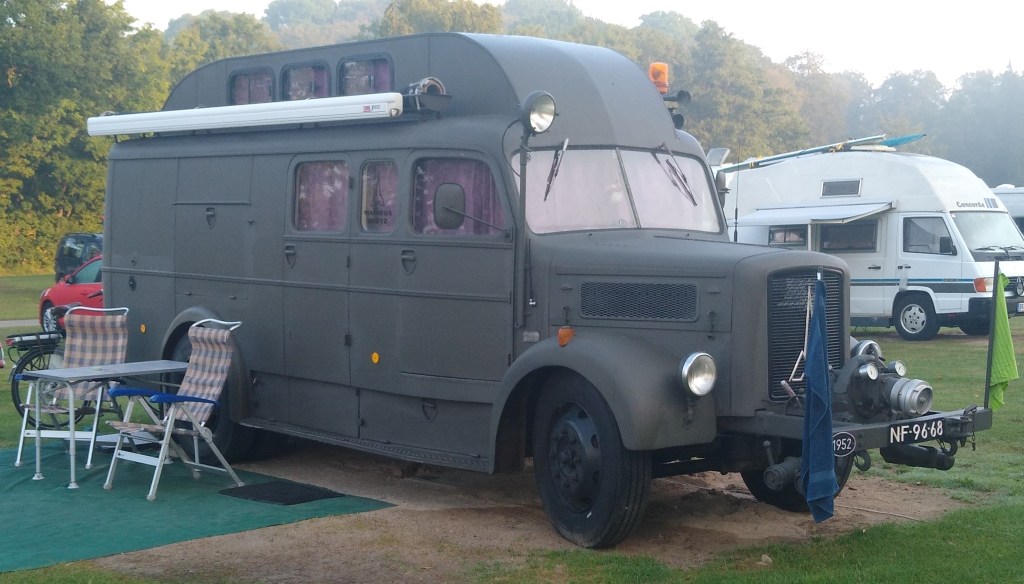
We found a decent campsite at Rødby in south-eastern Denmark, just 15 minutes from the ferry that would take us next morning to Puttgarden in Germany. I’d bought a flexible ticket with Scandlines (an €11 premium on a €49 fare), so it was easy to change the date. The campsite was right on a lake and within walking distance of the town. Among the usual array of camper vans and caravans was the green vehicle you see here, clearly an army ambulance or fire truck dating from 1952 and converted into a camper van.
We woke early next morning to a beautifully misty lake and headed off to catch the ferry to Germany, which took just 45 minutes on a mill-pond surface. One of the advantages of being back on German soil was the price of petrol there: standard E10 cost as little as €1.66 a litre in places, but more typically €1.69, which was significantly better than the €1.80-€2.00 we’d been experiencing elsewhere. The 2022 price of fuel was a consideration for this trip, but we figured we’d just pay whatever it took – it was either that or give up touring, which is not an option!
Norway is stunning but a little more August sunshine wouldn’t go amiss…

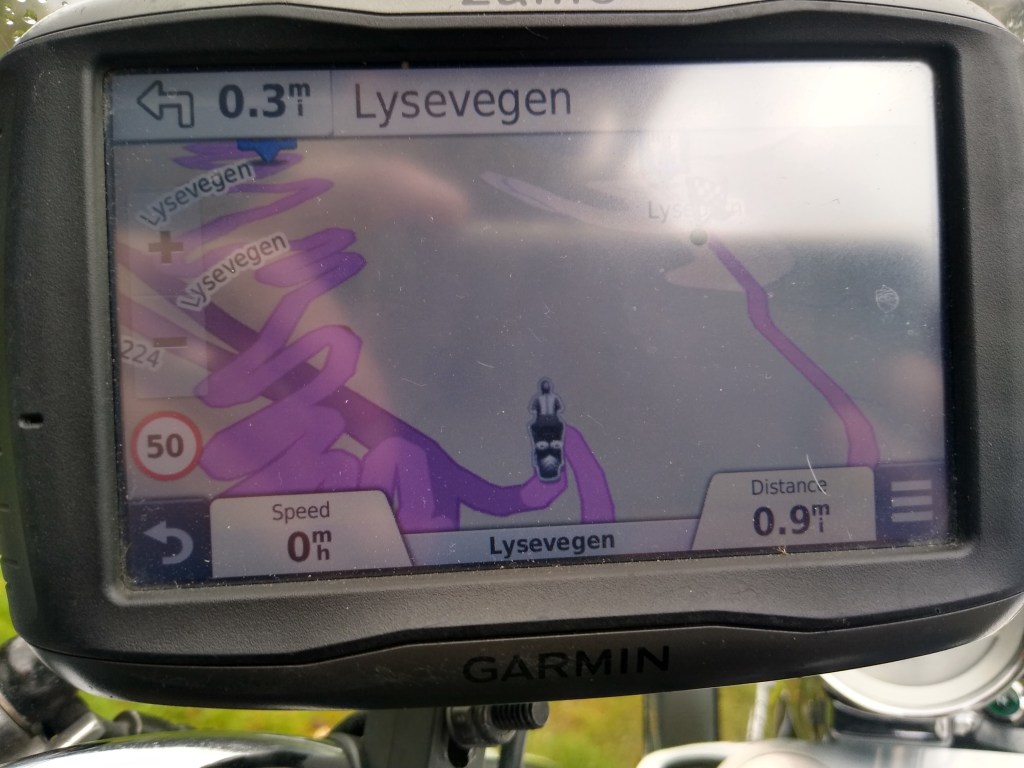
By now, my love affair with the traffic-free Norwegian roads was losing its ardour. Yes, the roads are excellent and yes, they are a rider’s dream, but oh! The speed limits! And the drivers! The speed limit on most stretches of country road is 80 kph, or 50 mph. My speedo is in mph and the Garmin is set to mph, converting from metric, so I mostly thought in miles. The most a Norwegian driver seems willing to hit on those roads is 48 mph, with many opting for 45 or lower. And each time you enter a village with a posted lower limit you can see the brake lights come on as they brake just before the actual sign. Maybe that’s the correct way to drive, the way all right-thinking people drive, but I’m used to people driving at just over the limit – maybe 8-10% above. And easing off on the throttle when entering a lower-limit stretch, letting the engine braking take you down to the required speed. But these guys observe all the limits with a religious fervour. And since the roads often lack obvious, safe stretches for overtaking, you’re stuck behind a procession of camper vans for far longer than seems good. It can get a bit frustrating.

Given the terrain, it’s no surprise that Norway has its share of tunnels, some of them quite long. One even came with a large roundabout in the middle, with roads leading off it in two different directions. Now that was a first! They’re still building new tunnels, it seems, or at least improving the existing ones: on a couple of occasions, we had to join single-file processions along long, freshly tarred diversions to avoid major roadworks. It slowed progress a bit, up there on the snowline, but it was impressive to see the planning and effort behind the whole project.

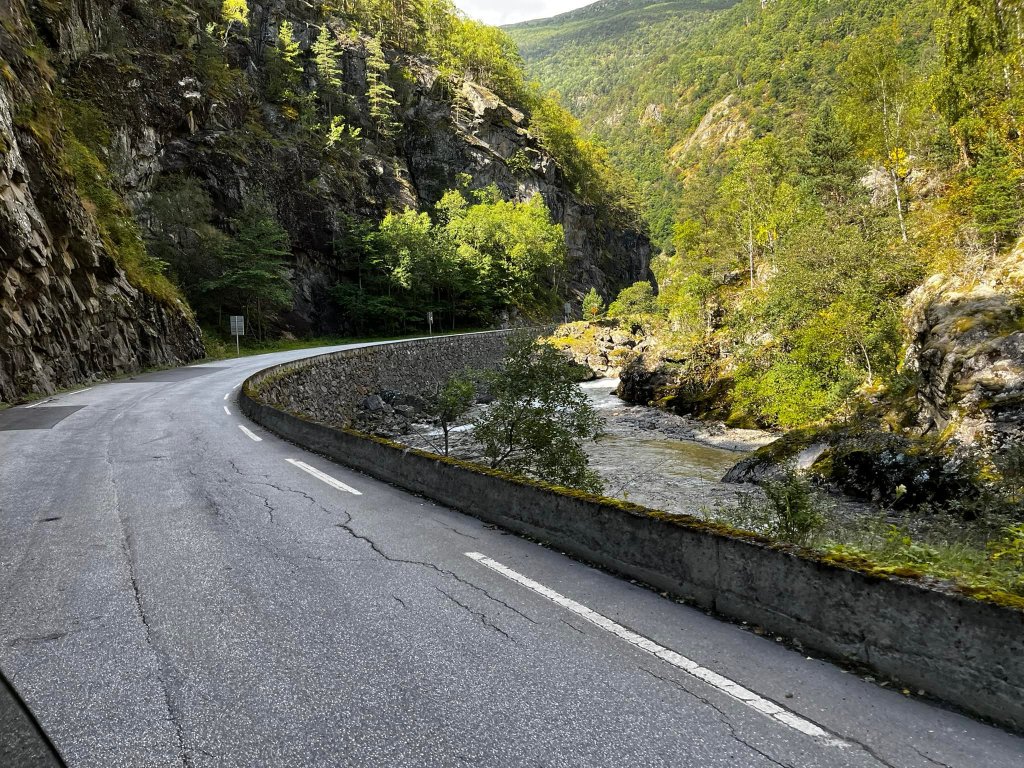
Typical Norwegian country road, complete with roadside river. The surfaces are usually better than this. Photo courtesy of Tommy Oppegaard

The Røldal campsite was conveniently situated on our route and unpretentious, with great mountain views. Unlike so many campsites we’ve used in France and Italy, this one had no restaurant but we dined on locally procured beer and sandwiches in the reception area, which allowed us to charge our intercoms, phones and Kindles. Campsite pitches with electricity are all very well, but they don’t take a normal plug adapter, so reception areas and washrooms became our go-to places for recharging. The Kindles last for about 14 hours, which gives us five days’ use or more, but the phones needed charging every two days at least. The Sena headsets built into the Shoei helmets work really well and their batteries lasted about a day and a half, but we found that if we spoke less often we could make them stretch to two days, which we could live with.

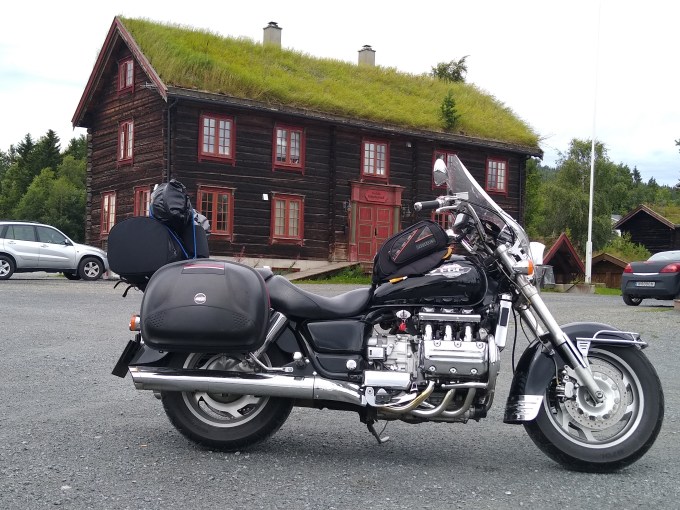
That night’s campsite was at Smedsmo in Vågåvegen, about halfway to Trondheim, the next waypoint on our route to the Arctic Circle. It was unmemorable (as in neither one of us can remember anything about it, apart from the fact that it yet again required a tent-side meal of supermarket-bought supper) but it gave us a chance to have a fresh check on the weather forecast. Rain was predicted for the following evening and the day after, so we decided to skip camping and booked ourselves into a hotel in Trondheim. Along the way, we saw vast numbers of those typically Norwegian red wooden houses, with the cladding panels placed vertically rather than horizontally. With their white wooden trim, they’re wonderfully picturesque. Now, however, we were seeing more and more with turf on their roofs, many even with small trees and bushes growing out of them. One assumes that the earth provides great insulation.

The road from Vågåvegen to Trondheim was light on traffic, especially when we moved on to the motorway section, and got us into the city by late afternoon in time to play tourist. The Chesterfield Hotel is unpretentious, clean, comfortable, central, and cost £103 for two, including an excellent breakfast – we can heartily recommend it. Okay, the bar across the street was playing We Will Rock You loudly at 03:25, but we were both so tired we soon got back to sleep.

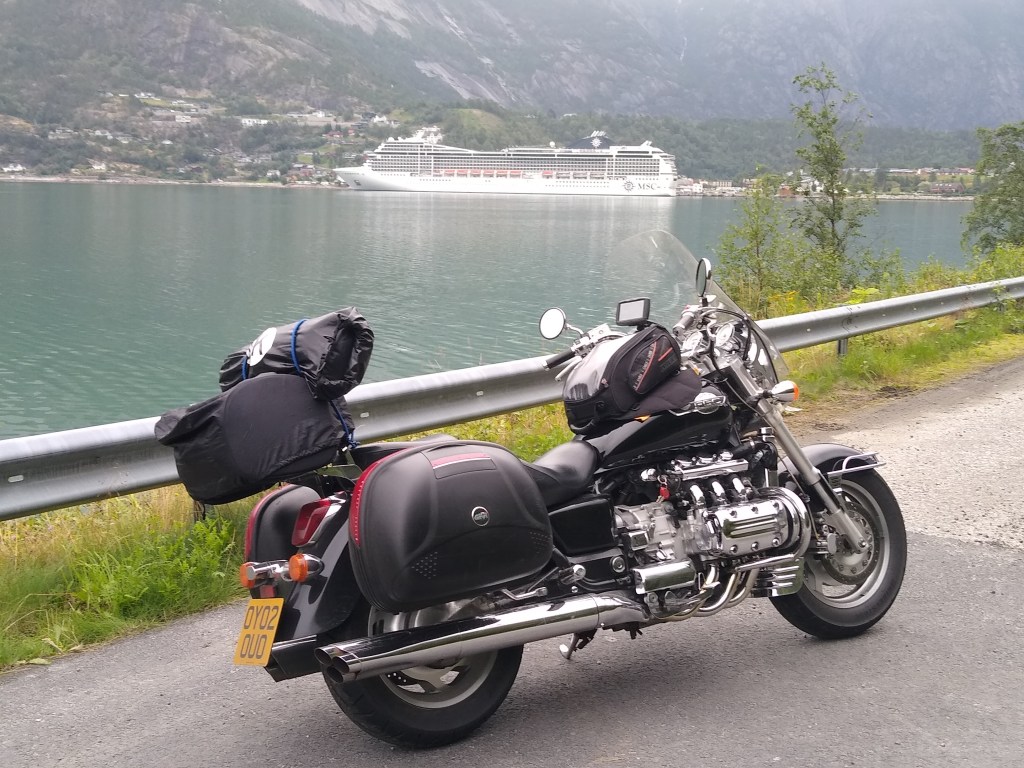
There are two main ways to see the fjords: from sea level by cruise ship or from the top by motorcycle, which is my choice every time!

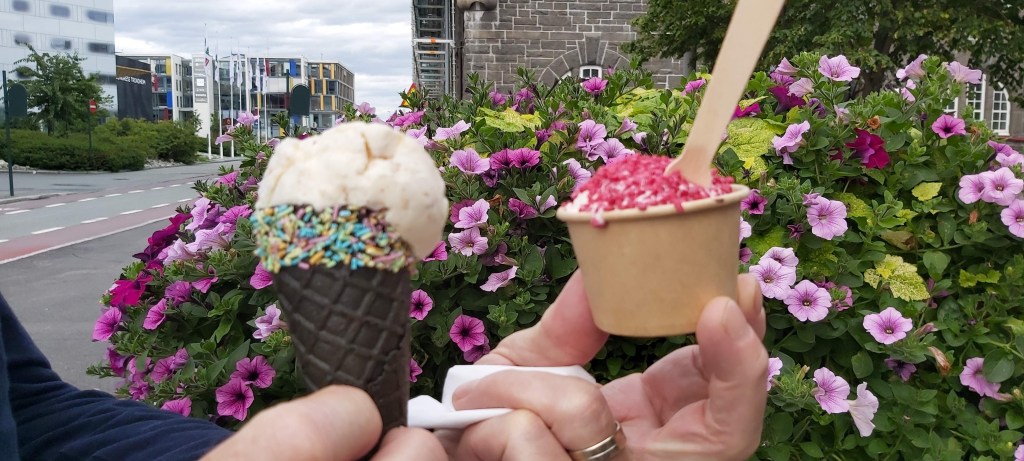
Trondheim is a fabulous city with great architecture and lots to see, including an impressive cathedral and a beautiful fjord. The centre abounds in chic eateries, shops and bars, busy but not over-crowded with happy revellers. A stroll by the harbour introduced us to our first-ever £5 ice-cream cone, which was topped later that evening by a wonderful but horrendously expensive Thai dinner (more than £100 for two, albeit with a glass of beer and a glass of wine apiece).

Ice creams were delicious – at £5 apiece!

Over supper we looked at the 32-hour round-trip that still lay ahead to get us to and from the Lofoten Islands, plus the 350km trip across the islands themselves. We checked the weather for the area and found only rain for the next 10 days. Peter is a master of forecast-checking and she found that if we headed east into Sweden instead of north, we’d find ourselves in warm, sunny weather for the foreseeable future. Much though we wanted to see and experience the stunning islands for ourselves, the prospect of riding 2,000+ kilometres in rain for that privilege held no appeal. With deep regret, we messaged Per Arne Olsen of VRCC Norway, who had offered to give us some pointers on must-see places, and explained the change of plan. He replied to say he totally understood: the winds there were already howling at 35 knots, it was raining, and he planned to leave shortly anyway to escape the weather! Thus reassured, we headed for Sweden and some sunshine. It was a pity, given that the Lofoten Islands had been our target, but it pays to be flexible.

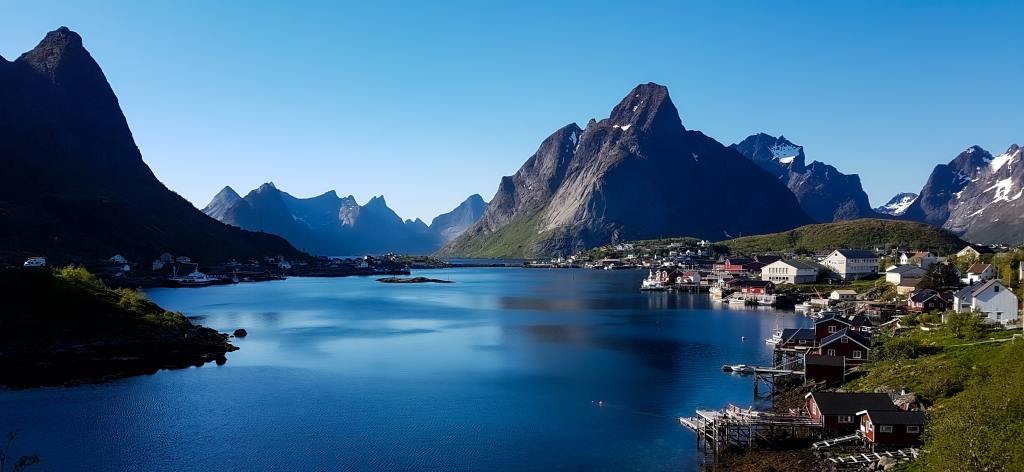
The stunning Lofoten Islands would never have looked this good if we’d pressed on, sadly. Photo courtesy of Paul Taton and Unsplash

Running out of road

We camped the first night at the Kommer in Loon op Zand in the Netherlands. There was an excellent restaurant and bar just a short walk away, where we drank Belgian Leffe beer in the warm evening sun and watched some very serious wannabe golfers play on a crazy-golf putting course. These folk, mostly couples, carried special briefcases containing golf balls and who knows what else. We saw these little putting courses in several campsites along our route – must be a Continental thing.

Our second night was spent at a pleasant campsite near Hamburg, where we were beguiled slightly at check-in by the promise of a restaurant and a bar on site. As it turned out, the restaurant was adjacent to the campsite, not part of it, and was closed that night! Ever-resourceful, we shopped at the Co Op across the road and dined like kings by our tent on chicken wings, salad, beer and chocolate for a relative pittance.

The ride north through Denmark was flat and pretty dull, but we had a three-night break from camping while enjoying two-day stopover with old friends in the Jutland area. By the time we resumed our journey towards the northern Danish port of Hirtshals, my knee pain had vanished, and Peter had found a neat way of adding occasional back support by holding her fists against the small of my back for 15 or 20 minutes; that helped a lot.

The three-hour ferry crossing to Kristiansand via Color Line was smooth, easy and not bad value at £152. Finally, by mid-afternoon, we were in Norway. We’d taken the precaution of booking ourselves into a campsite for the first night, and duly pitched our new Tempest Pro tent close to a beach on a fjord in record time. The wind was strong and getting stronger, and we thought it prudent to check the weather forecast. The wind would continue, it said, to be joined by rain in the night and throughout the next day. Time for a re-think.

I don’t like riding in the rain. I’ve had to do it for most of my life, especially in the early years when a motorcycle was my only form of transport. Rain, snow, ice, whatever. But I don’t find it fun. Camping in the rain is no fun, either, in my book. Many, perhaps most, of the campsites we were to visit also offered small wooden cabins where you could sleep sheltered from the elements. They typically cost three times then price of a basic tent pitch and didn’t seem such great value, so we never tried them. Instead, we found ourselves a decent hotel 30 minutes away in Kvinesdal, booked ourselves in for two nights, packed up all our gear and abandoned the campsite. The Utsikten Hotel gave us warmth, shelter, a view of the fjord, comfort and food for the next 24 hours until the weather picked up and we could be on our way again. It also introduced us to the £22 hamburger and £11 glass of wine, but hey, this was Norway…

The ever-helpful folk on the Valkyrie Riders Cruiser Club UK group on Facebook had suggested we make contact with the VRCC Norway guys, and a helpful member named Tommy Oppegaard had produced five routes for us that he said together constituted the ultimate Norwegian motorcycle trip. He also offered three routes to get us back as quickly as possible from the Lofoten Islands to Gothenburg, to maximise our time up there. Our hotel lay close to the first route, which took us from Kvaviksanden to Lysebotn. This was what we’d been waiting for!

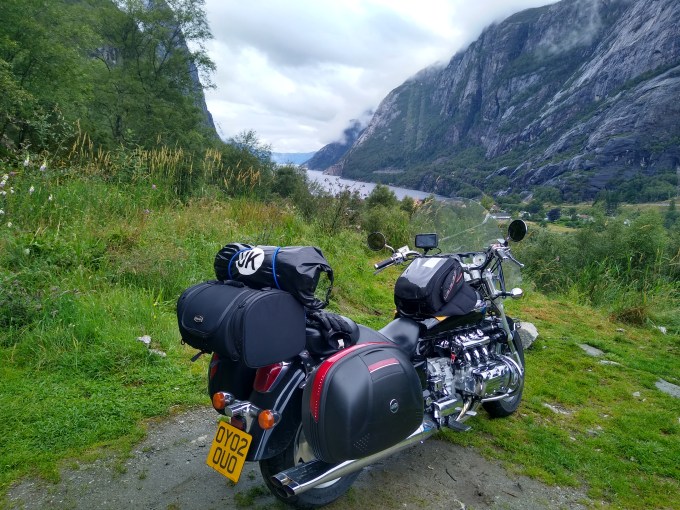
The smooth road out of Kvinesdal meandered along the edge of the fjord, offering wonderful vistas at every turn. That first morning of the holiday proper was made even more memorable by the lack of traffic – we came across no more than eight cars in the first couple of hours. The weather was warm and dry as we climbed up what became a seemingly endless series of hairpin bends. They were, if anything, more challenging than anything we’ve encountered in the Jura, Alps, Dolomites or Rockies. I thanked my lucky stars for the brand-new Bridgestone Exedra tyres that made rapid bend-swinging such a delight, and the new brake pads front and rear that helped slow us down. This was exhilarating stuff, with many of the corners needing first gear and huge handlebar input to keep the whole ensemble on track.

As we rose higher, it grew colder and started to drizzle, which soon turned to rain. For the first time, I felt pleased that I was wearing the Rukka gear and several layers underneath. I stopped to swap my summer gloves for my waterproof winter ones, again pleased I’d packed them. Peter was wearing her trusty Halverssons trousers and Scott waterproof over-jacket and was sitting pretty. Then we entered the clouds, and visibility became a real issue. That’s when we encountered our first mobile roadblock of camper vans, tip-toeing their way around the same bends, often at a snail’s pace.

The road started to descend toward the fjord, lost in cloud way below, and at one point the German camper van in front of us came to a halt when faced with an equally large camper coming up the other way. Neither van (small truck was closer to the truth) could move forward, so they both started to reverse. Now, the Valkyrie ain’t all that good at being reversed at the best of times but pointing downhill with a pillion and 60-odd pounds of luggage on board there is nowhere to go but forwards, so I nipped through a gap to the left of one van and the right of the other and left them to sort it out between them. They must have done, because when we came back up an hour later they were gone.

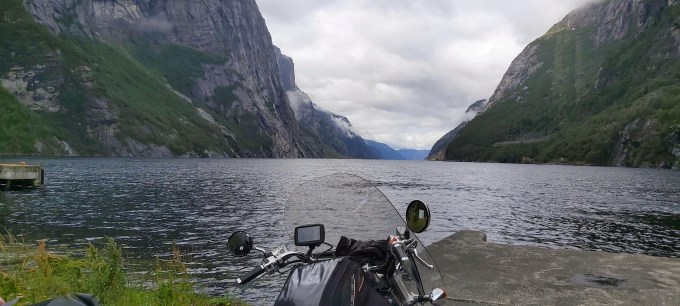
Came back up? Yes, that was a bit of a surprise, because when we finally got down to sea level at Lysebotn it became clear that the road ended right there, at the edge of the fjord (see title photo). We were both fairly taxed by the descent, with its blind hairpins and occasional camper vans. Peter said to me over the intercom: “We don’t have to go back up, do we?” I replied: “No, no. From here we go on to Dalen Hotel.” However, to my total surprise, there were only two ways out: by ferry to somewhere we didn’t want to go, or back up the mountain! So back up the mountain we went, laying the bike over hard, tugging on the bars, and praying we wouldn’t meet something large on one of the bends.

At lunch, back on level territory, we considered the route for the next few days. Tommy had undoubtedly picked out some wonderful roads, but our goal was the Lofoten Islands, and they were still 2,000 kilometres of riding to the north. We decided to cannibalise the route a little, incorporating some of the original roads but taking some shortcuts that brought us to a nice campsite at Røldal and onward the next day to Trondheim.

Norway: the ultimate biking country?

Norway is a fabulous place to ride a motorcycle. I was 55 years into my motorcycling life before I found this out for myself, so, if you’re into smooth, challenging, twisty motorcycle journeys, then you owe it to yourself to go to Norway soon. It lived up to or exceeded all our expectations, including the fact that it’s crazily expensive. We just didn’t expect the weather in August to be so unpredictable.

Getting there from the UK is easier said than done. There used to be a ferry from Newcastle to Kristiansand, but that closed in 2006; and there was a ferry from Newcastle to Stavanger and Bergen, but that ceased in 2008. You could once take a ferry from Harwich to Esbjerg in Denmark, cutting out vast swathes of boring roads, but that too closed in 2014.

These days the only way to get from Britain to Norway on two wheels or four is to make the hard slog across very flat and, to be honest, dull bits of France, Belgium, the Netherlands, Germany and Denmark – or you can cut out a chunk of that by taking a ferry from Hull to Rotterdam. That would have been good for my wife Peter and me, living just two hours west of Hull, but we opted for the Channel Tunnel because it gave us greater freedom to change dates depending on when Peter’s Schengen visa came through (to apply for a Schengen visa, you first need to have firm travel bookings).

There was last-minute scope for a re-think when chaos descended on the port of Dover and the Eurotunnel terminal in Folkestone a week before our departure. News reports of massive traffic jams and delays of up to 21 hours due to (apparently) a shortage of French border officials had me searching for a Hull-Rotterdam booking, but by then all the ferries were full. Our one concession was to change our mid-afternoon Tunnel booking for an early morning one, because the queues got worse as the day progressed. As it happened, the traffic at the Felixstowe terminal was only a little worse than we’d experienced in previous years, adding about an hour to proceedings, but we arrived early and got to Calais at more or less the intended time.

This was our first serious two-up trip with full luggage on the Valkyrie in three years, and the first since the completion of my two years of (happily successful) cancer treatment. Peter reckoned that I’d lost a bit of muscle mass in the process, which I had to concede was possibly true. I’d also been getting unrelated lower back pain over the same period, so the question was how my body would cope with a fully laden bike. It wasn’t so bad on the first day’s ride from Manchester to Kent; maybe this would work out. On day two, across the tedium of that part of France and Belgium, the back pain was more pronounced but survivable. Unfortunately, my helmet was doing my head in – literally. The Shoei Neotec 2 was supplied with a small sponge insert to cushion my skull against the hard ribs that live behind the main liner, and the sponge had shifted, but this was easily remedied. What else would intrude to spoil the ride?

We stopped off in Ghent because Peter reckoned it was worth seeing. Certainly, the old city centre was attractive, but getting out of it was a bit of a traffic nightmare due to roadworks and diversions. That was a mere foretaste of what was to come next day in Hamburg, which is undergoing a truly massive autobahn construction project. The ultra-narrow lanes meant that the Valkyrie with its Givi panniers was too wide to split between the cars, so instead I resigned myself to an hour or so of stop-start progress, sometimes reaching the dizzy heights of 5 mph. It was sunny and hot, and the limitations of motorcycle weight and the wrong riding gear became obvious very quickly.

The back pain of the previous day was getting worse and had now been joined by a sharp pain in my left kneecap whenever I put my left foot down, and a whole new set of pains in my right wrist, bicep and shoulder. The weather was hot, and my Rukka winter riding gear just added to the general discomfort. I found the weight of the luggage, albeit with only the lightest stuff like sleeping bags up high, was creating a sort of pendulum effect at very low speed, making the roadworks section tedious, difficult and painful. For the first time, I really did wonder whether my aging body would manage to get us all the way to the Arctic Circle and back. That afternoon, the jury was definitely out.