Where have all the Dubai bikes gone?

The motorcyclist in me is never far from the surface, even when I’m on a (rare) non-biking holiday. We’ve been spending a few weeks in Dubai, a former stomping ground, and I’ve been surprised by the explosion of bikes on Dubai’s roads since we left – and by the dearth of bikes on Dubai’s roads!

The explosion has been caused by the massive increase in food and grocery delivery services, all courtesy of hundreds if not thousands of 125cc Hondas and their Chinese derivatives. Deliveroo is much in evidence, along with countless local versions such as Talabat, bringing a vast range of takeaways to your door. Forgotten a litre of milk? Need more bread and cereal? Order them online and a biker will deliver them in no time. It’s instant gratification on wheels – literally. The riders generally wear long-sleeved T-shirts, jeans, boots and gloves, often with strap-on metallic guards for forearms, elbows and shins. That amount of protection is an improvement on what delivery riders used to wear in 2017, which is good.

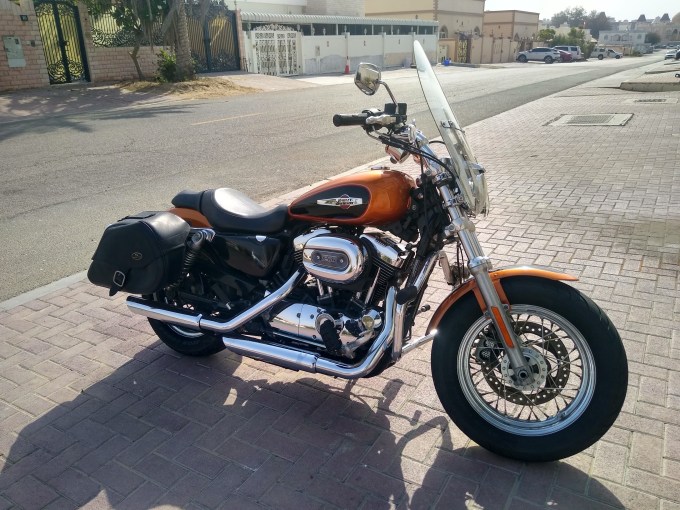
The dearth of non-delivery bikes is harder to explain. In summer, only the foolhardy venture out: we were there a couple of weeks ago and one day it was 47 degrees C. I had to ride from Dubai to Abu Dhabi once in 47-degree heat and it was very challenging, as in boil-the-blood-in-your-brain challenging. But we were also there last winter when the midday temperature is around 30 degrees C and it’s actually really nice biking weather. In three weeks last November, however, I saw six bikes beyond the 125cc army – two sports bikes of indeterminate origin, two feet-forward Harleys, the neighbour’s Sportster, and a parked Suzuki. Maybe they all gather at weekends and ride to some biker café, but otherwise the lack of bikes is puzzling.

Luxury cars, however, are in greater abundance than ever. The supermarket near my daughter’s villa, where we were staying, boasted two highly exclusive SUVs in its car park the other day: a Rolls-Royce and a Bentley. There were three Bentleys within less than half a mile on the Sheikh Zayed Road (SZR) last week, and another R-R SUV being loaded on to a low-loader from where it had broken down in the fast lane… oops!

The SZR is a massive highway that flows through the middle of Dubai, with up to seven lanes in each direction. In older, wilder times I’ve seen cars weaving in and out of the traffic at 100 mph there. Luxury shops are arranged along much if its length, selling every imaginable out-there item. Car dealerships with impressive frontages line certain sections, where you’ll see Bentley alongside Ferrari, Maserati, Lamborghini, Jaguar and all the mainstream, upmarket brands. In among them are often-sprawling showrooms for every imaginable supercar, new and used, from Bugatti to Koenigsegg. It’s literally an awesome spectacle and, if anything, that whole scene is bigger than ever.

It does give one pause for thought, especially if you’re a visitor. If you live in Dubai you get used to the abundant wealth: it just is. As a visitor, though, it’s so in your face that you can’t fail to do the odd double-take. It’s not just cars, either, but everything: the new villas being advertised at £5 million plus, the shops, the kids’ clothes, the malls, the boats – everything. Going there at a time when the pound was at a near-record low didn’t helped. It used to be six Dirhams to the pound back in my day; last November it was four, thanks to Liz Truss; this past week it was 4.3, so everything still costs the earth!

I lived in Dubai for two years and in neighbouring Abu Dhabi for six, so these past two visits have also been a bit of a nostalgia trip, too, for my wife and myself. We visited the spectacular Louvre in Abu Dhabi for the first time, having watched it rising slowly out of the sand for several years, and finished the day with dinner at Yas Links, a favourite destination across the road from Yas Marina Circuit where I worked for 18 months.

With the setting sun over the blue waters of the mangroves, the palm trees waving gently, the roof of the futuristic Yas W hotel slowly changing hue from cream to red to green, the good times came flooding back. I could even imagine riding home on our Triumph Rocket III, which took that route with me many times. I can recommend the whole Yas and Saadiyaat Island experience to anyone (there are many more attractions open these days, including a new Sea World, plus in December the impressive-looking Zayed National Museum). It may not be cheap but it’s a great experience, especially in winter.
The unattractive truth about loose magnets

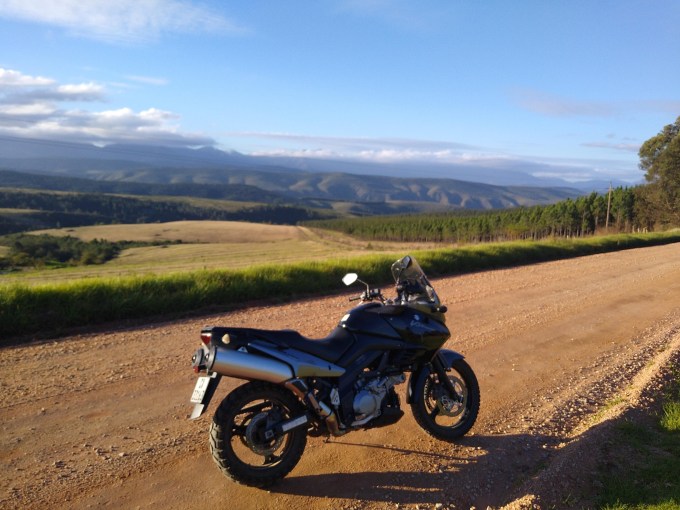
The news from the motorcycle repair shop wasn’t good. The battery charging issue with the V-Strom, they said, was down to the flywheel, not the regulator, but they couldn’t get their hands on a second-hand example anywhere. A new flywheel would set me back R7,810, plus VAT, plus labour. Oh, and flywheels were back-ordered and delivery would take six to eight weeks.

That wasn’t all: the problem was with the flywheel’s magnets, which had come loose. The mechanic had found shards of broken magnet in the oil, so the recommendation was to strip down the engine completely to ensure that there were no other shards waiting to destroy the engine from within. The total cost of the repair would be around R22,000, which is a shade over £900, which to me is a lot.

The deal-breaker was the six-to-eight-week wait for the part; I had to head back to the UK in three weeks and wouldn’t be back till much later in the year. So I had the bike trailered from the workshop to our home for a very reasonable R450 (about £20) and there it now sits while I consider my options.

I paid about £3,500 for the bike in December 2010, and as a going concern it could be worth around £2,500 in South Africa today. The nearest bike-stripper will give me about £600 for the Suzuki, which ain’t enough, frankly. So the decision now is based on whether I can find a second-hand flywheel in the UK, bring it back in my luggage on our next visit to South Africa and fit it ourselves (my wife and me); check out the price of a new part in the UK and see if it makes sense to buy it there; or go ahead with the South African repair and costings.

It’s primarily a financial decision now, as the propensity of V-Strom 1000s to shed their magnets seems all too high, according to the owners’ forums, and so I have no massive desire to keep the bike. Once again, it seems as if our horribly bumpy dirt road has claimed another victim; it could so easily have played a part in shaking the magnets loose. I’ll do some parts-shopping and reach a decision this summer.

It’s a shame in another sense, too. I’d been thinking about replacing the UK-based Honda Valkyrie with a smaller, lighter bike. I’ve been experiencing an irritating but not debilitating pain in my right arm when riding the Valkyrie over the past year, which I have attributed to the riding position. A few years ago I burst one of my bicep tendons and decided against having it repaired, as the majority of people who went for the repair seemed to be body-builders or serious weight-lifters. For everyday life, you can get by with just one tendon, and I have – until now. I think that the angle of the Valkyrie’s bars, their height, and the need to hold the throttle open manually for long periods have conspired to cause me pain in my wrist, forearm, bicep and shoulder. It sets in within an hour, whereas I can ride my wife’s Tiger 800XC, the V-Strom, the Ducati Sport Classic and the Suzuki TL1000 without any pain.

Okay, that’s not entirely true: the Ducati and the TL are beginning to be a pain in the neck, literally, from the need to keep my head up from their naturally head-down riding position, but that’s another story! But the new Triumph 900 GT Pro seems to have a lot to offer as a tourer, along with the same flat bar as the Tiger 800, and the V-Strom likewise. The reputation of V-Stroms for alternator and regulator issues, however, has eliminated in from the list. I plan to try the Triumph anyway, and probably the Yamaha Tracer 900 and the BMW 1250 RS. They each offer a useful weight saving over the Valkyrie – more than 100kg in the case of the Triumph – which might be welcome as the years advance.

In the meantime, I’m not quite ready to walk away from the wonderful Valkyrie. It’s my third, and I’ve owned one for a total of 18 years. I’ve tried to tackle the problem from the other end – me! Can the arm problem be fixed to the point where the pain goes away and the Honda becomes a pleasure to ride again. I’ve started with six sessions of acupuncture to my arm and neck. The chiropractor reckons he’s found a few issues that he can deal with, and that’s already having a positive effect. A bit of gentle work with weights, gradually increasing the load, might help complete the task. I shall be reunited with the Valkyrie in mid-June and can’t wait to see if the problem’s been sorted. Otherwise, it’s bike-shopping time!

Stiffer shocks sort low-speed weave

It’s official(ish) – I’m not losing the ability to ride a heavy touring bike, two-up, with luggage, at low speed. Phew!

Readers may recall my mentioning that I found the Honda Valkyrie harder to manage at very low speed in traffic during our Scandinavian odyssey this past summer. It felt like a pendulum, the back end wanting to sway and me wrestling with the handlebars more than I ever had to do before. It was only when we arrived home, three weeks later, that it occurred to me that my failure to raise the pre-load on the rear suspension might have been to blame.

The only way to check was to load the bike back up to holiday levels and try again. Before that could happen, Ihad to get my Givi brackets welded. My wife Peter had spotted that the welds on the top of both brackets had started to split, which in itself might be an indication that I’d been overloading them for years. Found a local welder in Middlewich who repaired them for £20, which I though was reasonable. Refitting the brackets went against the grain, because the bike looks a while lot better without them, but needs must.

I filled the two panniers with clothing and camping materials to take them to the 9 kg apiece they’d been in the summer, refitted the Kuryakyn roll bag and long waterproof roll-bag, filled them with the same kit we’d carried in August, and added the windscreen and magnetic tank-bag (a handy if heavy item, but at least the weight is carried where it can’t cause any real issues). I jacked-up the rear suspension to level 4, where it should have been, instead of 3 where it had been, and set off.

Happily, the tendency to slalom at low speed and the need for constant tiller-like adjustments at the handlebars had all but disappeared. I stopped, raised the setting to 5 and tried again – even better. So I wasn’t surrendering my riding skill to old age – just the mental alertness to realise more quickly that the shock settings might have something to do with the problem. In any event, I’ll be ditching the Kurykyn roll-bag for a second plastic roll-bag, saving 3.5 kg of high-up, behind-the-axle weight in the process.

I’d been prepared to change bikes for something lighter if the suspension changes hadn’t made any difference. My head had been turned by a BMW R1250RS, which weighs only 236kg compared with the Valkyrie’s 309kg, and the new Triumph Tiger 900 GT Pro, at just 198kg and 21st-century features like built-in satnav and a phone charger. There might still be a reason to switch, however, because the Valkyrie still generates a pain in my right arm in four places (wrist, forearm, bicep and shoulder). I reckon that’s down to a ruptured bicep tendon some years ago. Not much I can do about that now (if it was going to get reattached, it needed to get done within weeks, and the evidence suggested it wouldn’t be worth the aggro). I find that I can ride my very sporty Ducati for a couple of hours without triggering the arm pain, but it can appear within 30 minutes on the Valkyrie, even one-up without luggage. So the latest plan is to build my arm muscles with weights and see if that helps. If it doesn’t, then a new bike might still be in order. I’ve got the winter months to find out…

The Norway trip: stuff that worked, and stuff that didn’t

Every motorcycle tour teaches me something, which I then try to incorporate next time to make the whole experience even better. You’d think that after 46 years, with some time off for other pursuits and more conventional family holidays, I’d have it all sorted now, but either I’m a slow learner or you never stop learning.

One innovation we tried this year was to bring very few clothes. Normally I’d bring a spare pair of jeans and maybe a week’s worth of T-shirts, underwear and socks. My wife Peter is usually a bit more sensible but generally we’d both carry more stuff than we needed. This time, to save weight and space, we cut that right back: we carried only two to three changes of underwear, T-shirts and socks. Mrs Peter had seen an ad for men’s underwear designed for camping and said to be fast-drying, so I bought three pairs. At a sale in one of the camping shops I bought a pair of very light, thin, Factor 50-rated long trousers for wearing off the bike, which meant I could ditch the spare jeans. Speaking of jeans, it took me years to work out that the pain in my backside that seemed to set in within hours, regardless of what bike I was on, was largely down to the seams of the rear pockets. When the world seemed to switch to stretch jeans, and conventional non-stretch ones were hard to find and very expensive, I followed the herd and bought M&S stretch jeans and found that not only are they supremely comfortable on a bike, the pocket seams are far softer and the sore bum problem has disappeared.

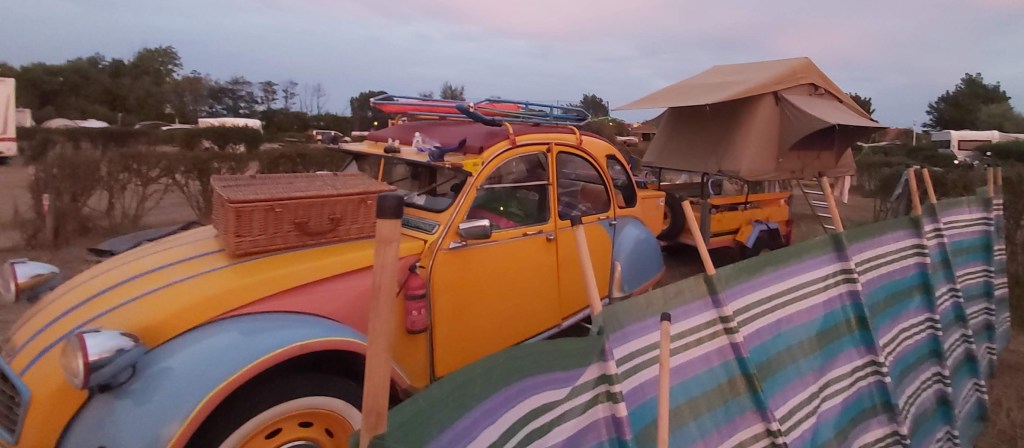
I forgot to include this colourful, hand-painted 2CV at our Dunkirk campsite in a previous blog

Travelling with far fewer clothes worked just fine, the new underwear less so. It took exactly the same time to dry as conventional items, so that was a tenner wasted. Obviously we had to wash our clothes every night or second night, but it made perfect sense. Our microfibre towels dried almost instantly and are indispensable. The attempt to take less stuff almost had us leave our traditional Kuryakyn roll bag behind, but at the last minute I decided we needed the extra space for stuff like trainers, flip-flops and sleeping bags; we’d have been better off without it, as the extra weight high up and far back proved to be a pain. We’ve had the Givi panniers for several years; they work, but aren’t waterproof, aren’t pretty and are too wide for easy filtering, so we’re exploring affordable alternatives, which may not exist. Even a scuffed pair of OEM Valkyrie hard panniers seems to command £1,000 on eBay, which just seems too much.

The Oxford magnetic tank bag is invaluable and is a definite keeper. It weighs a lot, due to the magnets, but the weight is not in a place where it causes problems, and we’ve long since perfected a double-act for removing and holding it during refuelling. The waterproof cover is a bit naff, billowing away in the wind but never actually disappearing.

One area for future improvement is our riding gear. I’ve long been a fan of Motolegends, the Guildford-based bike clothing specialists. They send out regular missives about great gear, and a few weeks before we left they wrote at length about the unsuitability of winter waterproof suits for summer touring. What they said made perfect sense, but I didn’t fancy spending a fortune on new stuff – have you seen the prices of riding gear these days? Wow!

My Rukka jacket and trousers are 19 years old and, barring one 100-mile rain-soaked trip in 2020, have always kept me dry and warm. As an older laminated suit, it’s also quite heavy and devoid of air vents, so it’s far from ideal on a 30°C day in summer. For that, I have a Hein Gericke summer jacket with plenty of air vents, but it’s not waterproof and it’s not warm. We’d been advised to expect temperatures between 5° and 30° in Norway, with possible rain, so I wore the Rukka. Next time, I’ll follow the advice from Motolegends: wear a summer riding jacket and maybe Rokkertech jeans (at £300-odd a pair!) and pack a waterproof Scott jacket and Scott trousers for rainy days. My wife swears by her Scott jacket over her leather one and says it keeps her warm, too. It should mean I stay much more comfortable on warm-to-hot days and won’t have to find room to stow the bulky Rukka pants.

My short Daytona boots were great, staying warm, dry and comfortable throughout, but not too warm on hot days. My Triumph winter gloves were perfect for the wet, cold days, but the well-worn IXS summer gloves I’ve used for about eight years have started bunching on the right palm and causing callouses on my throttle hand, so they’ll have to be replaced. Our Shoei Neotec 2 helmets are basically fine, especially with the convenience of the neat intercom system, even though my head is between two sizes: one removable liner is too tight around the forehead, the other lacks padding on the top of the head. The ‘accessory’ sponge Motolegends supplied solves the top-of-head issue most of the time. In any event, with £560 invested in the Shoei, it’ll have to last a few years yet.

The Garmin satnav was the subject of a separate blog. It still works, and God knows we’d have got totally lost without it many times, but I think it’s time for a change to something more modern and less clunky. So there are a few things we need to do before the 2023 touring season in that endless quest for perfection.

Sat-nav: a blessing or a curse?

When it comes to First World problems, choosing the best satnav device for motorcycling must be right up near the top of the list. For decades, my idea of motorcycle touring was to plan a route on a good paper map, write down the names of the towns I needed to pass through, place the sheet of paper inside the plastic case on my tank bag, and go.

Then, after a bit of research, I bought a Garmin Zumo 590 LM. It had good reviews, not least because its screen size was a tad larger than most rivals. Users seemed satisfied. I think I paid around £400 for mine and bolted it to the left handlebar of my Valkyrie. I’d fire it up, it would go through the step of acquiring satellites, I’d type in the name of my destination, and it would give me, usually, three route options with varying arrival times.

I liked its features. It would give me an accurate note of my speed, which was usually 2 mph lower than the speedo suggested; it would warn me of the prevailing speed limit; it would warn me of upcoming speed cameras; it would give me a miles-to-destination readout; and I could program it to do other stuff like tell me the time and find hotels and local attractions. It even posted photos of upcoming junctions to make sure I was in the correct lane. It was waterproof and, initially, fairly easy to read.

Then maybe my eyesight started to deteriorate a bit, but I found myself having to stare at the little screen a second or two longer than I wanted. I solved that by connecting my Shoei Neotec 2 and its Sena intercom system to the satnav, and watching the screen was no longer a priority: that standard electronic voice would tell me where I needed to go. So far, so good.

In the meantime, however, I had discovered the joys of Google Maps, which I used extensively in my car. It was so easy to use and it became my main satnav device for the past three years. This year, with motorcycle touring back on the agenda, it was time to get back to the Garmin. And, oh, what a contrast! Its limitations became obvious very quickly.

Tommy Oppegaard from VRCC Norway had taken the trouble to create five or six detailed route maps for us to follow on our summer trip there. I tried to upload them to the Garmin, but that didn’t seem possible. Some online research suggested that it might be possible if I used some new software, but that didn’t work for me either. I watched a tutorial, too, but finally had to agree with a helpful comment that it was very, very hard to do. I gave up and simply wrote down all the towns on Tommy’s maps on a folded piece of A4 and stuck it inside the clear window of my tank bag – just like in the old days!

As a last-minute thought, I went to Halfords to buy a handlebar mounting kit for my phone, thinking I’d use that instead. The requisite hardware came to about £75, which I considered way too much, so we decided to stick with our piece of paper.

When we got to Calais, I relented and thought I’d enter a destination into the Garmin. Instead of typing in the name of the destination on a full keyboard in mere seconds, of course, I had to go to a sub-menu and select the letter grouping, then enter the name letter by letter, then wait till it found routes. It worked, of course, just fine, once I’d accepted the clunkiness. The audio feed was very helpful, as were the images of major junctions.

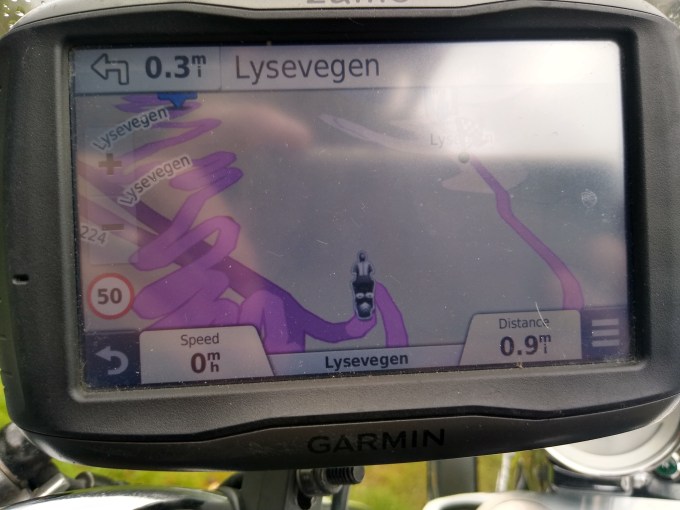
Sometimes it just went nuts. We were following an autobahn in Germany and it told me exactly what lane I needed to be in as I approached a junction. As the junction loomed, the purple line indicating the correct route suddenly coloured both directions: straight ahead and right. I went straight and the system had soon rerouted me back to the junction so that I’d take what would have been the right turn. I guess satnavs have off-days. It happened again three times in places where roadworks had completely closed the route. I’d updated the maps just before we set off, but roadworks don’t feature in the Garmin approach, and it refused to search for alternatives, taking us back to the closed road time and time again. We eventually learned to ignore it, follow our noses, and let the satnav resume when we’d got things back on track. I realise that there are probably all kind of functions on the Garmin that I could try to use – the website seems to have lots to say – but frankly I find Google Maps so easy and intuitive that I think I’ll bite that bullet for next year, look into on-board phone charging and invest in a mounting bracket and waterproof case for my Motorola.

Time to consider a change of touring bike?

Is it time to wave goodbye to our beloved Honda Valkyrie and try something smaller, lighter, more modern? I mentioned when writing about our Norway trip that I’d found my Valkyrie a bit of a handful at low speeds in heavy traffic. It hadn’t been a problem before – was it me, or was it the bike?

When we got home, I weighed our luggage equipment. I was a bit surprised by the results: the round Kuryakyn bag that sits on the rear carrier weighed 3.5kg empty, when the factory weight limit for the carrier is 3kg. We normally pack two sleeping bags in there (1.5kg combined), along with sundry items like a tent lamp, Peter’s Scott waterproof jacket, some adapter plugs and charging wires for the phones and helmets, and a beanie (this trip only). The total with gear was probably 6kg. On top of that we pack our two super-thin air mattresses in a plastic waterproof roll-bag, weighing a further 1.5kg, so we’d been carrying between 7 and 7.5kg up high and well behind the wheel spindle. Some obvious room for improvement there: I plan to ditch the Kuryakyn bag and replace it with another plastic roll-bag, which weighs almost nothing; that would give us a total of a fraction over 3kg back there.

VRCC Norway friend Tommy Oppegaard told me he’d upgraded his rear suspension to take the extra weight of a trailer and suggested I consider the same. That got me thinking: I’d stupidly left the rear shock preload settings at 3, which I used for normal UK riding, instead of 4, which I’ve always used in the past for two-up touring. I realised this early on but my wife said it was comfortable for her and the suspension wasn’t bottoming, and we weren’t planning on riding fast so that we could conserve expensive fuel, so I left it at 3 and forgot about it. It now occurred to me that this could have been a contributory factor to the pendulum effect I’d felt, so that now needs investigation.

I can’t do that just yet, because while we were in Germany we noticed that a weld on each chrome Givi pannier bracket had started to split. The splits never got any worse, but nonetheless they can’t be left like that, so I took them straight off when we got home. We both far prefer the look of the bike without the panniers, so I’m in no rush to get the brackets welded and put everything back on.

While I was weighing everything, I found that the Givi panniers weigh 5kg each and the brackets 1.1kg, meaning that the panniers and brackets add 12.2kg to the bike before we add even a pair of socks. With the Kuryakyn bag, it all comes to 15.7kg of luggage equipment. Maybe that’s not out of the ordinary for motorcycle luggage (I’ve never bothered to check before), but it got me thinking that I need to check out other options before re-fitting the Givis. My last Valkyrie had the factory panniers from the Touring model, which weren’t ideal (won’t take a full-face helmet and aren’t that capacious) but looked fabulous and probably weighed less. I knew from my initial search for luggage some years ago that they were horribly expensive now, borne out by an ad last week on eBay for a second-hand pair, complete with a few paint scuffs and rusty hinges, for £1,000!

So much for the luggage: what about the bike itself? My lower back pain is probably a semi-permanent fixture, possibly an inevitable feature of being 68; some massive proportion of older folk suffer from it, I believe. My physio told me it was all down to bad seating posture, specifically crossing my legs and especially resting one ankle on the opposite knee – my long-preferred position for using my laptop. I’ve written hundreds of thousands of words in that way. Stop that, he said, and it’ll all go away. I did stop, months ago, and the pain improved considerably, but it hadn’t gone away.

However, I recall that the conventional wisdom used to be that the ideal riding position on a bike was one that splits the rider’s weight between wrists, bottom and feet. The Valkyrie’s cruiser stance puts all that weight on the bum, down through the spine. Can that be good for someone with lower back pain? Maybe a new bike with a less upright riding position would help? An hour or so on my Ducati Sport Classic after we got home suggested that the solution may lie in that line of thinking: no back pain whatsoever. Obviously the single-seat Duke would never make for a comfortable touring mount, even with its after-market, flatter bars, but maybe other bikes with flat-ish bars would work?

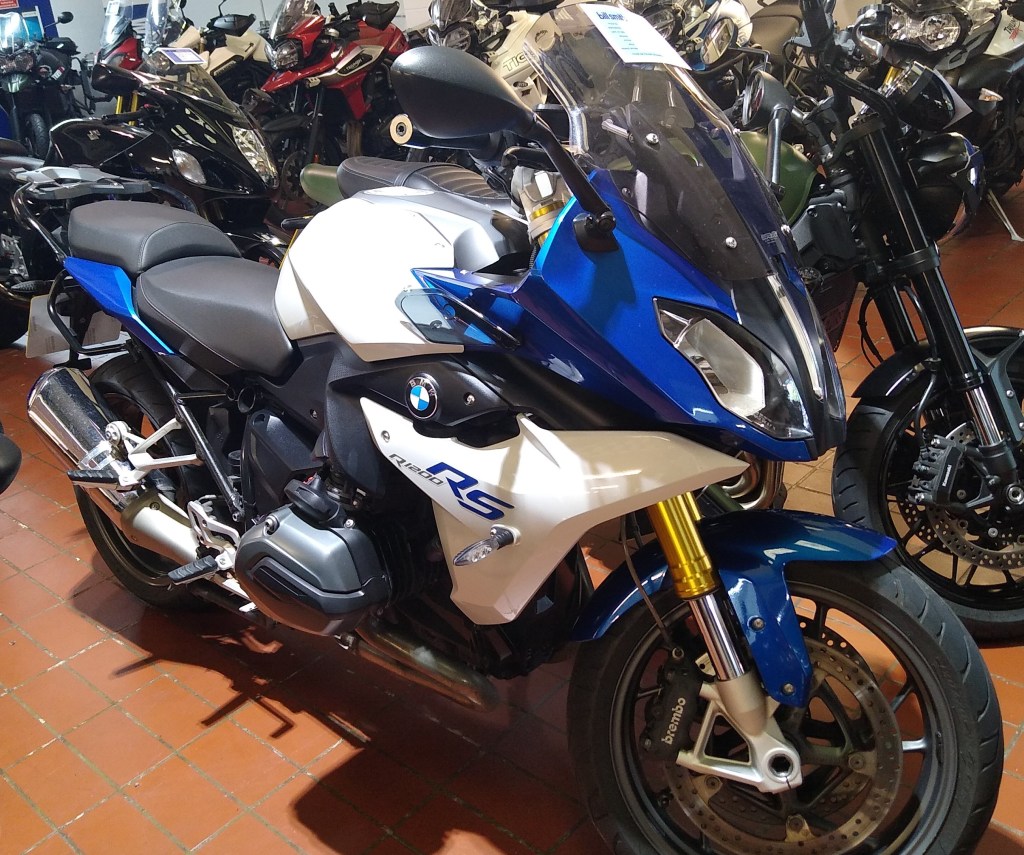
I sat on a BMW R1200RS in a dealership yesterday and the riding position certainly felt much more comfortable, and the 236kg weight would be an improvement on the Valkyrie’s 309kg. I owned a new BMW R100 back in 1979 and never really loved it, perhaps because the day after I bought it I rode the new Gold Wing K3 and decided that was better! In comparison, the BMW seemed too tappetty and unrefined. Still, it’s worth a test ride. The new Triumph Tiger 900 GT Pro looks interesting, too, with its 198kg and all manner of modern features, from built-in satnav to a phone charger. Having owned three Valkyries now, for a combined total of 15 years, not to mention the Valkyrie Rune for a further seven, I have a huge affinity for these bikes and a massive resistance to change. However, if changes in my skeletal structure mean that there might be more suitable touring bikes out there, it makes sense to check them out.

First, though, I owe it to the Valkyrie to see whether lighter panniers, a lighter carrier load and the correct suspension setting can redeem it. I’m hoping they can.

The worst rain of the trip came on the final leg to Cheshire

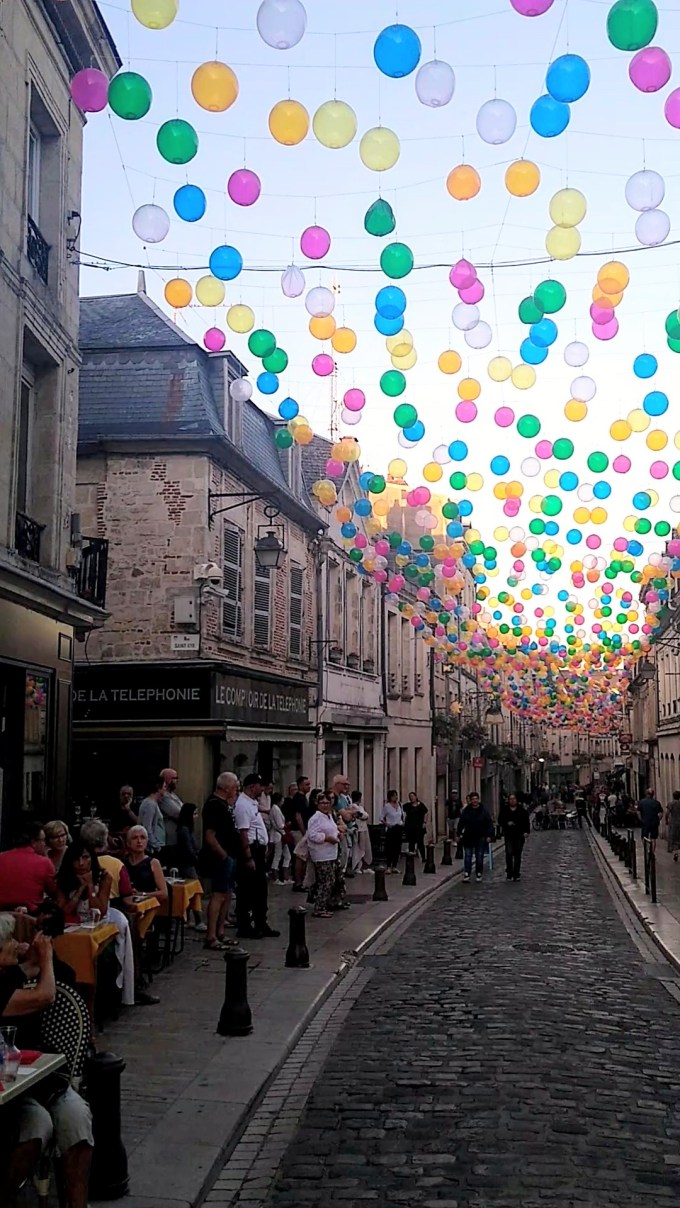
The Laon campsite lacked a restaurant but we rode into the old city and found a cobbled street closed to traffic where the locals were celebrating some festival or other (photo above). Jazz bands played and people ate and drank at outside tables, soaking up the vibe. The place was pretty full so we settled for an excellent kebab house where the waiter turned out to be from Afghanistan, where he’d been an interpreter for US forces. He told us that his young children would now grow up safe in France but he regretted that they would know little about their home country, which he doubted would be safe for any of them to visit again.

Peter reckoned she’d seen enough medieval ruins for this trip, so instead of exploring the city next day we went for breakfast at McDonald’s and headed for the coast. Our Flexiplus+ Eurotunnel ticket had been an expensive but necessary indulgence, given that, when we booked it, we had no firm return date in mind. Now, however, it meant that we could pay £10 to change the date and could take the train back that afternoon. Instead, we thought we’d spend one last night under canvas (well, nylon and polyester) and head back the next morning. The idea of camping close to Calais, with its hordes of economic migrants, didn’t hugely appeal, so we headed for Dunkirk and the campsite we’d planned to use on our outward leg before we’d changed the Eurotunnel timing.

The Camping la Lincorne site was on the edge of town, right by the beach and offered incredible value at €9 for the night; we’d been charged an average of about €25 at all our other sites. This one not only had a bar and restaurant but the barmaid cheerfully let us charge both our phones behind the bar. Like many Continental campsites we’d encountered, there were lots of permanent or semi-permanent plots where the caravan was almost welded to a wooden chalet or a large awning tent. There were relatively few basic tents. The pitch next to ours was occupied by a multi-coloured, hand-painted Citroen 2CV with matching trailer-tent. Its elderly occupant and his wife had driven all the way from the UK to Sicily and back in two weeks, which was some going. He wandered over to admire the Valkyrie and share his experiences owning a BMW R69 back in the day.

We dined very well and affordably in the on-site restaurant, Peter enjoying her first-ever taste of rum baba for dessert. Put off post-dinner drinks by the extortionate prices for the past three weeks, we celebrated the last night of our trip with whisky and Cointreau respectively. Up early next morning, there was time for fresh, warm croissants and coffee before riding the final 35 minutes or so to the Eurotunnel terminal at Calais. We didn’t know what to expect in terms of delays or queues, given the problems on the UK end three weeks earlier, but we joined a queue of perhaps three cars and were through in minutes. With the smug self-assurance of people who’d paid extra to travel with some form of priority ticket, we followed the purple road paint in the Flexiplus+ lane to the barrier and were first in line. The light turned green within two minutes, the barrier rose, and we road through, surprised at all this speed and efficiency. All channel crossings should be this easy.

Hah! It turned out that the only reason we were let through was to allow some car-bound passenger to get through and head for his train. We had to wait inside the barrier for perhaps 20 minutes before being allowed to proceed, waiting train-side to be joined by a group of other bikes waiting to board the last, as is the normal procedure for motorcycles. Those bikes had all paid the standard fare. Lesson: Flexiplus+ ain’t worth the money if you’re on a bike, although it does give you the ability to board the next available train, regardless of what time you show up.

Our plan was to meet our son James for lunch in Shoreham before heading on home to Middlewich in Cheshire. He’d just moved there the previous week to take up a new job. A glance at the Garmin showed what looked like an unnecessarily long route, following the M20, M25 and M23. It was 101 miles and would take 1 hour 52 minutes. I thought that was unnecessarily out of our way: surely you could take the coastal route via Hastings and Brighton and that would be quicker? Garmin didn’t offer that option., but Google Maps did, and so we eschewed the motorways and set off on some ridiculous B road that was poorly surfaced, narrow, slow and deeply frustrating. So much for me learning stuff about avoiding the back roads!

We made it to our lunch in Shoreham only 15 minutes late, and afterwards took the fastest route back to Middlewich via the M25, M40, M42 and M6. After three weeks of rising more than 4,700 miles across seven countries, the worst rain hit us when we were about 40 miles from home! It rained steadily, then heavily, and we made it on to our driveway tired, safe, and still dry. The old Rukka and Peter’s much newer Scott and Halverssons did their job. It had been a great trip, even if we didn’t make it to the Lofoten Islands. The Valkyrie hadn’t missed a beat, but even though we’d tried hard to minimise our baggage there were still questions to be answered about our next foray. Was it time to change the bike? Change the luggage? Change the satnav? Time for some reflection.

A ride in the Black Forest with my head in the clouds

The holiday was almost over and we were just trying to find a different route back to the UK, avoiding not only the roadworks delays around Hamburg but also the boredom of the Hamburg to Calais sector. We stuck to the autobahn from Puttgarden at first but our Hamburg avoidance strategy brought us on to the back roads for a while, slowing progress considerably. Peter had chosen the Black Forest town of Baden-Baden as our destination, and we got back on the autobahn as soon as we could to cover the miles.

It felt good to be unbound by speed limits again; in Germany, even the camper vans travel at 80 mph! We came across a section of gridlocked traffic that brought back memories of Hamburg, but this time it was different: the cars in the fast lane pulled over to the left, almost hugging the central reservation, to allow motorcycles a safe and easy passage. We trickled past, the weight of the laden Valkyrie notwithstanding, and possibly saved 45 minutes on that stretch. One guy hadn’t read the memo and was blocking our path, but the guy behind him gave him a sharp horn blast and gave us a shrug and a grin to say “some people”! You gotta love German drivers!

Peter had found us a quiet and slightly weird campsite outside the town – weird inasmuch as we were the only people camping, and all the other caravans seemed to be semi-permanently attached to wooden chalets. The facilities were minimal but it had a decent bar and excellent restaurant, which seemed to be the place to eat for miles around: we had to book a table for each of our two nights there.

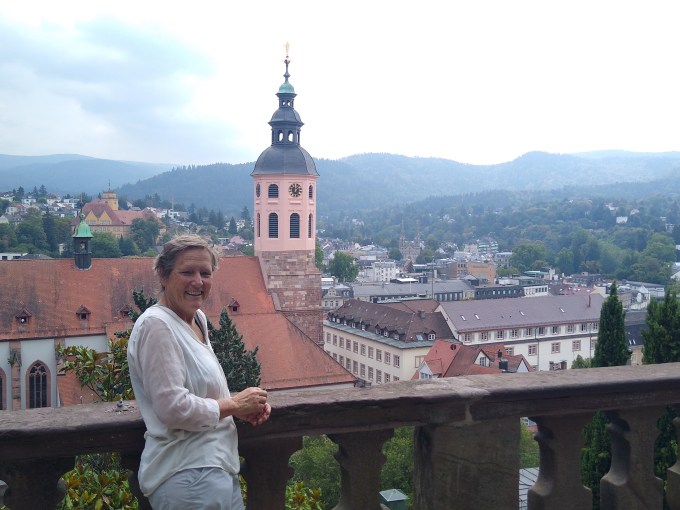
Baden-Baden, pictured above, is a beautiful and historic town, dating back to Roman times. It has a well-preserved Roman bathhouse, impressive town centre, old churches, a beautiful park – but it doesn’t possess a single bureau de change! Having stocked up with Norwegian krone in advance of our trip, in case our UK credit and debit cards didn’t work everywhere (they didn’t, but more about that in a later blog), but having spent less time than anticipated in Norway, we had loads of krone and not many euros. Staff in the banks shook their heads and suggested we try Stuttgart – 100km away! The relatively unhelpful attitude of the staff in two banks, the campsite and a mini-market was more an indication of disinterest rather than rudeness, but it was in marked contrast to the friendliness we encountered almost everywhere else.

Peter plotted our exit from Germany on a road called the L500, which I’d never heard of but apparently is much loved by German riders. We headed there after breakfast and enjoyed the first few miles as the road twisted and wound its way playfully up a mountain. The traffic was light, but it soon started to rain. Then we were in thick cloud, or possibly fog, reducing visibility to maybe 10 yards in places on an already very challenging and now slightly greasy-looking road. The morning’s ride suddenly became a matter of survival rather than unadulterated pleasure.

The Garmin will receive a blog of its own soon, but it is not a great tool for micro-managing one’s route in such situations – it’s too clunky and not great for seeing the bigger picture. Peter consulted Google Maps to find a way out of the cloud-bound area. It was a good thing, too – Google was able to highlight that our road was closed farther ahead, blocking our planned route into France, which the Garmin, not operating in real time, could not. With Peter giving directions over the intercom, we branched off the mountain road and descended into a valley, eventually emerging out of the cloud into much clearer weather and, near the French border, some welcome sunshine.

If past trips had taught is anything, it was that European motorways are rarely interesting. They’d also taught us that local roads in places like France and Germany take you through interminable villages with their little roundabouts, speed limits and speed humps. Many, perhaps most, of those roundabouts are so small and tight that there is no natural flow for a heavy two-wheeler, so it can be hard work. So it was that day, and after an hour of tedious travel we opted instead for the autoroute towards Paris and Calais. I remember on first long-distance trip in 1976 or thereabouts watching with envy from those rural French roads as the traffic sped past on the autoroute, which as an impoverished 22-year-old I shunned to avoid paying tolls. Yes, the fuel was more expensive on the autoroute, but we’d long since stopped caring, and €1.90 a litre for E10 no longer seemed extortionate after paying £1.90 in the UK earlier in the summer. We made faster progress toward the French coast and stopped for the night at a campsite in the medieval city of Laon.

Sweden brings a little sunshine and time to explore, but not huge warmth

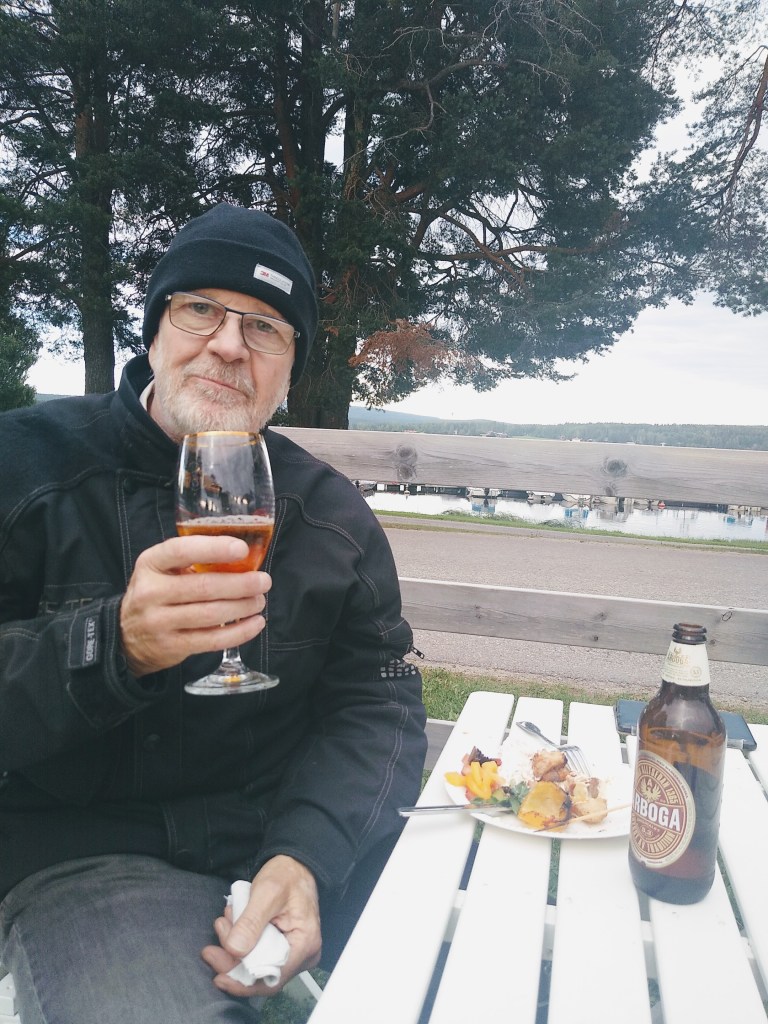
It was still raining as we left Norway, but the road was heading downhill, promising warmer temperatures, and the rain eased as we passed through Sweden. The promised sunshine materialised, and we enjoyed the empty roads as we headed towards the Baltic Sea coast. The rural limit here was a heady 90 kph in most places, which just felt that little bit more realistic. The Swedes love their camper vans too, and they’re also dedicated to staying below the limit, but here at least there were many more overtaking opportunities. The scenery became less rugged, giving way to vast swathes of pine forest, which gets a bit boring after a while. I prefer the open vistas of Norway or the American west and mid-west, where you can see for what looks like 50 miles in all directions. We spent our first night in Sweden at a lakeside campsite in Bollnäs, eating barbecue and drinking great beer while a guitar-playing duo gave excellent renditions of hits from the 70s and 80s. We took a walk along the lake and found a Swedish pop group playing to a huge live seated audience in a nearby park, doing justice to an array of English and what I assume were Swedish classics. Out on the lake, a flotilla of about 30 small boats lay at anchor, each with its own concert party going on. Four people even had a dining table and chairs on a pontoon!

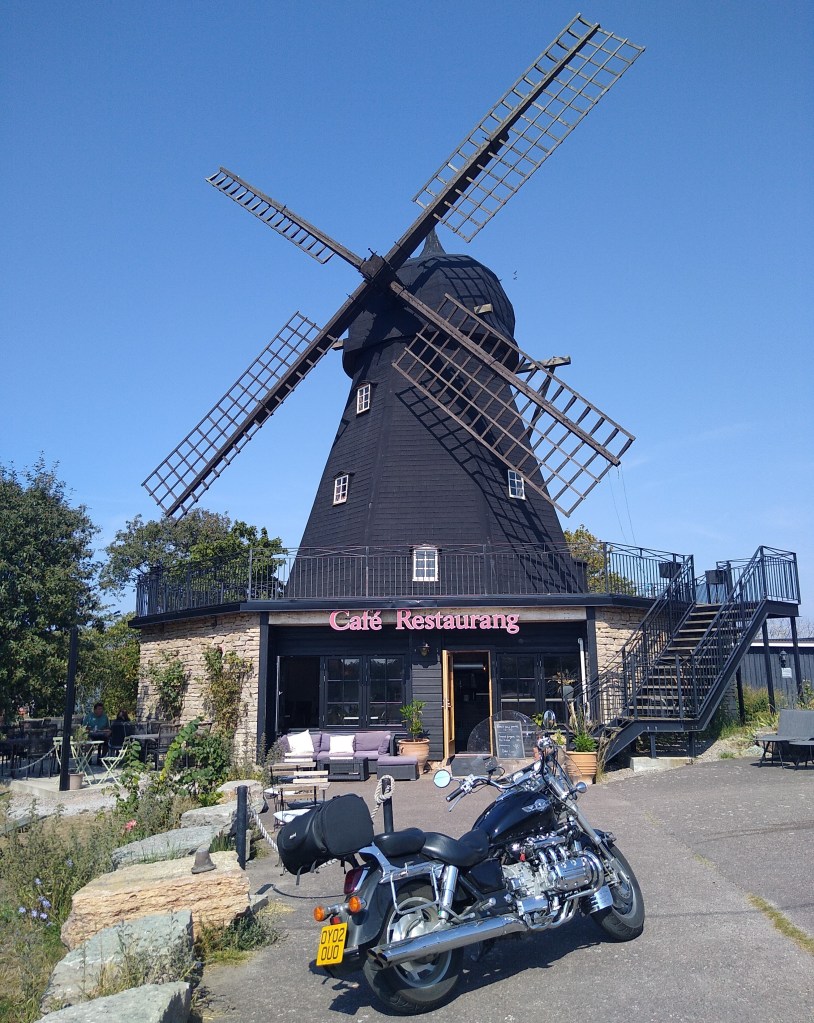
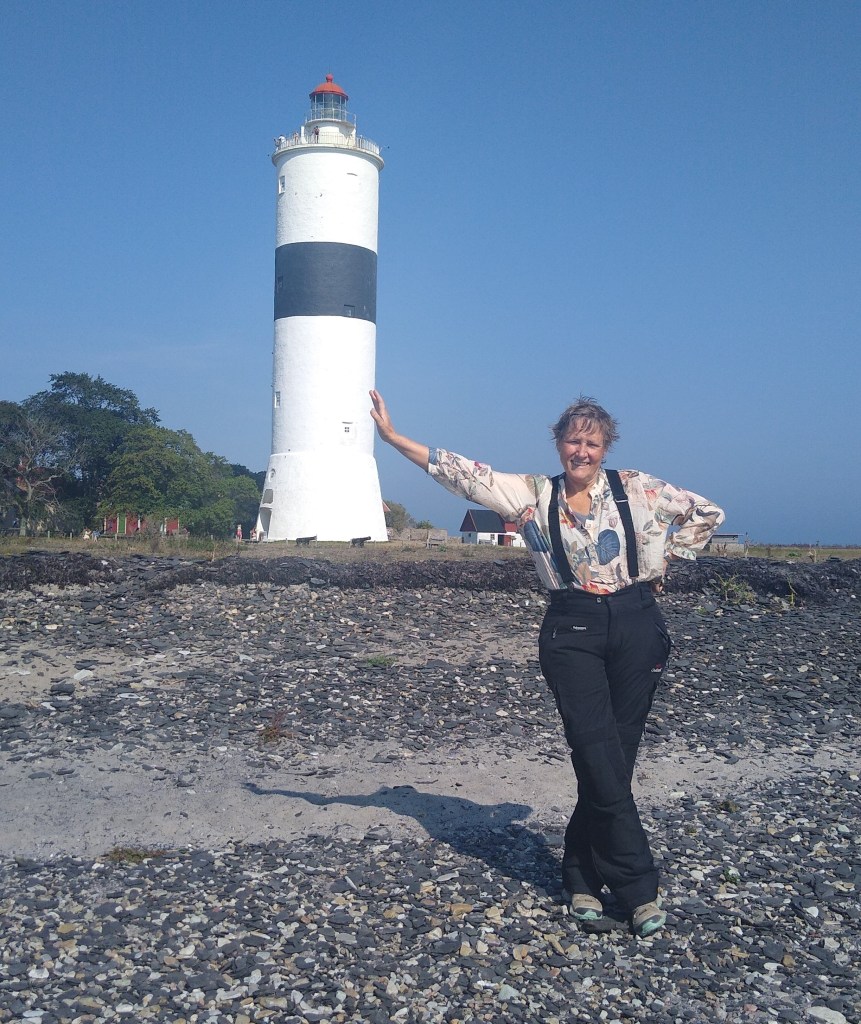
Having cut out the northern leg of our itinerary, we were now several days ahead of schedule. That was a first; on almost all previous trips, before we retired, there was a finite amount of time to reach our destination, get home again and head back to work. That led to sometimes more rigorous daily mileage targets than seemed ideal. Now, we considered various options, including riding north around the Baltic Sea to Finland, since we were in the area, but it looked a hell of a long way and maybe a bit too close to the dreaded Russia. We’d have to ride through Russia on the way back, or take a ferry to Estonia – way too much extra travelling. A gentle meander southward through Sweden, into Denmark and on to Germany seemed more appealing. Lunch next day with some Swedish friends in Uppsala brought the suggestion that we might enjoy the island of Öland on the east coast, so we spent a couple of nights there. You reach the island via a 6km bridge, which gave us a foretaste of the next stage of our journey.

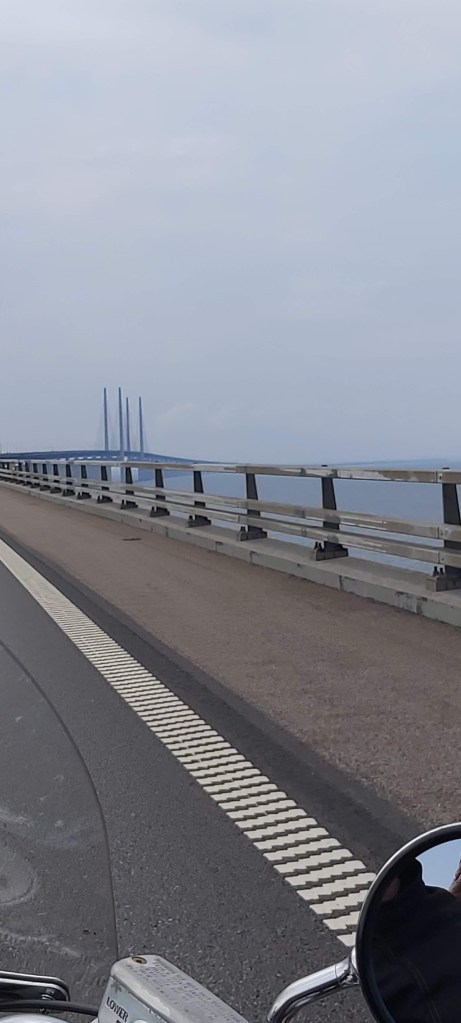
One of the highlights of the trip was always going to be crossing the impressive five-mile-long Öresund Bridge between Sweden and Denmark. We’d enjoyed the Nordic noir drama The Bridge a few years ago, in which the bridge played a central part (quite literally, if you’ve seen it). The bridge itself was actually a bit of a disappointment. For one thing, there are no stopping places on either side from which to take photos (credit for the one at the start goes to Julian Hochges and Unsplash); for another, the wind was very strong and it took most of my concentration to stop being blown off the structure, leaving little time for admiring the view. Indeed, we chatted to an Irish biker on the Eurotunnel train a few days later and he told us of his experience driving a 38-tonne truck across the bridge in similar winds, his foot braced against the side of the cab to help him keep everything in a straight line.

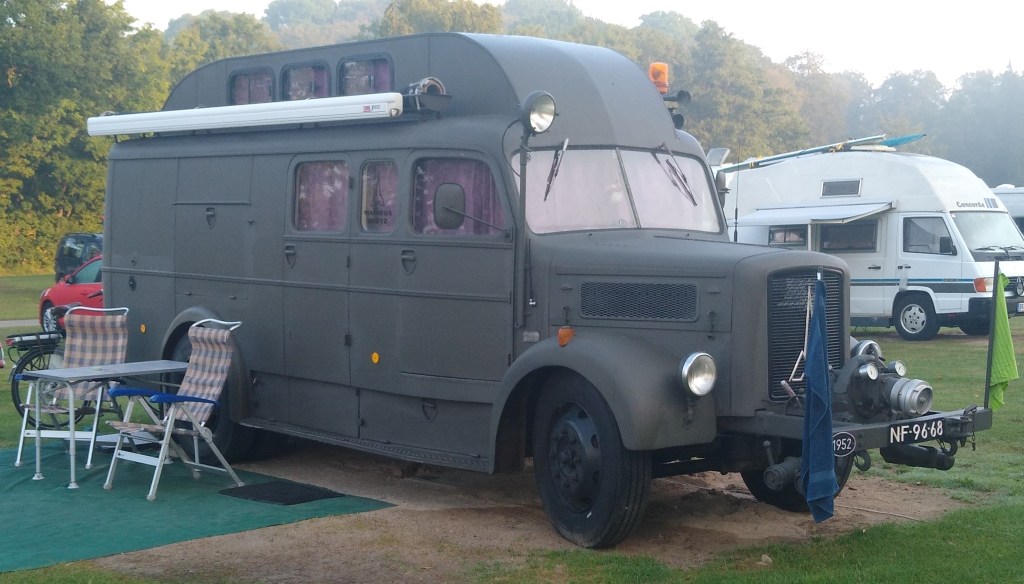
We found a decent campsite at Rødby in south-eastern Denmark, just 15 minutes from the ferry that would take us next morning to Puttgarden in Germany. I’d bought a flexible ticket with Scandlines (an €11 premium on a €49 fare), so it was easy to change the date. The campsite was right on a lake and within walking distance of the town. Among the usual array of camper vans and caravans was the green vehicle you see here, clearly an army ambulance or fire truck dating from 1952 and converted into a camper van.

We woke early next morning to a beautifully misty lake and headed off to catch the ferry to Germany, which took just 45 minutes on a mill-pond surface. One of the advantages of being back on German soil was the price of petrol there: standard E10 cost as little as €1.66 a litre in places, but more typically €1.69, which was significantly better than the €1.80-€2.00 we’d been experiencing elsewhere. The 2022 price of fuel was a consideration for this trip, but we figured we’d just pay whatever it took – it was either that or give up touring, which is not an option!

Norway is stunning but a little more August sunshine wouldn’t go amiss…

By now, my love affair with the traffic-free Norwegian roads was losing its ardour. Yes, the roads are excellent and yes, they are a rider’s dream, but oh! The speed limits! And the drivers! The speed limit on most stretches of country road is 80 kph, or 50 mph. My speedo is in mph and the Garmin is set to mph, converting from metric, so I mostly thought in miles. The most a Norwegian driver seems willing to hit on those roads is 48 mph, with many opting for 45 or lower. And each time you enter a village with a posted lower limit you can see the brake lights come on as they brake just before the actual sign. Maybe that’s the correct way to drive, the way all right-thinking people drive, but I’m used to people driving at just over the limit – maybe 8-10% above. And easing off on the throttle when entering a lower-limit stretch, letting the engine braking take you down to the required speed. But these guys observe all the limits with a religious fervour. And since the roads often lack obvious, safe stretches for overtaking, you’re stuck behind a procession of camper vans for far longer than seems good. It can get a bit frustrating.

Given the terrain, it’s no surprise that Norway has its share of tunnels, some of them quite long. One even came with a large roundabout in the middle, with roads leading off it in two different directions. Now that was a first! They’re still building new tunnels, it seems, or at least improving the existing ones: on a couple of occasions, we had to join single-file processions along long, freshly tarred diversions to avoid major roadworks. It slowed progress a bit, up there on the snowline, but it was impressive to see the planning and effort behind the whole project.

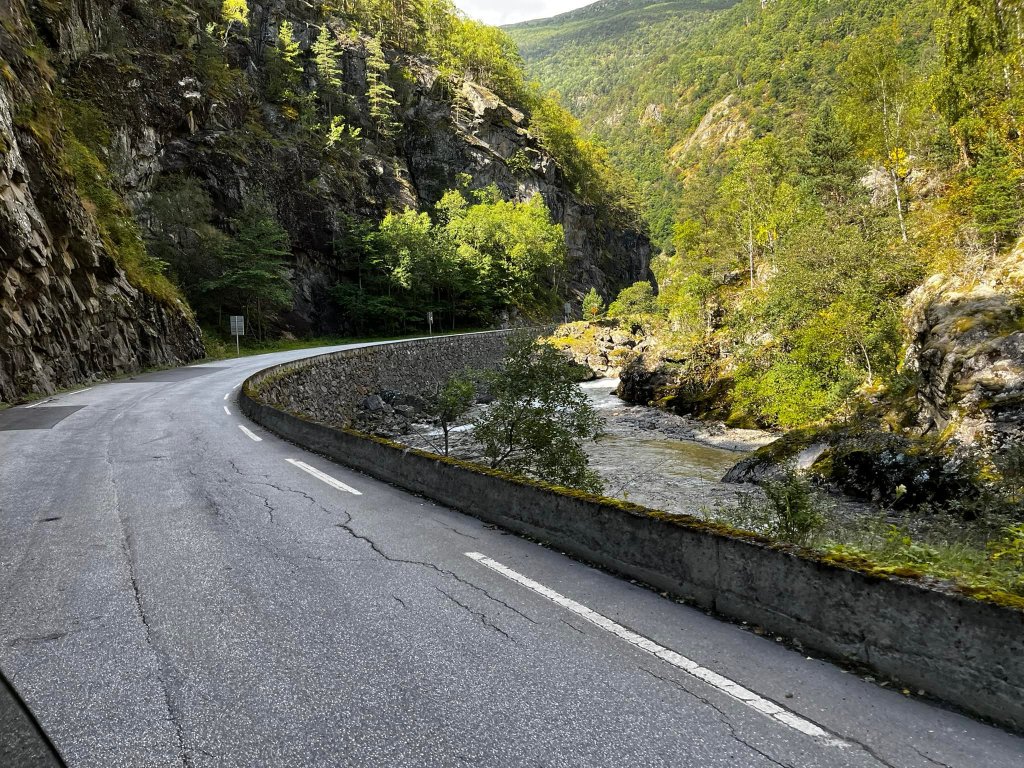
Typical Norwegian country road, complete with roadside river. The surfaces are usually better than this. Photo courtesy of Tommy Oppegaard

The Røldal campsite was conveniently situated on our route and unpretentious, with great mountain views. Unlike so many campsites we’ve used in France and Italy, this one had no restaurant but we dined on locally procured beer and sandwiches in the reception area, which allowed us to charge our intercoms, phones and Kindles. Campsite pitches with electricity are all very well, but they don’t take a normal plug adapter, so reception areas and washrooms became our go-to places for recharging. The Kindles last for about 14 hours, which gives us five days’ use or more, but the phones needed charging every two days at least. The Sena headsets built into the Shoei helmets work really well and their batteries lasted about a day and a half, but we found that if we spoke less often we could make them stretch to two days, which we could live with.

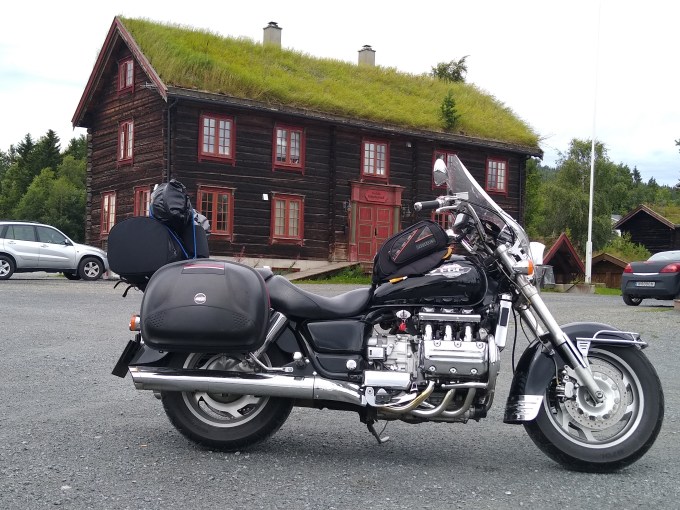
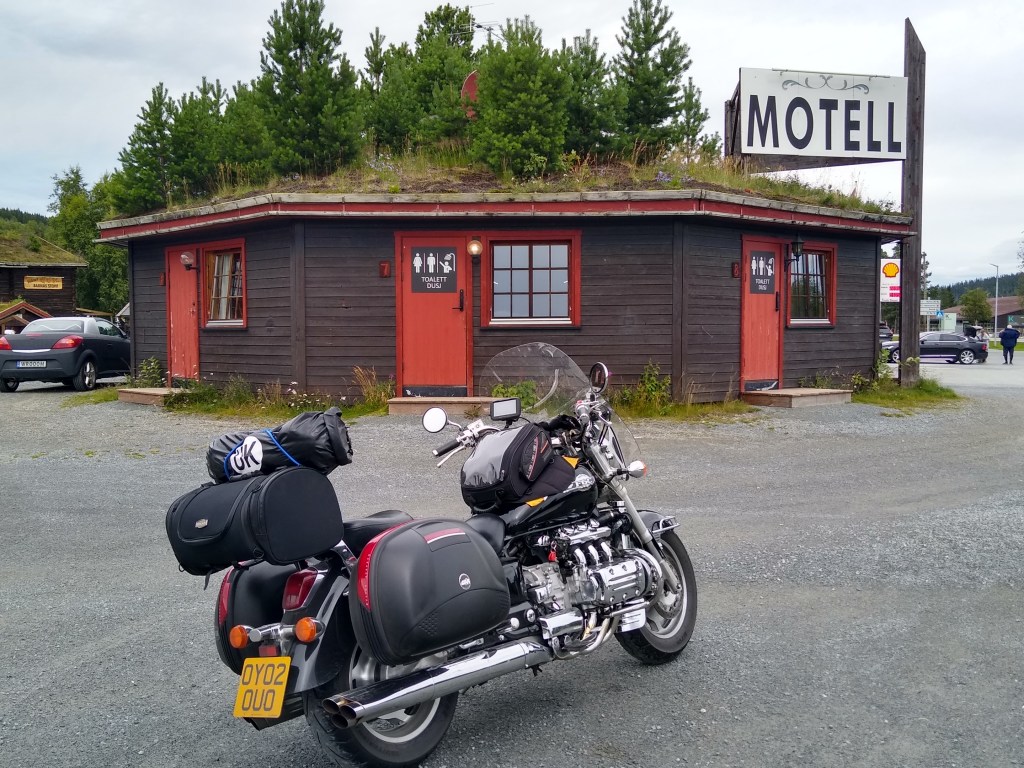
That night’s campsite was at Smedsmo in Vågåvegen, about halfway to Trondheim, the next waypoint on our route to the Arctic Circle. It was unmemorable (as in neither one of us can remember anything about it, apart from the fact that it yet again required a tent-side meal of supermarket-bought supper) but it gave us a chance to have a fresh check on the weather forecast. Rain was predicted for the following evening and the day after, so we decided to skip camping and booked ourselves into a hotel in Trondheim. Along the way, we saw vast numbers of those typically Norwegian red wooden houses, with the cladding panels placed vertically rather than horizontally. With their white wooden trim, they’re wonderfully picturesque. Now, however, we were seeing more and more with turf on their roofs, many even with small trees and bushes growing out of them. One assumes that the earth provides great insulation.

The road from Vågåvegen to Trondheim was light on traffic, especially when we moved on to the motorway section, and got us into the city by late afternoon in time to play tourist. The Chesterfield Hotel is unpretentious, clean, comfortable, central, and cost £103 for two, including an excellent breakfast – we can heartily recommend it. Okay, the bar across the street was playing We Will Rock You loudly at 03:25, but we were both so tired we soon got back to sleep.

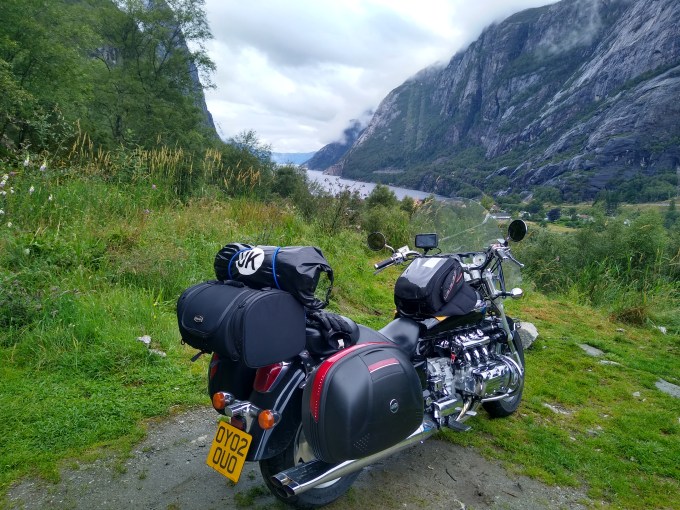
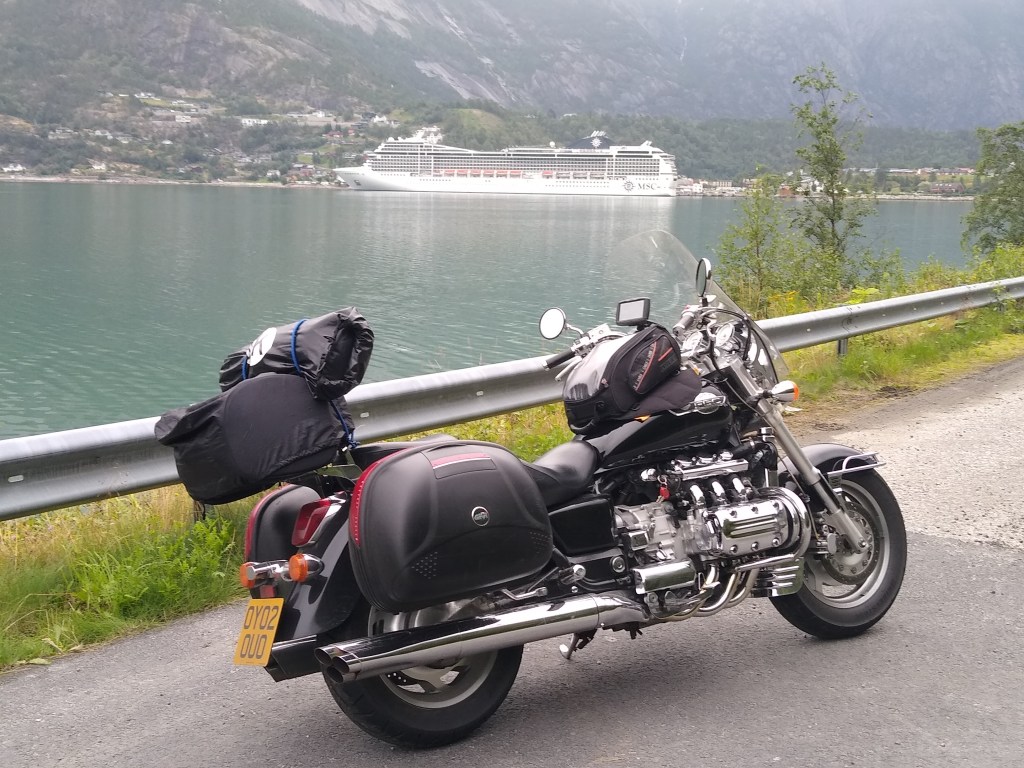
There are two main ways to see the fjords: from sea level by cruise ship or from the top by motorcycle, which is my choice every time!

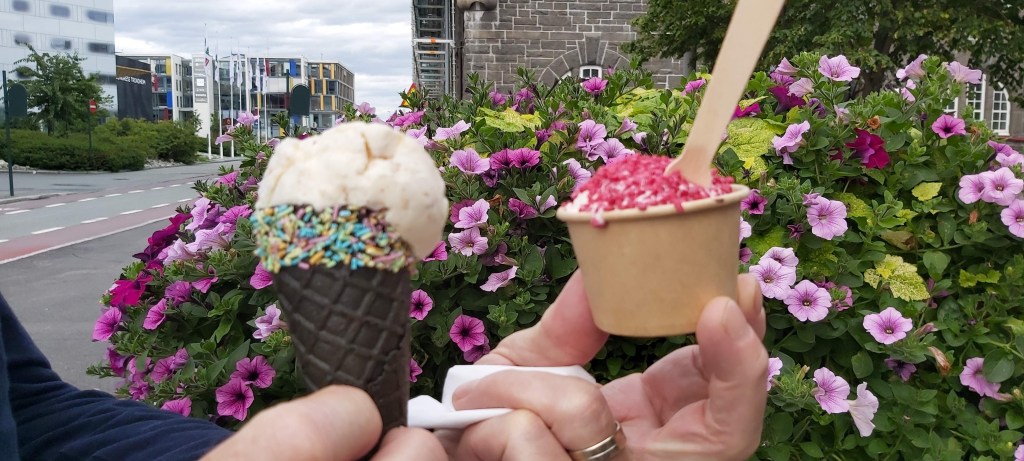
Trondheim is a fabulous city with great architecture and lots to see, including an impressive cathedral and a beautiful fjord. The centre abounds in chic eateries, shops and bars, busy but not over-crowded with happy revellers. A stroll by the harbour introduced us to our first-ever £5 ice-cream cone, which was topped later that evening by a wonderful but horrendously expensive Thai dinner (more than £100 for two, albeit with a glass of beer and a glass of wine apiece).

Ice creams were delicious – at £5 apiece!

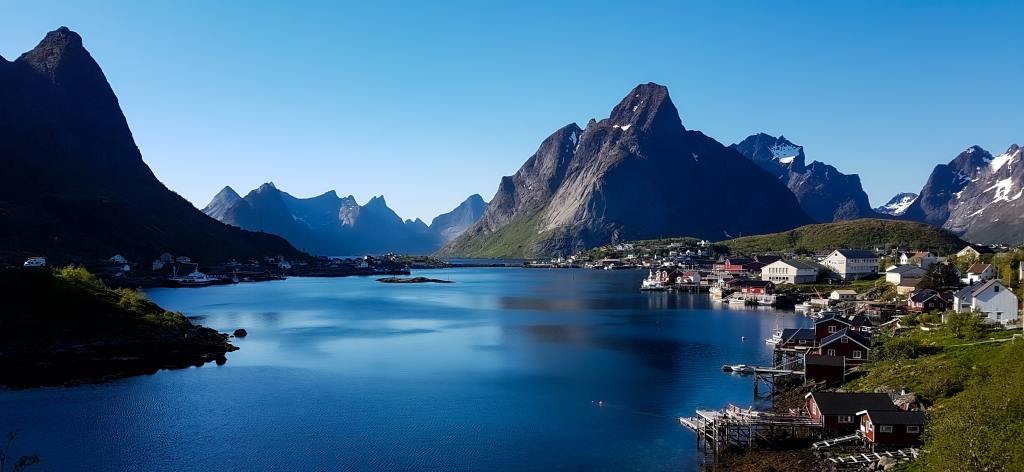
Over supper we looked at the 32-hour round-trip that still lay ahead to get us to and from the Lofoten Islands, plus the 350km trip across the islands themselves. We checked the weather for the area and found only rain for the next 10 days. Peter is a master of forecast-checking and she found that if we headed east into Sweden instead of north, we’d find ourselves in warm, sunny weather for the foreseeable future. Much though we wanted to see and experience the stunning islands for ourselves, the prospect of riding 2,000+ kilometres in rain for that privilege held no appeal. With deep regret, we messaged Per Arne Olsen of VRCC Norway, who had offered to give us some pointers on must-see places, and explained the change of plan. He replied to say he totally understood: the winds there were already howling at 35 knots, it was raining, and he planned to leave shortly anyway to escape the weather! Thus reassured, we headed for Sweden and some sunshine. It was a pity, given that the Lofoten Islands had been our target, but it pays to be flexible.

The stunning Lofoten Islands would never have looked this good if we’d pressed on, sadly. Photo courtesy of Paul Taton and Unsplash