Simple speeding fine becomes £1,000+!

Believe it or not, there is one technical motoring offence considered to be 10 times more serious than breaking the speed limit. No, it’s failure to disclose the identity of a driver or rider alleged to have been speeding.

I found this out to my cost when I returned home from a very enjoyable seven-and-a-half-month trip to the Middle East and South Africa. The sun was shining, the weather was dry, and all my trickle chargers had kept my bikes and car alive. Joy!

Next morning, however, was a vastly different story. I started opening the mountains of mail that had piled up in my absence. One of the first envelopes contained a notice from a company called Marstons Recovery saying I owed them £1,089 in unpaid fines. For what?! A scam, surely. I continued to open the envelopes and the story slowly unfolded.

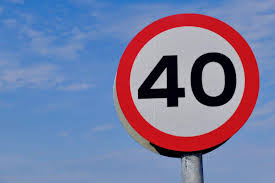
Apparently I’d been caught by a speed camera doing 47 mph in a 40 mph zone two days before I left on my long odyssey. I found that odd, because I’m always careful these days not to exceed the posted limit, but I had indeed ridden the route indicated that day and so I guess the information was correct. So be it: a fair cop, and all that.

The problems began with all the stuff that happens afterwards. You have 10 days to inform the police who was riding the bike at the time of the offence, but obviously I didn’t – I knew nothing about it, because all the letters arrived after I’d flown overseas. So I didn’t see the reminder, threatening a £1,000 fine and six licence points if I refused to provide the information demanded. Of course, I couldn’t respond to that, either.

Then came a letter from the court saying that I’d been fined £1,014 and given six points on my licence, which helped explain the letter from Marstons Recovery telling me I owed them that money – plus their own collection fee of £75. Ye gods!

Needless to say, I spent some time over the next two days investigating my options. Calling the number on the Cheshire Magistrates’  Court letter resulted in a voice message saying that my call couldn’t be taken at this time. I called five times and got the same message. I then emailed the court and received a reply advising me to contact Marstons and a body called the Single Justice Service, which I duly did. At least this time I was put into a queue system – a 25-minute queue but an improvement, nonetheless. A helpful lady said she’d email me a link to an online form I could fill in and submit to have my case reviewed in light of my circumstances. She said that Marstons would be informed about my request and that they might consider putting the bailiffs on ice while the matter was reviewed – but suggested I call them too.

I did, and another very polite lady said that they were acting in compliance with a court order and couldn’t withdraw their demand. However, they could offer me a payment plan and they would repay the amount in full if the court review found in my favour. I was pretty confident that it would because it turns out there’s a statutory obligation to take into account the defendant not being aware of the charges, the hearing or the court date. It happens quite a lot, it seems – mainly when someone moves house and fails to inform the DVLA of their new address. I took the payment plan, figuring that I might get the whole mess sorted out before I had to pay the second or third instalments.

Having submitted my reasoning for having the case reviewed in court, including a copy of my airline ticket to show I’d been out of the country, I was surprised to find that the response came by email, not regular post. If only the police had been required to notify me by email, perhaps in addition to snail mail, then the whole crazy situation would not have arisen. The second surprise was that I now had a court date less than two weeks away where I could plead my case.

I wasn’t particularly nervous about appearing in a magistrates’ court and was fairly confident that I could present my case articulately. However, I was unprepared for the daunting scene that awaited me inside the court doors. The usher led me in and pointed to the dock, a raised platform surrounded by three tall panels where I was told to stand. In front of me were three magistrates, sitting on a tall dais way higher than the clerk of the court, who himself sat on a dais above four court officials working away at computer terminals. And there was little ol’ me.

The clerk of the court was a star. He asked me some basic questions, read out the details of my case, asked me to confirm that they were correct, and reiterated to the judges that I was out of the country when all the paperwork started flying and so was incapable of responding. I saw a copy of my flight details pop up on one of the magistrate’s screens. The judges looked at each other, spoke quietly, nodded among themselves, and told me that the original court conviction for not identifying the driver would be quashed, and with it the original sentence. A wave of relief swept over me, helped on its way by the very real feeling that I was standing in a dock like a criminal.

The lead magistrate then asked me how I would now plead to the original charge of exceeding the speed limit. Guilty was my only realistic option. They conferred some more and said that I’d be fined £100 plus costs of £40, including a compulsory “victims’ surcharge”, and would get three points on my licence. Never has receiving a speeding fine brought such a sense of relief!

The issue for me is that this whole episode caused a lot of expense, inconvenience, worry and wasted time. Had the police been required to notify me electronically of the offence at the outset, I could and would have ‘fessed-up to being the rider and paid the fine on  the spot. Ah, you ask, but did they have my email address? In theory yes, because I always supply it and my mobile number when taxing my vehicles with the DVLA, which is where they went to get my postal address. Providing your email address is voluntary, but I do it anyway. It’s 2025, and I reckon the majority of drivers and riders have an email address. Those who haven’t could still be reached by post. Eliminating the postal delivery for all others would have the country a whole bunch of money, too.

It also raises the question of the logic behind imposing a fine of £1,014 for not informing the police who was riding. The reason has to be that it allows the penalty points to be allocated to the appropriate person: unfair to award them automatically to the registered owner if someone else was riding. The question must be whether the allocation of penalty points has made a significant difference to road fatalities? If it has not, then there’s a whole slew of admin involved that could be eliminated by copying countries that impose only a simple fine for speeding.

Adding insult to injury, the whole case hinged essentially around a single mile per hour. I did 47 mph in a 40 zone; at 46 (10% plus 2 mph) the police would not have prosecuted. I know there has to be a cut-off point somewhere, but this just made the episode even more frustrating.

If you see a Gold Wing or a Rune pottering around this summer at a few mph under the posted limit, that’ll be me!

28-year-old Suzuki TL delivers mountain bliss

There are few better feelings than riding a motorcycle you love through flowing bends on a warm sunny day. We all know this. For those of us who live or spend a lot of time in the northern hemisphere, it might happen in July or August, if we’re lucky – but definitely not in early February.

You have to have lived in northern Europe to appreciate fully the sheer joy of warm sunshine at a time when experience tells you it should be very cold and probably very wet. I  remember in my days as a journalist being flown by Honda to the south of France in December 1978 to test the new CX500. We’d taken off from London Gatwick in snow, yet that same evening we were in T-shirts strolling by the Mediterranean in 21 degrees C. Bliss.

One recollection from that launch was a conversation I had with a young member of the Honda design team responsible for the CX500. This was an era when Japanese bikes in general didn’t handle or stop as well as their European rivals. I had recently sold a Ducati GT750, which handled and stopped particularly well – even if running reliably was a bit of a stretch! I asked the engineer why Honda couldn’t make a bike more like a reliable Ducati, and he grinned widely. He told me he understood completely, because he rode a Ducati to the factory each day, much to the irritation of some of his colleagues because they felt he was being disloyal. “Wait till you ride the CX, and you will see we are making progress,” he told me. He was right about the progress, but it was still no Ducati…

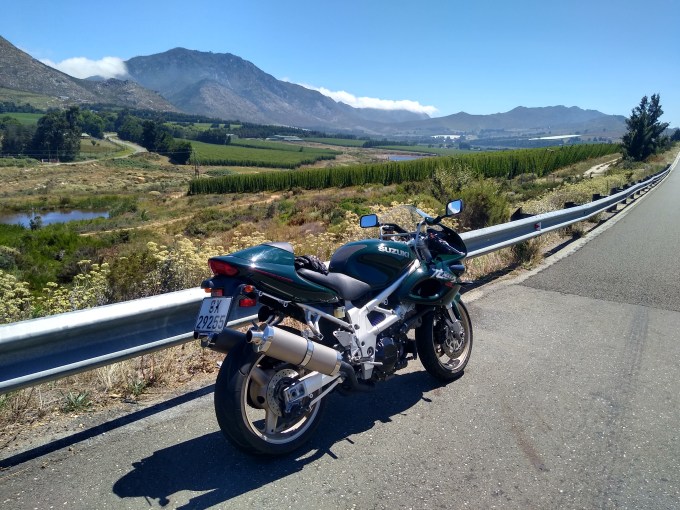
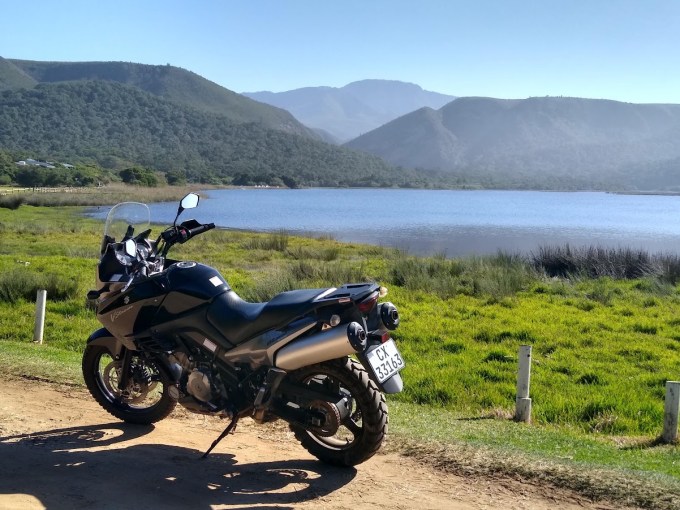
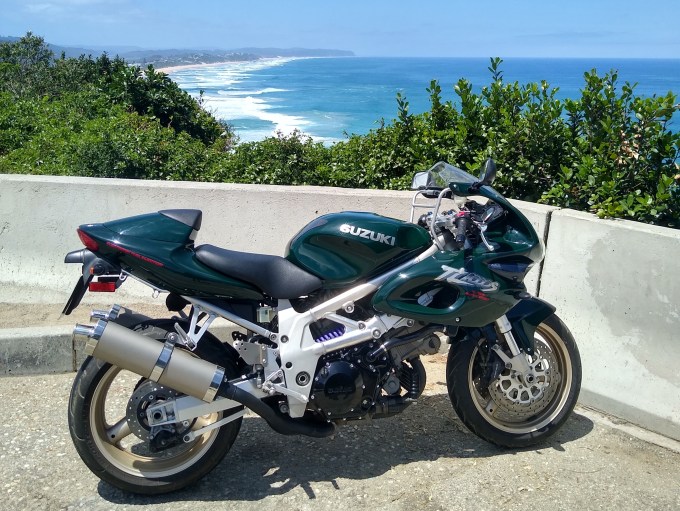
The subject of today’s tale is my trusty 1997 Suzuki TL1000S, which I’ve owned for the past 21 years, back on the road after having its front brake calipers cleaned and new seals installed. The location was South Africa’s Garden Route, about as far south as you can get before hitting Antarctica. It was 29 degrees C under clear blue skies with a gentle breeze and a few small fluffy white clouds as picturesque features.

The roads, relatively busy until a few weeks ago due to the influx of tourists for the Christmas holidays, were almost deserted. In sharp contrast to Britain’s roads these days, they were pothole-free and smooth, which was a welcome bonus.

My wife and I had been busy with a whole bunch of house maintenance and entertaining visitors, among other things, but the bulk of the work was happily behind us and our latest guests had just left. Our dirt road, which is our only access to South Africa’s tarred road network, had been abominable in recent weeks, a mass of corrugations and potholes that threaten to tear rugged vehicles apart. It even destroyed the throttle sensor on our pick-up truck a few weeks earlier, so there was no way the relatively stiffly sprung TL was going to cope. But the grader guy was just here a few days earlier to smooth it all out, creating a window of opportunity to get the Suzuki out of the garage. It was time to ride.

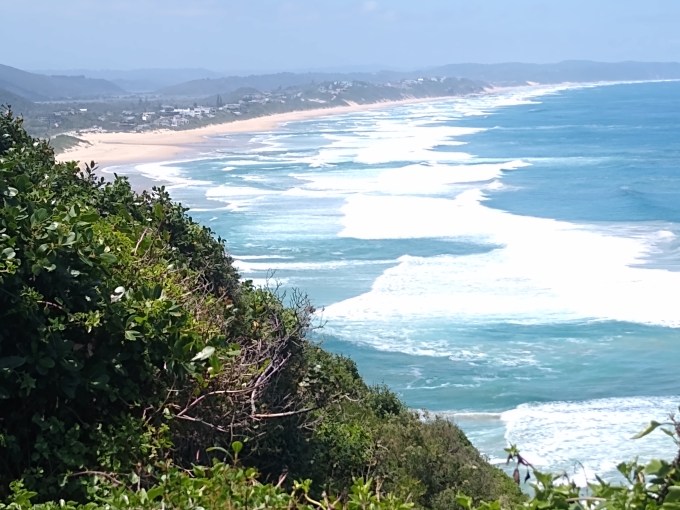
The N2 is the main highway connecting South Africa’s east and west coasts through the southern end of the country. It’s just two lanes for most of its length, but with light traffic that’s not always an issue. I made it to Wilderness in time for a chicken mayo sandwich and Pepsi Max lunch overlooking the beach. Sometimes you get to see schools of dolphins playing in the waves below, but not today. The view, nevertheless, was as spectacular as ever.

Onward to the large regional town of George, and through it to the start of the Outeniqua Pass. This is a beautiful road, blessed with scores of fast, sweeping bends and a few slower ones, climbing steadily from sea level to 800 metres before dropping down into farmland that soon gives way to the desert known as Little Karoo.

Speed limits are quite strictly enforced in South Africa, as much as a revenue-earner as for road safety. The speed cameras used to be grey and almost camouflaged, but in recent years the fixed cameras have been painted bright yellow and are pretty visible. Less visible are the mobile cameras, nasty little grey-green things that the police place meticulously in front of vertical posts and other road furniture to make them almost impossible to detect. The rules state that there has to be a cop stationed and visible within a few hundred metres of the camera, but of course this almost never happens. The good news is that there are no licence points for speeding, just fines, which are typically about 200 rand or £9, so getting caught speeding isn’t a disaster.

This meant that I could concentrate purely on the road ahead as it wound its way upward through the foothills of the Outeniqua mountains. The bends flow easily from one to the next, connected by shortish straights, against a stunning backdrop. It had been a while since I’d stretched the TL, and it was pulling so strongly up the hill that I thought I’d change up to sixth – only to find I’d been in top gear for the past few miles! The bike accelerated so easily from bend to bend, and I’d forgotten the strength of its pulling power. The almost total absence of traffic – one car and one truck the whole way up the pass – added to the sublime pleasure, and I found myself changing down to fifth and even fourth once or twice to enjoy the thrust. But sixth would have sufficed the whole way.

The engine felt smooth and the bike handled as steadily as I always remember it. It’s been out of production for about 24 years and technology has moved on significantly since its heyday, but honestly it offers me so much pleasure I can’t imagine ever replacing it. Yes, the Gold Wing is infinitely better as a tourer, the Rune a unique riding experience, the V-Strom and Tiger adventure bikes more suitable for the local dirt roads, but the TL is the perfect sports bike for me. And mine still has just over 9,000 miles on the clock from new…

I was two weeks away from turning 71, and I think the aging process is responsible for the tingles I get in the fingers of my right hand after an hour or two in the saddle. I suspect some form of damage resulting from a torn bicep tendon 10 years ago, and the TL activates the sensation more than the other bikes. The Valkyrie used to do the same, despite its turbine smoothness, and I suspect it’s a riding position thing: high bars and low bars. The flatter bars on my other machines are less bothersome.

Having reached the farmland below the mountains (photo above), I made a U-turn and relived the twisties back up the pass and down into George before heading for home, having enjoyed the best few hours’ riding I’ve experienced for many a year. As I said, bliss!

Rune finally gets a new front tyre – in just 30 minutes!

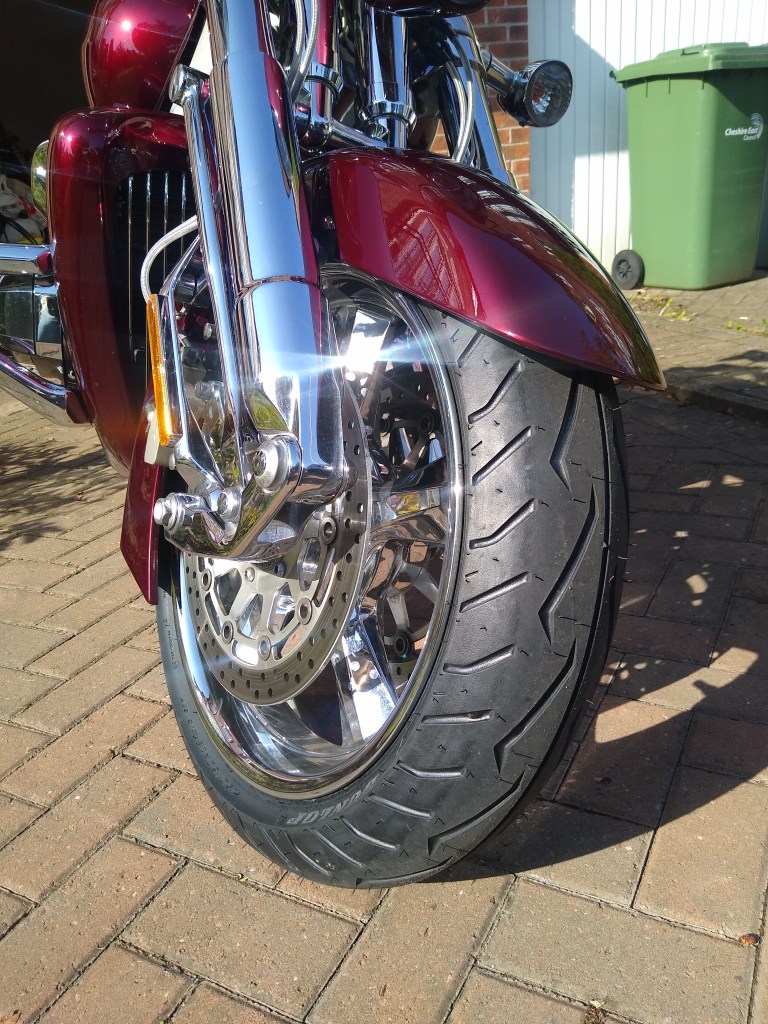
In the long-running quest to put a new front tyre on my Honda Rune – a simple enough task, you’d have thought – I finally got it sorted. Such joy!  In the end, it took only half an hour and cost a mere £35 for labour, plus a not-inconsiderable sum for the tyre.

Regular readers may recall that the much-loved Rune had worn its front tyre down to – and possibly slightly beyond – the legal tread limit. Finding the OEM tyre, a Dunlop D251, seemed impossible, but folks on various Facebook groups offered advice on alternatives, with Metzelers a favourite, including using larger-section tyres on the front.

The other issue was finding someone who could remove the front wheel. One major dealer in my area had spent three hours wrestling with the problem and had to admit total defeat. He recommended a motorcycle tyre specialist who said he’d get back to me but never did. The bike weighs 440 kg and no one seemed to have a lift designed to handle the weight and touch the necessary support points. A kind Rune forum member near London very kindly offered to let me use his own lift if I could organise the tyre; unfortunately he lived near London and I wasn’t prepared to risk a 200-mile trip on what was left of the front rubber.

The Rune sat in my garage for the summer while I travelled and got on with other things but a few weeks ago I called Hunts, a former Honda main dealer in Manchester. They are now a big Yamaha dealer but said they could handle the matter. Yes, they could order an OEM front tyre. The supplier was quoting delivery in three days, but they did add the caveat that the last time they ordered a Dunlop tyre it took two years to arrive! Oh, and the price of the tyre would be £260, which was way more than I’d ever paid for a motorcycle tyre and £10 more than I’d paid for a high-spec tyre for my Jaguar XF when I lived in Abu Dhabi. But, faced with the possibility of a Rune that couldn’t otherwise be used at all, it seemed reasonable.

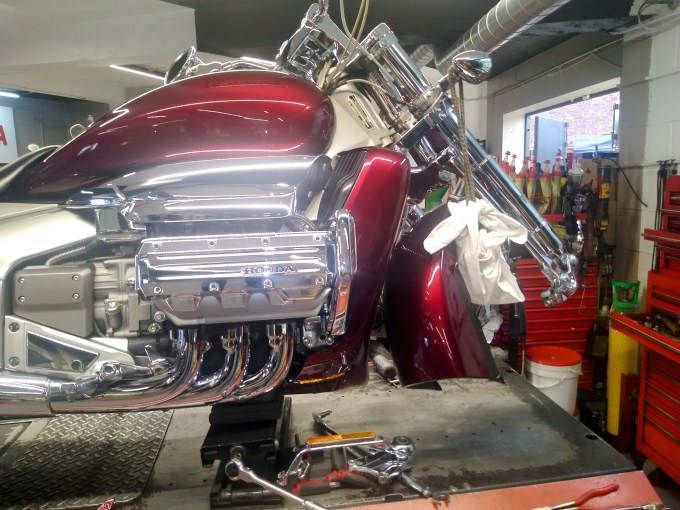
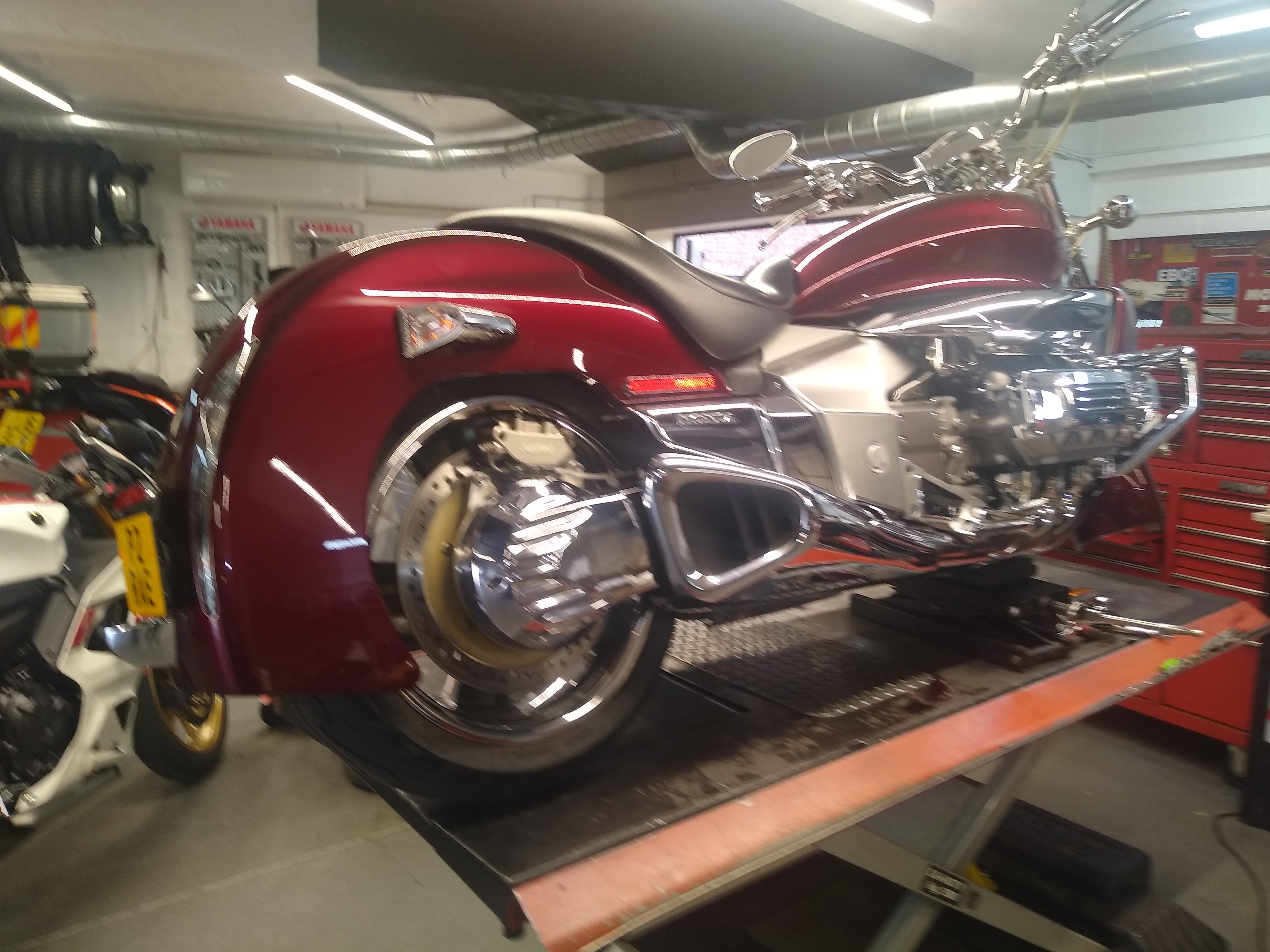
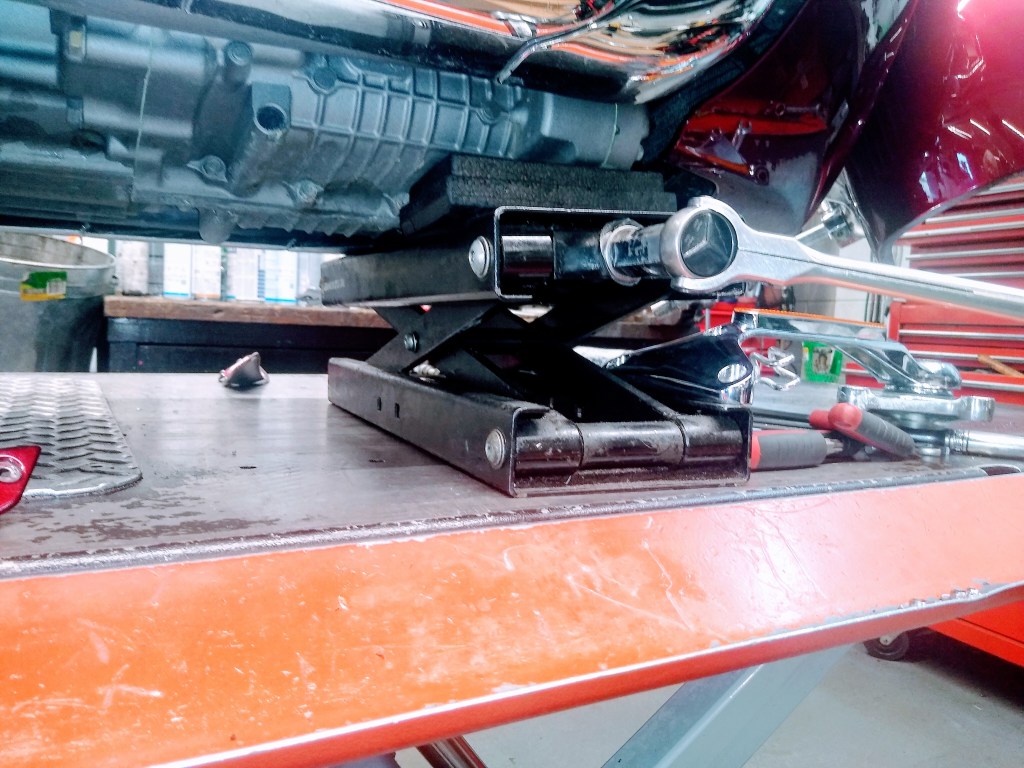
I needed a dry day to get the bike safely to the dealer, 19 miles away. With the fickle British summer of 2024, that took some planning and a re-booking when the weather didn’t match the forecast, but one recent morning I finally headed off to Hunts to get the tyre fitted and the annual MOT (roadworthiness, for those outside the UK) test done. The service department produced the tyre (saying I was lucky to get hold of such a rare beast – and they weren’t kidding), placed the bike on a hydraulic ramp, and got to work. The big problem for anyone attempting a Rune tyre change is finding a way of supporting such a heavy bike with no obvious jacking points. There is a special angle-iron support frame thingy that came with the bike, but this got lost by the shippers en route from South Africa. Hunts simply placed a small scissor jack under the crankcase, protected the crankcase itself with some thick rubber matting, and raised the front end. Off came the wheel, then the old tyre, on went the new tyre, the wheel was balanced and then reinstalled. After all the drama, all the head-shaking, Hunts Motorcycles of Kingsway, Manchester, completed the job in just 30 minutes and charged the standard rate of £35. The MOT test was a doddle, as always, and I was soon back on the road with a fully functioning Rune on a rare warm and sunny autumn day. Bliss!

Our smallest and largest Hondas hit the Dales between rainy days

Great Britain has had a rubbish summer. I know this for two reasons: first, I wasn’t there, and secondly because the Met Office confirmed that it’d been the coldest summer for nine years.

I spent June, July and most of August out of the country, staying at our place in South Africa. But because the technology makes it so easy, I frequently checked the weather back home and found that, almost every time I checked, it was warmer and sunnier in the depths of South Africa’s winter. This was great for riding, because most days down there it was in the low 20s, dry and sunny. Unfortunately, I didn’t get out on the bikes that much because my wife and I had committed to major house maintenance: sanding all external woodwork (and there’s a lot of it) back to bare wood and applying three coats of varnish, with careful application of wire wool and turpentine between coats. That took about seven weeks.

Then, in the absence of a plumber willing to do the work, we spend about three weeks installing a whole new wastewater treatment system, which was exacting, laborious and ultimately successful. In between times, I got out on the newly repaired V-Strom and the trusty Tiger 800; unfortunately, the TL1000S had developed a bad case of seized front brakes, so the green beauty had to stay in the garage. I’ll get to it next time.

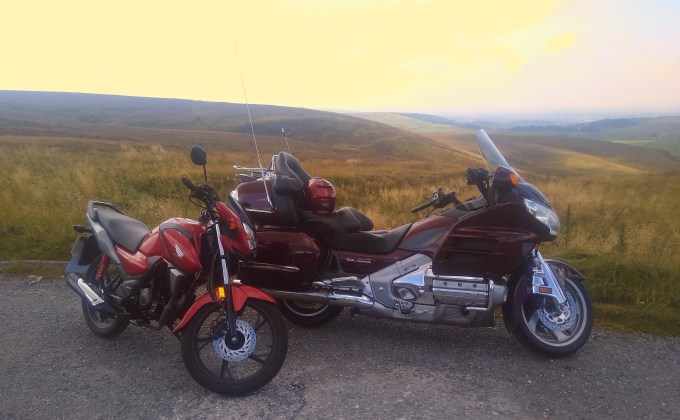
Back in England, it was now late August. My wife wanted to get some riding time in on her new CB125, and I wanted to get better acquainted with my “new” (to me) Gold Wing. Hah! They’d been on trickle chargers and were all ready to go, but it was raining. Or cold. Or both. We had to wait until about the last day of August to brave the elements, but we did manage it.

We rode some wonderfully empty backroads up into the Yorkshire Dales to the Cat and Fiddle pub, which was closed. Turns out it’s been closed for years and now operates as a whisky distillery. I’ve passed it many times without knowing! Happily, we were there for the roads, the views, the sunshine and the fresh air, and there was plenty of all four. It was the first time we’d used our Shoei Neotec 2 Sena intercoms bike-to-bike, which was novel, and they worked well. Normally for us it’s just a rider-pillion thing. There was a bit of whistle through the system from the wind, I admit, but we’ll figure that out. For now, it was just an opportunity to enjoy our new bikes. Peter professed herself happy with the 125, while I wondered why I’d waited so long to get a Wing. It’s fabulously comfortable, natch, but handles like a bike several hundred pounds lighter. Brakes well, plenty of power for my needs, great torque. It’ll take us back to Norway next summer and, if the weather doesn’t play nice, the Wing will take it all in its stride.

V-Strom on the road again at half the price

Sometimes the easiest solution to a motorcycle repair problem – as with much in life – is simply to spend the money and get it sorted. So it proved with the long-running saga of my Suzuki V-Strom and its broken magneto rotor.

Having had no success whatsoever with trying to source a secondhand rotor, I bowed to the inevitable and decided to buy a new one. The man who’d offered me a secondhand rotor for R5,000 had claimed that a  new one would cost about R14,000. I called my nearest Suzuki dealer, which was in Mossel Bay, about 140km from our home in Plettenberg Bay. Yes, they could get me a new rotor: it would cost R9,155 (about £390), which was a pleasant surprise, and it would be there within three days. The repair shop I spoke to a year ago said it would take three weeks! I bought it over the phone and collected it a few days later. The V-Strom’s future was looking more positive.

The next hurdle was removing the remnants of the old rotor. Online research had showed that this needed a blow torch and a compressed-air-driven impact driver. Late last year, a motorcycling friend in Plett named Stan had introduced me to one of his friends who had all the tools I’d need. A quick call to Stan now revealed the very sad news that his friend had since died rather suddenly. Stan suggested I try a local Plett repair shop called Muddy Offroads, which said they’d be happy to help.

They duly collected the bike in their bakkie, removed the old rotor, installed the new one, installed a new oil filter, filled the sump, and it was ready the next day. The only problem was the battery, which was only a few weeks old when the magneto failed a year ago but had clearly not enjoyed being on trickle charge for the past year. That would take an extra day. The whole job involved three hours’ work which cost about £65, plus £47 for the battery and £42 for the oil. Okay, the oil seemed a bit pricey but everything else was a bargain. They’d even cleaned and lubed the chain, so the  logical thing to do on picking the bike up was to take the slightly longer way home, via some empty local roads with a few twisties thrown in. The total cost of repairs, including the new rotor, was half what the other bike shop quoted me last year.

It felt wonderful to be on the V-Strom again after its 14 months of enforced idleness. It really is a fabulous bike and truly put a big grin on my face. I’ve ridden all my other bikes in that time – the Ducati and the Valkyrie (both since sold), the Rune, Gold Wing, TL1000S, Triumph Tiger XC800 and Yamaha TW200 farm bike – and they are all great at what they bring to the party, but the V-Strom has its own unique, relaxing cadence.

The grin was still there yesterday when I rode it out to Sedgefield and Karatara in 23-degree sunshine (that’s what passes for mid-winter in these parts). The bike was still its comfortable, sure-footed self. It fulfils the same role as the Tiger 800, and has only 21,000km on the clock from new, so we’ll probably need to sell one or the other. For now, though, the V-Strom is going to get a lot of use. It’s been worth the wait.

Going Chinese? I don’t really think so!

Would you buy a brand new bike off the showroom floor that couldn’t be delivered on the agreed date because it had a part missing? No, me neither! Which is a shame, because it was all going so well…

My wife, Peter, used to have a full motorcycle licence. She’s owned a Suzuki GSX750, a Yamaha Star 1100 and a V-Strom 650, and ridden a whole host of 1980s bikes. She currently owns a Triumph Tiger 800XC and a Yamaha TW200. Unfortunately, she let her South African licence lapse while living and working in the UAE (sadly, no licence-till-you’re-70 there) so needs to get a new one.

She duly took her CBT training and  started to get some current UK two-wheeled experience on the Suzuki Address 110 scooter she took over from our emigrating son. She wanted something more substantial with a ‘manual’ gearbox to ride before taking her test, so we went shopping online for a suitable 125.

That was an interesting experience. It’s been about 45 years since I last rode a 125, a Honda CG125 I had on test for Motorcyclist Illustrated. I recall it was a thoroughly nice 125, albeit woefully underpowered for the commute from our home in Gravesend (at the time) to central London. My first surprise this month was the price of new 125s from the big four Japanese manufacturers: some of the best cost more than £5,000! Low-mileage, one-owner used examples were also well into the £3,000 mark. To get down to the £1,500-£1,800 we fancied paying for a bike that Peter would use purely as a test-passing vehicle, we were looking at much older, multi-owner bikes.

Along  the way, I found an ad for a Hanway 125 SC, which looked impressively like a Ducati Scrambler. A review of some road tests showed that it was well-received by the media and produced 15 bhp, which is the maximum for a learner 125 and significantly more than the 10-11 bhp offered by more mainstream bikes. Even better, there was a brand-new, pre-registered example on sale for £2,699 at a dealer near us.

We drove there and examined the Hanway, a pre-registered Benelli and a two-owner Honda CBF125, all at roughly the same price. Peter felt the Hanway, a stylish beast for its size, looked like the best bet, and I agreed, so we paid a £100 deposit and agreed to pick it up the following Friday.

We called first thing on Friday to say we were on our way to collect the Hanway. The salesman we’d been dealing with was out but a colleague asked us to wait until 11:00 so they could get the paperwork ready and make sure the bike was clean from its brief road-test by the mechanic. Our original salesman, a very impressive and helpful guy in my opinion, called shortly afterwards to explain that there was a problem.

They’d discovered that a mechanic in their workshop had cannibalised the Hanway to source a part from the switchgear for some other bike. They’d have to order a replacement from the parts depot, but it was close by and they should have the part before the end of the day and they’d fit it as quickly as possible. We were disappointed, naturally, and a little concerned. What kind of dealer would allow a mechanic to cannibalise a new bike on the showroom floor and not at least order a replacement immediately?

We called mid-morning the following day and spoke to the manager; our salesman wasn’t there that day. He said the part had arrived but they didn’t have workshop staff on site till Monday; however, they’d get to the bike as soon as they could.

“I have to say I’m not very impressed,” I told him. “Why would you allow a mechanic to take a part off a new bike and not order a replacement straight away?”

“It seems we did,” he told me, “but unfortunately that part never arrived. Anyway, cannibalising showroom bike is a common practice – all dealers do it.”

He may well be right, but the “part never arrived” bit did it for Peter and me. We’d been willing to take a punt on a Chinese brand we’d never heard of because the price was good, the test reports were favourable and it looked great. But this was a new bike, already missing a component, and the parts ordering system had proved fallible. The dealership had a workshop that didn’t work on Saturdays, and they couldn’t give us a firm delivery date beyond “as soon as we can”.

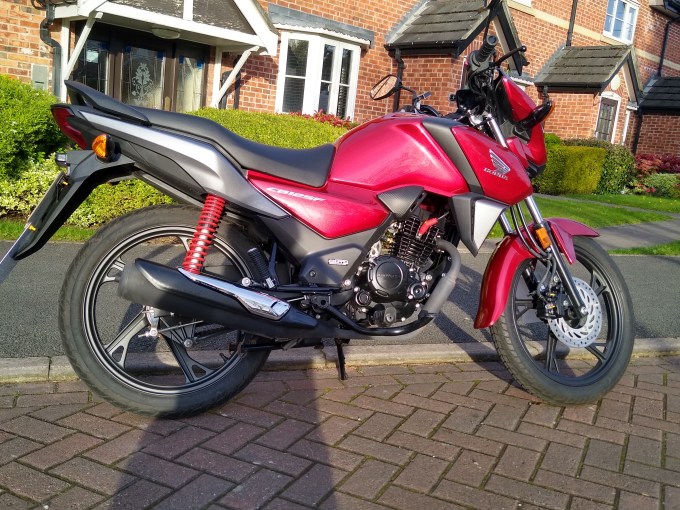
We did the logical thing and cancelled the order, and happily they didn’t fuss over refunding our deposit. I went online straight away and found three Honda CBF125s for sale at Staffordshire Honda in Newcastle-under-Lyme, so we headed there. The three bikes had between 250 and 850 miles on the clock. The lower-mileage white bikes were ex-demonstrators, whereas the red model with 850 miles was a one-owner bike in seemingly excellent condition. We bought it on the spot, for £100 less than the Hanway. The dealer said his workshop was fully booked for the next two weeks but since the bike had had its first service only a few weeks earlier they’d put it through the workshop immediately for a safety check and we could ride it away. Had we gone for either of the white models, it would have been 10 days before we could have taken delivery.

I rode the bike the 20 miles home and found it perfect for the job it was about to do. Peter loves it and gets out to practice her skills as often as she can. I can’t speak highly enough of the service we received from Staffordshire Honda that day – it’s worth a visit even if only to see the wonderful collection of modern classics on display there. I’m not going to name the Hanway dealer, because it seems well-rated online, the salesman was a solid guy, and maybe this was a one-off. He lost one certain sale and another likely one (a BMW K1600 GTL on the showroom floor that took my fancy). But I can’t help feeling that we had a narrow escape and ended up with the better brand and the better bike.

45 years on, I finally bought a Wing!

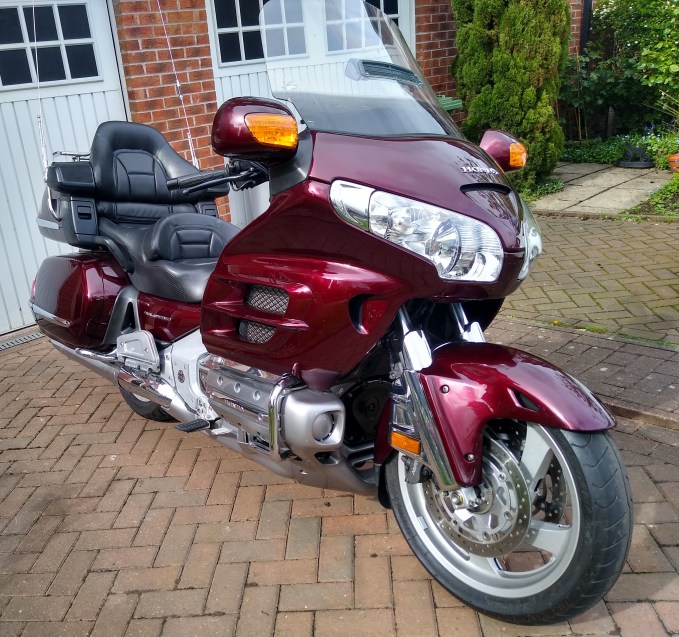
I rode my first Gold Wing in August 1979; three years later I wrote the book Gold Wing; but it’s taken until last Saturday for me to actually own one. Almost 45 years is quite a wait, and I haven’t been disappointed.

That first Wing ride was memorable for many reasons. As a motorcycle journalist at the time, I’d recently come back from the launch of the 19709 BMW range in America. I’d joined seven other British journalists to sample the then-new R100RT, R100T and a few others I don’t now recall. It was probably the sheer joy of stunning California and Arizona scenery in 80-degree (Fahrenheit) weather in February that turned my head, but I liked those bikes – so much so that I ordered a new R100 Autumn Special in a glorious metallic green when I got home. I wanted that bike so much, and was thrilled when I picked it up from Slocombe’s on V-plate day, 1 August.

The following day found me at Honda’s UK headquarters in Chiswick to collect a brand-new GL1000 K3 Gold Wing. By the time I arrived home in Gravesend, I knew I’d made a mistake in buying the Beemer. To my mind, the Wing was the better bike – and it would have cost me £30 less to boot! I rode both bikes back-to-back that week and found the Honda smoother, quieter (the BMW had a tappet rattle that never went away), more comfortable and more powerful.

When I was asked to write a book on  Gold Wings in 1982, the logical place to go was Wing Ding, the annual gathering of Wing owners in the US. That year it was held in Steamboat Springs, Colorado, and I rode there on a spanking new metallic brown and gold Aspencade on loan from Honda US. Again, I admit to being seduced by the ride and the scenery: through the San Bernadino mountains, across the Mojave desert, into Las Vegas at 1 am and out again at 2 am, vast stretches of nothingness in which at one stage I didn’t see a light or sign of another human being for 30 minutes. It was 95 degrees at midnight, and what I did see was the “billion stars all around” from The Eagles’ Peaceful Easy Feeling. Fabulous bike, memorable ride over several days, awesome trip.

Yet I didn’t buy myself a Wing. There was a mortgage to pay, young children to raise, so I focused instead on more affordable second-hand machinery: a CX500, a CBX (should never have sold that one), a new Firestorm, a Kawasaki 1500 Vulcan, two Honda Valkyries, a Suzuki TL1000S, a Ducati Sport Classic, a Rocket III and finally a third Valkyrie. Oh, and then a Rune. But no Wing. Until last Saturday.

The Valkyries always appealed to me because on balance I have preferred naked bikes, and the Valk is basically a naked Gold Wing: same 1500cc flat six (until the Wing went to 1832cc and left the Valkyrie behind) but with the look of a traditional motorcycle: an engine, a petrol tank, two wheels, lots of chrome, and plenty of smooth, silky power. None of that plastic nonsense!

I borrowed a new Wing in ’88 for a week and loved it; I rode a friend’s 1800 down to Devon to buy the TL in 2005 and loved it; my wife and I rented one in Colorado for a week in 2011 and we both loved that, too. I was looking for a replacement for my Rocket III Touring and found a lovely Valkyrie in Blackpool, so for the next 10 years that became our primary tourer. But our trip to Norway 18 months ago got me thinking that the Valkyrie wasn’t necessarily the answer anymore. I messed up the rear suspension settings and that made the bike harder to manage at low speed; the handlebar position and angle seemed to cause me arm pain that didn’t happen on my other bikes; and the lack of modern amenities like built-in satnav, heated grips and easily lockable luggage suggested that maybe the time had come for a replacement.

Online reading suggested the Triumph GT900, which weighed about 100 kg less and had lots going for it: flatter bars, built-in satnav, heated grips. Or the BMW R1250 RS, which added shaft drive to the mix. Then while shopping for a new 125 for my wife to re-take her test (blog to follow) I saw not one but three BMW K1600s at prices that seemed more affordable than I’d have guessed. A test ride or two seemed in the offing.

Then last Friday I rode my Rune to Bill Smith Motors in Chester to have a new front tyre fitted. The tyre stuff didn’t work out, because the mechanics reckoned it was too hard to raise the front end of the 440kg Honda to get at the wheel. While I waited, however, I spied a very nice-looking red 2007 Gold Wing with 39,500 miles on the clock. A return trip that afternoon on the Valkyrie allowed the dealer to consider a trade-in offer. They called at 11:00 next morning with a deal that I felt was fair, and by 3pm I was riding home on my first Wing.

Initial impressions confirmed what I already knew: it was smooth, powerful, very comfortable, very sure-footed and a pleasure to ride. The riding position promised an easier time for my right arm, the centrally locked luggage system suggested easier moseying while touring, and the general amenities (fairing, great seat, radio, MP3 player, reverse gear, heated seats, heated grips, air-adjustable suspension) augured well for our future tours. Only time will tell. It’s been a long wait, almost 45 years, but I sense it’s all come right in the end.

A Knysna journey into my biking history

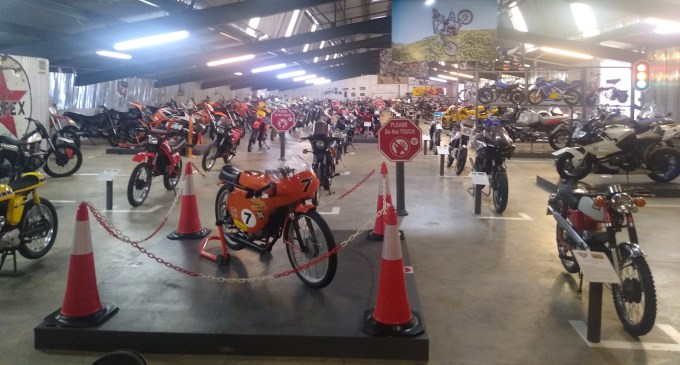
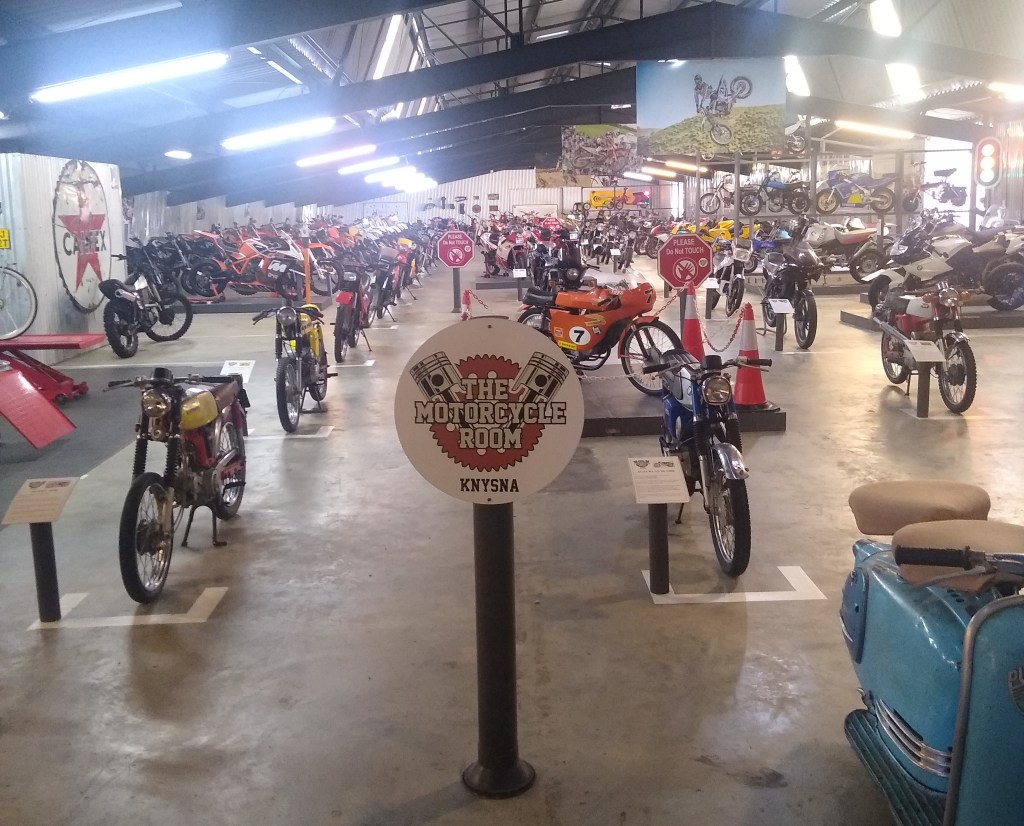
It was like a window back into my personal motorcycling past, laid out across the vast open floor for my delight: there was my 1977 Yamaha XS750 triple; my Triumph 3TA 350 twin; my Jawa 175 split-single two-stroke; my friend Kevin’s Triumph Tiger 200 single. Interspersed among them were several bikes I had ridden during my years as  a road-tester: a BMW R100RS, the BMW R100RT I’d ridden across the Arizona desert; the Honda 1978 CX500 whose launch I’d attended in France, the Yamaha XT500 single, the Honda CB750F from 1981…

I was on a much-postponed visit to The Motorcycle Room, a museum in Knysna on the Garden Route in South Africa’s Western Cape. It’s about 25 minutes down the road from our home in Plettenberg Bay, and I’d been meaning to go there since it opened, with some 85 bikes on display. The wait wasn’t entirely in vain, though, because by now its collection has expanded to some 150 motorcycles. And this January day, I had the whole place to myself, alongside my friend Pete Meadowcroft, a BSA owner from way back.

Knysna is a quirky town, built along a beautiful tidal lagoon on the Indian Ocean, with a busy marina, a nice mic of touristy shops and restaurants, against a backdrop of the Tsitsikama Mountains. If you’re in the area, it’s well worth a visit and a meander, even if you’re not into old motorcycles.

The museum isn’t entirely my cup of tea, to be honest. I like my classic cars and bikes to be in mint condition, restored if need be to better than new – none of this “patina” nonsense so beloved by Wayne Carini of Chasing Classic Cars fame, and so many other classic vehicle buffs! Some of the bikes in this collection are in great condition, and one or two of the more recent BMWs look brand new, but many are a bit tired and some are plain rusty. And that’s the stated intention of the museum creator, Colin Stunden, a former enduro racer. He’s picked up a wide variety of old and not-so-old bikes, some designated as barn finds that await some degree of restoration.

My interest is mostly in road bikes, too, which means that about half this collection isn’t really my thing at all: there are scores of off-road bikes, most of them seemingly KTMs, which is great if you’re into that sort of thing but otherwise not very compelling. Others who admire the world of knobbly tyres will doubtless be engrossed.

There was a lot of metal to hold my attention, regardless. One of my first-ever bikes was a Jawa 175, bought from a scrapyard for a fiver in Dublin in or around 1969. My good friend Seamus, a wizard with things mechanical and electrical, was able to make it run – as long as it was connected to a transformer that was plugged into the mains! I don’t recall riding it very far… Here in Knysna were several examples of the same split-single concept under the Jawa and CZ brands.

The Triumph 3TA was of the bathtub variety and black, with that strange upturned rear mudguard thing. Mine came without the bathtub, happily, and was an ex-police bike, also black, that I had professionally painted in the metallic green of the Opel Reckord of the early ‘70s. I lingered over that Yamaha XS750, which brought back happy memories. My wife and I bought the then-new triple back in ’77 with a wedding gift that was intended to buy a three-piece suite. It was one of the first Japanese bikes with shaft drive, presenting an attractive alternative to the BMWs of that era. We rode it from London to Rome and back and enjoyed it hugely, although the XS850 that followed it a year or so later was even better to ride.

Memories were triggered too by the Honda CB750F in the Knysna collection, because I had one on test the week my daughter Elizabeth was born, back in June 1981. I remember being so elated at her safe arrival that I rode home from the hospital through country roads at about 1:30 in the morning, pulling a joyous wheelie the first chance I got. The bike was okay, as I recall, although the 900cc version was more fun.

Other machines in this eclectic collection include an 80cc version of the ubiquitous Honda 50 step-through, made in India under an Indian brand name. There was the odd Matchless, a smattering of BSAs, a few Ducatis, a Laverda or two, an Aermacchi, a few scooters, a Harley and a host of scramblers, motocrossers, adventure bikes and trail bikes. If you’re ever in the area, it’s well worth stopping off and spending an hour browsing through The Motorcycle Room. You’ll find it on Thesen Island, clearly signposted near the end of the quay, with several excellent waterside restaurants and bars a few steps away. Entry costs R160 (about £7). Maybe you’ll meet a slice of your own motorcycling past there, too.

The curious case of the missing magneto rotor

Did you ever buy a motorcycle part, pay for it, and then find it’s been delivered to some unknown person 890 miles away? Me neither – until now!

Having left my ailing Suzuki V-Strom in my garage in Plettenberg Bay for the duration of the European summer and the South African winter, I turned my attention to finding a second-hand magneto rotor in the British parts market. Should be easy, I figured. Hah! There weren’t any. A new one would set me back all of £670, or R15,000, compared with the R8,970 I‘d been quoted in South Africa. So no solutions in the UK, then.

Now back in South Africa to escape the British winter, my wife and I decided we’d sort out the V-Strom ourselves. The local repair shop had told me back in May that they’d found fragments of metal in the oil and that therefore they’d need to strip the engine completely and rebuild it, at a total cost of R22,000, which is now about £950, which was both expensive and, I thought, perhaps a bit unnecessary.

My first move was to drain the engine oil, and out poured the cleanest, clearest oil I’ve ever drained. Not a fragment of metal or anything else foreign in there. The oil filter was equally pristine. Even the small magnet in the drain plug was free of swarf. On that basis, I figured there’d be no fragments of magnets elsewhere, so set about stripping off the magneto cover. That showed the stator windings to be undamaged, which boded well – and there was no sign of any magnets, whole or in bits, anywhere! The mechanic at the repair shop had clearly taken them out and not put them back when he replaced the cover and trailered the bike back to me, at my request, unrepaired. If they were all broken or damaged, fair enough, though it would have been nice to tell me.

Mt wife’s ex-husband (a total Suzuki fan whose GSXR 1000 weighs only 166kg) recommended a used parts emporium in Cape Town, which didn’t do used parts anymore but recommended another parts dealer, which did. The price was a firm R5,000 (about £220), which seemed a tad high for a second-hand part but not extortionate, given the paucity of rotors. Shipping to my nearest depot in town was R110 (a mere £4.80).

The dealer was good enough to warn me that extracting the old rotor required ideally a blow torch and a compressed-air-driven impact driver. Not having such exotic equipment, I phoned a friend who has a friend who has everything I’d need – including a trailer with which to transport the bike to his workshop. What a result!

I waited the quoted three business days for the rotor to arrive. There was no sign of it. I asked for a tracking number. The dealer said he’d had trouble getting the rotor off the donor bike due to load-shedding, a peculiar South African practice whereby whole segments of the country are denied electricity to conserve supplies. It’s been going on for ever. Anyway, it was a plausible explanation, so I went with it. Chased the guy again a day or two later, and now he said his air tool wasn’t working properly – please give him a few more days. I had other bikes to ride, so I said fine.

Almost three weeks after buying the rotor, the guy said the part was now off the bike and on its way to me by express delivery. I called next day to get the tracking number, and that’s when he confessed there’d been a terrible mistake and it had been sent by the courier company to Mpumulanga – a province in the north-east of the country and about 890 miles from where I live! He apologised profusely and volunteered to refund the money. Damn straight! The R5,000 price was duly refunded, but not the R110 for the courier. The guy said he’d get the part back and send it again. I decided not to hold my breath.

I thought I’d chase it up again today, not expecting any progress. The guy was again most apologetic, saying that several branches of his nationwide parts business had been seized by gangsters who were trying to extort money from him to get the branches back. You’re thinking, nah! Didn’t happen.

But you know, it could actually be true. I know a guy who went out with a friend to buy a car trailer advertised in the press. They drove to the address they were given, only to be seized by seven armed gangsters who shoved them in the boot of their own car, drove them to a warehouse and roughed them up a bit, then used their cards to steal money from their bank accounts. They released them after about seven hours, dumping them by the roadside. They walked to the first house they came across where the clearly very poor occupants gave them food and a place to sit until someone came to fetch them.

That absolutely true story has an interesting ending – two interesting endings, in fact. My friend went to the police station to report the abduction and theft of money, cards, bank funds and car. He told the cops that he wanted to thank the people who’d helped him. “How will you do that?” the cop asked. “Give them some money?” My friend answered yes, exactly that. “It would be much better if you could give their son a job,” the cop replied. And now their 22-year-old son has a job as a well-paid intern in my friend’s IT firm. Great result.

Another twist was that a week after the incident, the gang tried the same stunt again – but this time their ad was answered by another gang, who showed up armed to the teeth and shot all seven of them dead!

So, in this beautiful but strange country, it’s entirely possible that my Suzuki magneto rotor supplier was telling the gospel truth. Regardless, I’m on the lookout for another rotor!

Farewell, old friend! Goodbye Ducati Sport Classic.

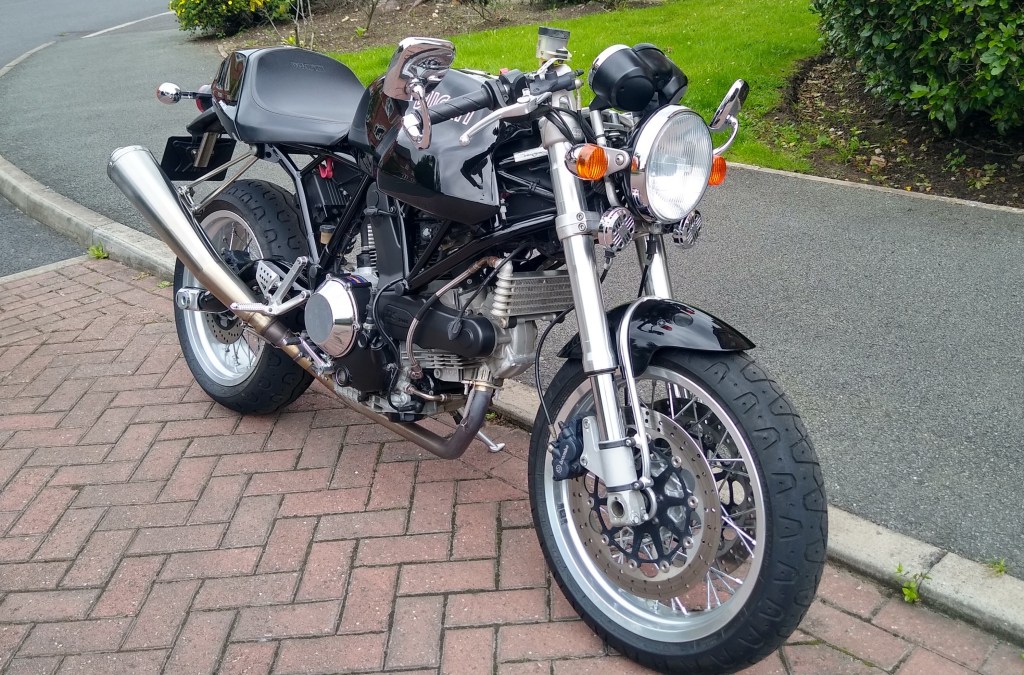
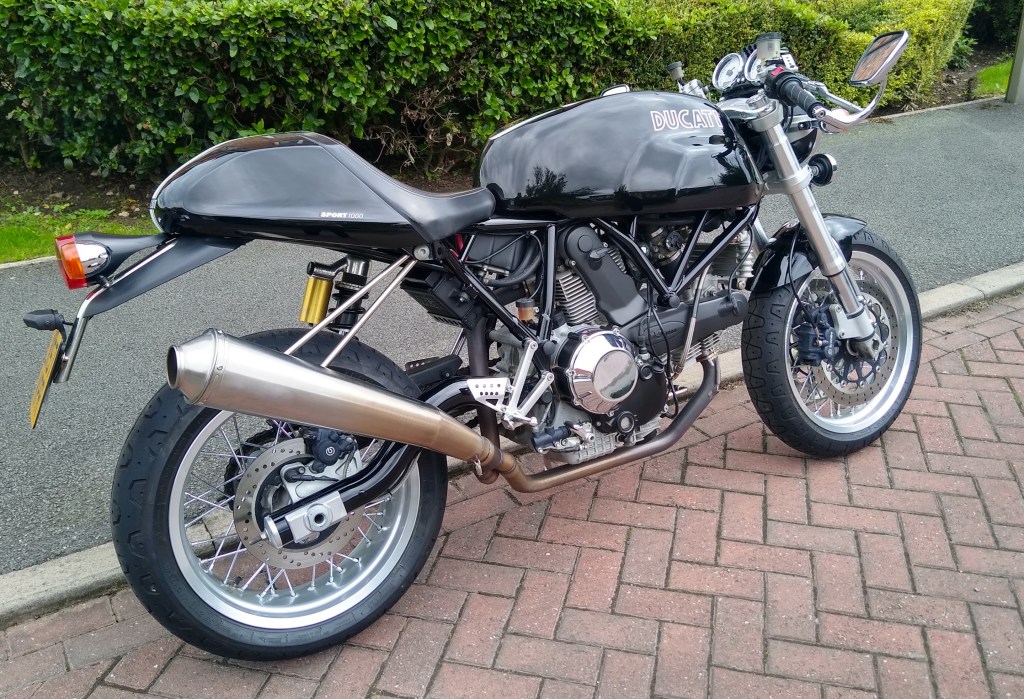
This morning I said a final goodbye to an old friend: I sold my Ducati Sport Classic 1000. Its departure marked a confluence of its appreciating value and my depreciating physical flexibility: I simply had to acknowledge that, no matter how much I enjoyed riding it, the very sporty riding position required more contortion than my 69-year-old frame found comfortable.

I first acquired an interest in Ducatis when Cycle magazine, which was my motorcycling bible in the 1970s, gave a glowing review of the GT750. The same engine, or a breathed-upon close facsimile of it, won the Imola 200 in the hands of Paul Smart in 1972. In 1977, a similar Ducati, ridden by Cycle editor Cook Neilson and built by Neilson and fellow Cycle journalist and tuner Phil Schilling, won the Daytona 200. That Daytona-winning Duke was more than a little bit special, featuring custom parts in titanium and magnesium, and a close-ratio gearbox built by the racing car transmission specialist Webster Gears at a cost of $1,400 – about the price of a new Honda CB750 in those days.

Both Smart and Neilson’s achievements were remarkable because they beat strong fields of the best and most powerful bikes of the era. Neilson said in an interview 40 years later: “There were bikes in the field that went fast, and bikes that handled and stopped. Only one that day did all three.” That combination came across clearly in Cycle’s review of the GT750: here was a bike that wasn’t as powerful as the Japanese competition, but it was lighter, had better brakes and handled like it was on rails.

I bought one, a 1974 model, second hand in 1976 and loved it. The handling was every bit as good as the tests claimed, and the smoothness from the 90-degree V-twin was uncanny. I owned that bike for 12 months and rode it for six; the other six were spent in and out of the repair shop. The quality control wasn’t great: oil would come out of a breather tube and foul the air cleaner; the feeble contacts in the rear light would vibrate and blow the bulb (nine times on one night-time trip through Wales). I recall working on that bike in the roadway outside my flat that winter with snow swirling around me. The service agent wasn’t great, either: I picked it up from the Italian Motorcycle Centre in Clapham late one afternoon, parked outside the local chippie in Lee Green to buy supper, and when I kickstarted the beast the rear carb just blew straight off! I’d had enough; sadly, it had to go.

When Ducati brought out the GT1000, Sport Classic 1000 and Paul Smart replica in 2006 as a modern-day homage to the 750s of the 1970s, I had to have one. Standing around in the dealership waiting for my 750 to get fixed 30 years earlier, I would gaze with great admiration at the yellow 750S on the showroom floor, so I naturally gravitated towards the Sport Classic. A test ride at Daytona Motorcycles in West Ruislip put a wide grin on my face and I was sold: this was what the original 750 should have been!

Back at the dealership, I had to choose between the yellow, black and red. The black spoke to me. The brand new bike on the showroom floor had been fitted with a Termignoni racing two-into-one exhaust that was lighter than the original, looked superb and sounded awesome. The salesman asked whether I wanted it with or without the Termi system, which he said cost £1,200. That was a helluva price for an exhaust system 15 years ago (and still is today, in my opinion), but the salesman spoke to the manager and they offered it to me for £300. I guess they didn’t want the hassle of talking it off and re-installing the original. Anyway, I know a bargain when I see one, and the black Ducati with racing exhaust was mine.

That was early February 2008. I rode the bike whenever the fancy took me and the weather was right. I soon tired, literally, of the original low clip-ons and replaced them with higher Ducati bars, still clip-ons but giving a slightly less stooped riding stance. I had two other bikes at that time, a Valkyrie and the Suzuki TL1000S, and a car, and work took me overseas, and then I got engaged. So the single-seat Ducati got used less frequently than it perhaps deserved. It was a joy to ride, though: fast, responsive, tracking true through the twisties, looking fabulous and sounding like a motorbike should! It was an elemental bike, stripped to the basics: a 1,000cc V-twin engine, two wheels, a tank and a saddle. I thought of it as the sort of bike Ogri would ride of he ever lost his Vincent.

A year after buying the Duke, I got married and we moved to Dubai where my wife was based. In 2010, I took a job in Abu Dhabi at Yas Marina Circuit and shipped my three bikes out to join me there, the Valkyrie having since been replaced by a Rocket III. The idea was that I’d get to ride them more often if we were all at least in the same place, but the reality was different. For some of the year, it was too hot to spend much time riding, with summer temperatures often in the mid-40s and occasionally touching 50 degrees C; and the vast majority if the roads were wide, straight highways with nary a wiggle in them to get the juices flowing. So in 2011 I shipped the Duke and the Suzuki to South Africa, where we planned to retire, eventually.

In South Africa, the Sport Classic was rare enough to attract lots of admiring looks and fun enough to get me out riding whenever I was down there. Regular readers (I have regular readers?) may recall my complaints about the 1.2km of dirt road that connected our home to the nearest tarred road. The road was so rough that it caused the indicator supports to break, and cost me a taillight, so sadly the bike didn’t get out much there either. Eventually, two years ago, we shipped the Ducati (and the Rune I’d bought in Cape Town) back to the UK, and I put about 500 more miles on the clock. I became increasingly conscious that the riding position was causing me neck ache, which hadn’t been a problem in the early days. I was now more of a sit-up-straight biker. So logic dictated that it was time to sell the Sport Classic, which happily had appreciated considerably in value over the years. I think it’s gone to a good home, to a collector who already owns an impressive array of modern classics. As we loaded it on to the van a few hours ago, I noted that it had 3,490 miles on the clock from new. I think the new owner has got himself a bargain. Farewell, old friend!