A Knysna journey into my biking history

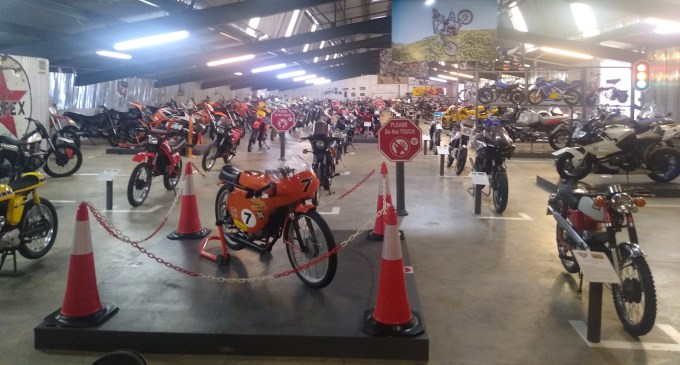
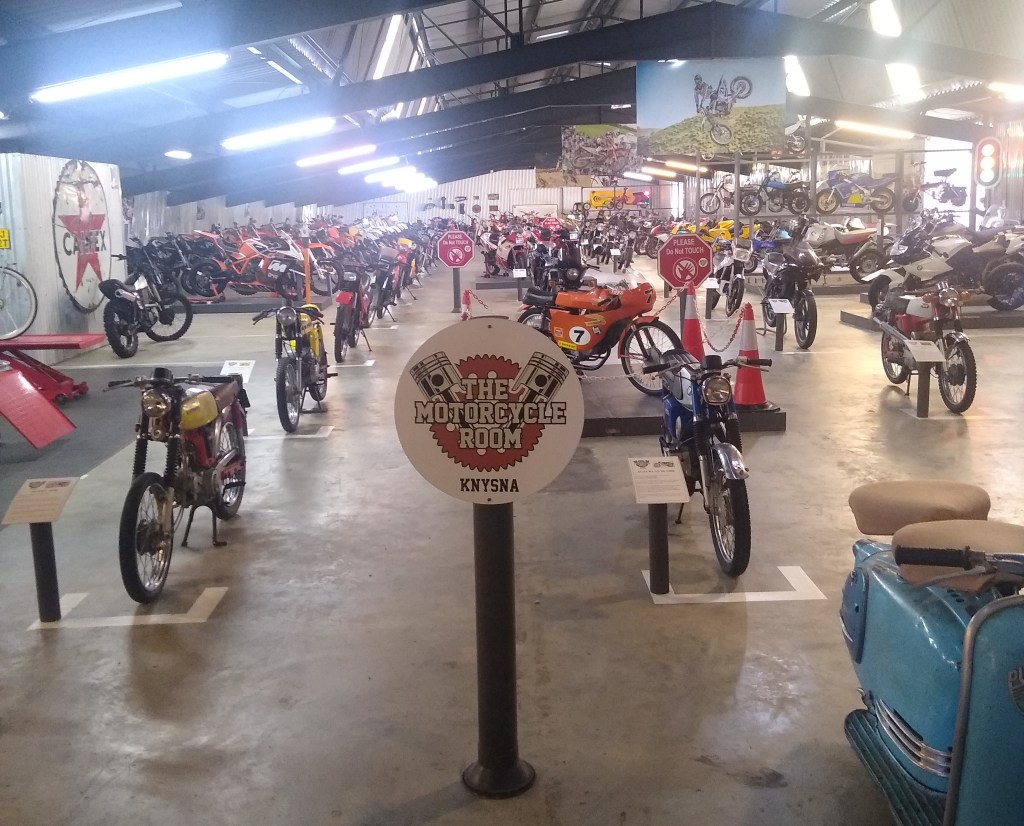
It was like a window back into my personal motorcycling past, laid out across the vast open floor for my delight: there was my 1977 Yamaha XS750 triple; my Triumph 3TA 350 twin; my Jawa 175 split-single two-stroke; my friend Kevin’s Triumph Tiger 200 single. Interspersed among them were several bikes I had ridden during my years as  a road-tester: a BMW R100RS, the BMW R100RT I’d ridden across the Arizona desert; the Honda 1978 CX500 whose launch I’d attended in France, the Yamaha XT500 single, the Honda CB750F from 1981…

I was on a much-postponed visit to The Motorcycle Room, a museum in Knysna on the Garden Route in South Africa’s Western Cape. It’s about 25 minutes down the road from our home in Plettenberg Bay, and I’d been meaning to go there since it opened, with some 85 bikes on display. The wait wasn’t entirely in vain, though, because by now its collection has expanded to some 150 motorcycles. And this January day, I had the whole place to myself, alongside my friend Pete Meadowcroft, a BSA owner from way back.

Knysna is a quirky town, built along a beautiful tidal lagoon on the Indian Ocean, with a busy marina, a nice mic of touristy shops and restaurants, against a backdrop of the Tsitsikama Mountains. If you’re in the area, it’s well worth a visit and a meander, even if you’re not into old motorcycles.

The museum isn’t entirely my cup of tea, to be honest. I like my classic cars and bikes to be in mint condition, restored if need be to better than new – none of this “patina” nonsense so beloved by Wayne Carini of Chasing Classic Cars fame, and so many other classic vehicle buffs! Some of the bikes in this collection are in great condition, and one or two of the more recent BMWs look brand new, but many are a bit tired and some are plain rusty. And that’s the stated intention of the museum creator, Colin Stunden, a former enduro racer. He’s picked up a wide variety of old and not-so-old bikes, some designated as barn finds that await some degree of restoration.

My interest is mostly in road bikes, too, which means that about half this collection isn’t really my thing at all: there are scores of off-road bikes, most of them seemingly KTMs, which is great if you’re into that sort of thing but otherwise not very compelling. Others who admire the world of knobbly tyres will doubtless be engrossed.

There was a lot of metal to hold my attention, regardless. One of my first-ever bikes was a Jawa 175, bought from a scrapyard for a fiver in Dublin in or around 1969. My good friend Seamus, a wizard with things mechanical and electrical, was able to make it run – as long as it was connected to a transformer that was plugged into the mains! I don’t recall riding it very far… Here in Knysna were several examples of the same split-single concept under the Jawa and CZ brands.

The Triumph 3TA was of the bathtub variety and black, with that strange upturned rear mudguard thing. Mine came without the bathtub, happily, and was an ex-police bike, also black, that I had professionally painted in the metallic green of the Opel Reckord of the early ‘70s. I lingered over that Yamaha XS750, which brought back happy memories. My wife and I bought the then-new triple back in ’77 with a wedding gift that was intended to buy a three-piece suite. It was one of the first Japanese bikes with shaft drive, presenting an attractive alternative to the BMWs of that era. We rode it from London to Rome and back and enjoyed it hugely, although the XS850 that followed it a year or so later was even better to ride.

Memories were triggered too by the Honda CB750F in the Knysna collection, because I had one on test the week my daughter Elizabeth was born, back in June 1981. I remember being so elated at her safe arrival that I rode home from the hospital through country roads at about 1:30 in the morning, pulling a joyous wheelie the first chance I got. The bike was okay, as I recall, although the 900cc version was more fun.

Other machines in this eclectic collection include an 80cc version of the ubiquitous Honda 50 step-through, made in India under an Indian brand name. There was the odd Matchless, a smattering of BSAs, a few Ducatis, a Laverda or two, an Aermacchi, a few scooters, a Harley and a host of scramblers, motocrossers, adventure bikes and trail bikes. If you’re ever in the area, it’s well worth stopping off and spending an hour browsing through The Motorcycle Room. You’ll find it on Thesen Island, clearly signposted near the end of the quay, with several excellent waterside restaurants and bars a few steps away. Entry costs R160 (about £7). Maybe you’ll meet a slice of your own motorcycling past there, too.
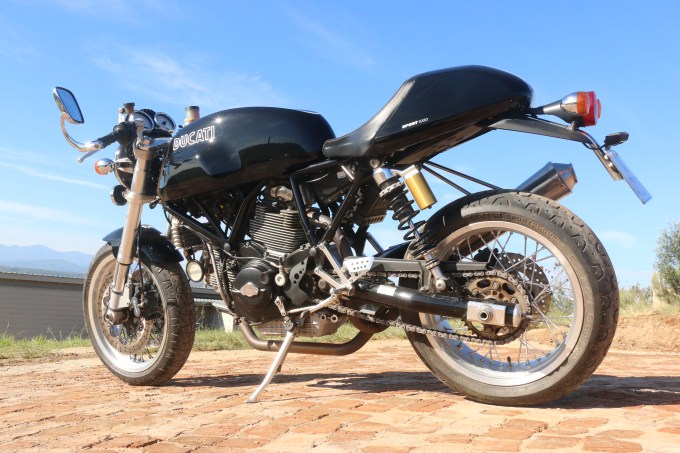
Farewell, old friend! Goodbye Ducati Sport Classic.

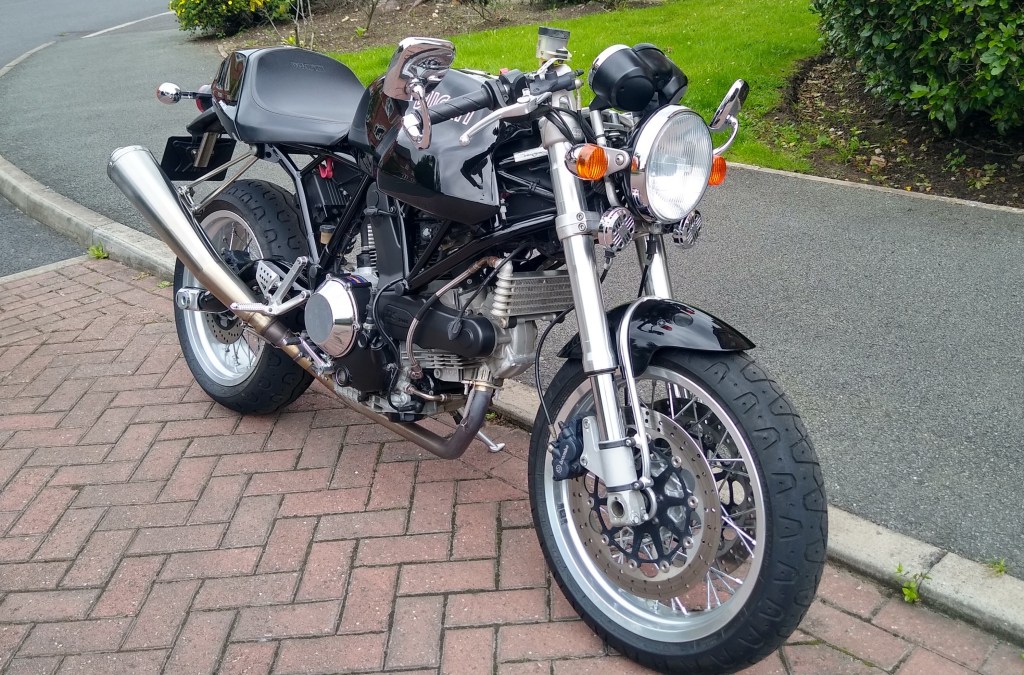
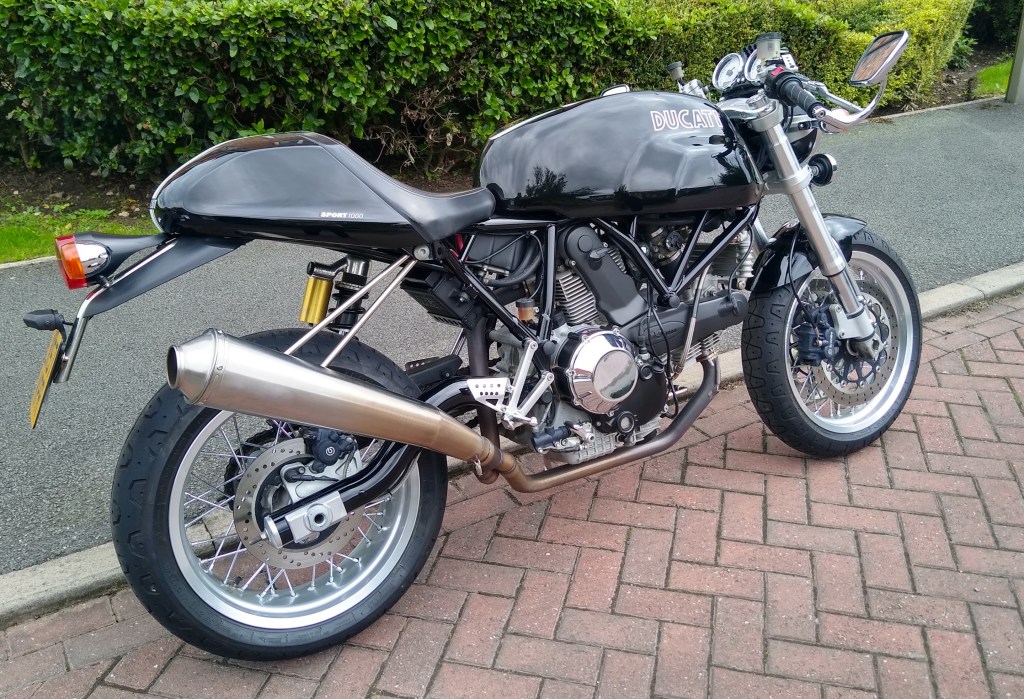
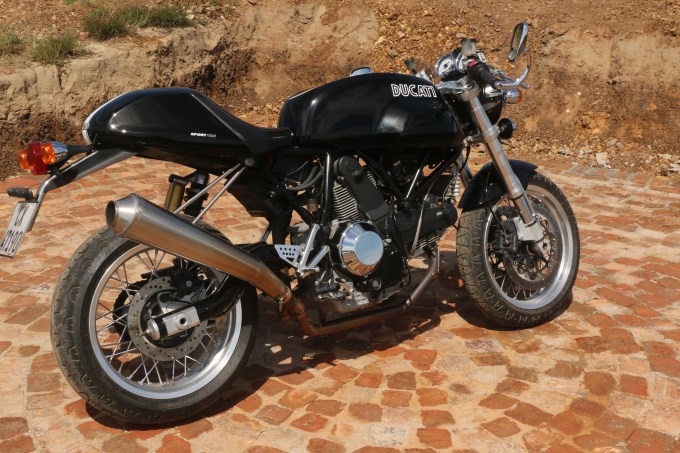
This morning I said a final goodbye to an old friend: I sold my Ducati Sport Classic 1000. Its departure marked a confluence of its appreciating value and my depreciating physical flexibility: I simply had to acknowledge that, no matter how much I enjoyed riding it, the very sporty riding position required more contortion than my 69-year-old frame found comfortable.

I first acquired an interest in Ducatis when Cycle magazine, which was my motorcycling bible in the 1970s, gave a glowing review of the GT750. The same engine, or a breathed-upon close facsimile of it, won the Imola 200 in the hands of Paul Smart in 1972. In 1977, a similar Ducati, ridden by Cycle editor Cook Neilson and built by Neilson and fellow Cycle journalist and tuner Phil Schilling, won the Daytona 200. That Daytona-winning Duke was more than a little bit special, featuring custom parts in titanium and magnesium, and a close-ratio gearbox built by the racing car transmission specialist Webster Gears at a cost of $1,400 – about the price of a new Honda CB750 in those days.

Both Smart and Neilson’s achievements were remarkable because they beat strong fields of the best and most powerful bikes of the era. Neilson said in an interview 40 years later: “There were bikes in the field that went fast, and bikes that handled and stopped. Only one that day did all three.” That combination came across clearly in Cycle’s review of the GT750: here was a bike that wasn’t as powerful as the Japanese competition, but it was lighter, had better brakes and handled like it was on rails.

I bought one, a 1974 model, second hand in 1976 and loved it. The handling was every bit as good as the tests claimed, and the smoothness from the 90-degree V-twin was uncanny. I owned that bike for 12 months and rode it for six; the other six were spent in and out of the repair shop. The quality control wasn’t great: oil would come out of a breather tube and foul the air cleaner; the feeble contacts in the rear light would vibrate and blow the bulb (nine times on one night-time trip through Wales). I recall working on that bike in the roadway outside my flat that winter with snow swirling around me. The service agent wasn’t great, either: I picked it up from the Italian Motorcycle Centre in Clapham late one afternoon, parked outside the local chippie in Lee Green to buy supper, and when I kickstarted the beast the rear carb just blew straight off! I’d had enough; sadly, it had to go.

When Ducati brought out the GT1000, Sport Classic 1000 and Paul Smart replica in 2006 as a modern-day homage to the 750s of the 1970s, I had to have one. Standing around in the dealership waiting for my 750 to get fixed 30 years earlier, I would gaze with great admiration at the yellow 750S on the showroom floor, so I naturally gravitated towards the Sport Classic. A test ride at Daytona Motorcycles in West Ruislip put a wide grin on my face and I was sold: this was what the original 750 should have been!

Back at the dealership, I had to choose between the yellow, black and red. The black spoke to me. The brand new bike on the showroom floor had been fitted with a Termignoni racing two-into-one exhaust that was lighter than the original, looked superb and sounded awesome. The salesman asked whether I wanted it with or without the Termi system, which he said cost £1,200. That was a helluva price for an exhaust system 15 years ago (and still is today, in my opinion), but the salesman spoke to the manager and they offered it to me for £300. I guess they didn’t want the hassle of talking it off and re-installing the original. Anyway, I know a bargain when I see one, and the black Ducati with racing exhaust was mine.

That was early February 2008. I rode the bike whenever the fancy took me and the weather was right. I soon tired, literally, of the original low clip-ons and replaced them with higher Ducati bars, still clip-ons but giving a slightly less stooped riding stance. I had two other bikes at that time, a Valkyrie and the Suzuki TL1000S, and a car, and work took me overseas, and then I got engaged. So the single-seat Ducati got used less frequently than it perhaps deserved. It was a joy to ride, though: fast, responsive, tracking true through the twisties, looking fabulous and sounding like a motorbike should! It was an elemental bike, stripped to the basics: a 1,000cc V-twin engine, two wheels, a tank and a saddle. I thought of it as the sort of bike Ogri would ride of he ever lost his Vincent.

A year after buying the Duke, I got married and we moved to Dubai where my wife was based. In 2010, I took a job in Abu Dhabi at Yas Marina Circuit and shipped my three bikes out to join me there, the Valkyrie having since been replaced by a Rocket III. The idea was that I’d get to ride them more often if we were all at least in the same place, but the reality was different. For some of the year, it was too hot to spend much time riding, with summer temperatures often in the mid-40s and occasionally touching 50 degrees C; and the vast majority if the roads were wide, straight highways with nary a wiggle in them to get the juices flowing. So in 2011 I shipped the Duke and the Suzuki to South Africa, where we planned to retire, eventually.

In South Africa, the Sport Classic was rare enough to attract lots of admiring looks and fun enough to get me out riding whenever I was down there. Regular readers (I have regular readers?) may recall my complaints about the 1.2km of dirt road that connected our home to the nearest tarred road. The road was so rough that it caused the indicator supports to break, and cost me a taillight, so sadly the bike didn’t get out much there either. Eventually, two years ago, we shipped the Ducati (and the Rune I’d bought in Cape Town) back to the UK, and I put about 500 more miles on the clock. I became increasingly conscious that the riding position was causing me neck ache, which hadn’t been a problem in the early days. I was now more of a sit-up-straight biker. So logic dictated that it was time to sell the Sport Classic, which happily had appreciated considerably in value over the years. I think it’s gone to a good home, to a collector who already owns an impressive array of modern classics. As we loaded it on to the van a few hours ago, I noted that it had 3,490 miles on the clock from new. I think the new owner has got himself a bargain. Farewell, old friend!

Buff envelopes deliver the right to ride – at last!

In this age of instant communication, the concept of excitement when a letter drops on to the doormat must be alien to many. I still get excited, though, sad old man that I am. And the envelopes that excite me the most are those buff, A5-ish ones with the little plastic address window and the words Driver and Vehicle Licensing Agency in the top left corner.

The strange attraction started when my driving licence was withdrawn for medical reasons a couple of years ago – as a precautionary measure. “You must stop driving from today,” the doctor said, so I did. The condition that led to this – a tiny tumour that appeared on a scan in a place where it shouldn’t be – was successfully eliminated within four weeks, but it was many months before the wheels of Covid-era bureaucracy reached the stage where my application to get my licence back was being actively reviewed.

I resorted to calling the DVLA in Swansea for updates. I called a couple of times a week, then several times, and finally every day. This may seem obsessive, but my doctor had sorted the problem the previous September and had confirmed the same to the authorities in March. There was no real reason why I couldn’t drive, or ride, apart from the need for that piece of plastic from Swansea. It was July, the sun was shining, and I wanted to ride. I spoke to several very pleasant and helpful Welsh people over the weeks. On one occasion, a gentle-voiced Welshman, clearly looking at my case on his screen, said: “Ah, Mr Rae, I see you spoke to us yesterday. What can we do for you today?”

During all these weeks I would check the post each day in case, just maybe, the licence had dropped into the box. Then, one day, a nice gentleman at the DVLA answered my call and said he had good news – the licence had just been approved! Yay! Hallelujah! I was free to drive from that moment onward, he told me, and the plastic licence duly arrived a few days later.

If you’ve followed the saga of the shipping of my Ducati and Rune from South Africa to the UK, you’ll be aware that this hadn’t exactly been plain sailing, either. Documents I’d supplied to register them here had subsequently been returned along with a request for more information in each case. So when I picked up the post last Friday and found another bulky, buff, A5-ish envelope from the DVLA, I was pretty sure it heralded more problems. The familiar paperwork inside seemed only to confirm this. Then I read the covering letter – and they’d approved the application for the Ducati! It was officially registered, and with the same plate it’d had when I first registered it in Reading back in 2008. The letter said that the V5C registration certificate would follow separately “in the next four weeks”. It actually arrived the next day.

So now, fully six months and one week after the Sport Classic and the Honda Rune were loaded on to a truck in Plettenberg Bay at the start of their long journey, at least the Ducati was legal to ride once again on public roads. Of course, it’s been raining for days now and the forecast suggest more of the same.

Today, however, three weeks on, has dawned bright and sunny. It’s cold but the sky is blue and the roads are dry so I fire up the Ducati and head down the M6 to Stoke to pick up an oil filter from the Ducati dealer. The Termignoni racing exhaust is making sweet music and it feels so good to be back in this particular saddle. It may be only 7 degrees C outside but its 21 degrees in my heart and 31 in my soul as I take in the autumn colours and get in sync with that unique Ducati vibe.

As I pull back on to my driveway 90 minutes later, the postman walks towards me with two buff, A5-ish envelopes bearing the DVLA logo in the top left-hand corner. The first one I open turns out to be confirmation that the Rune has been registered, finally. Oh joy! The second contains the new registration document. A Ducati ride and a road-legal Rune – all my Christmases have come at once, almost seven months to the day after the bikes started their journey. Then I try to move my faithful Valkyrie in the garage and find the front brake is seized and the bike is immobile. Into every life a little rain must fall…

At last – all road-legal in the UK, seven months on. This isn’t the UK, obviously, but Knysna Lagoon in the Western Cape.

Bogged down in a paperwork jungle

They say that anticipation is the greater part of pleasure. I’ve already written about my long-drawn-out anticipation of the arrival of the Ducati and the Rune in the UK. Would the reality live up to the dream?

I’ve owned the Sport Classic since I bought it new in January 2008, and the Rune since January 2016, so it’s not like we’re strangers. I’ve just spent a small fortune shipping them more than 8,000 miles – so of course they were going to be great to ride again. Even the all-too-short trip to the MOT centre, and the slightly longer trip back again, was an ample reminder of why I like these two very different bikes so much.

The Ducati for me always held the promise of my old 1974 GT750. It was, after all, designed specifically to be a 21st century version of that bike’s 750 Sport sibling, but with all the (many) glitches ironed out. It weighs only 181 kg and puts out about 95 bhp with its Termignoni racing exhaust system. It’s a basic bike – a great engine, two wheels, a seat, a tank and that’s pretty much it – and I see it rather as a latter-day Vincent. It gathers speed in what feels like a very traditional way, giving a visceral push towards the horizon without the exponential feel of a modern four. You either like the glorious feel of a sporty V-twin, or you don’t, and this bike does it for me. I plan to add new Pirelli Phantoms when I get the cambelts replaced soon and it’ll be ready to carve its way through the twisties once more.

Parenthetically, I think it’s nuts in this day and age to design an engine that needs new cambelts every two years, regardless of mileage, at a cost of almost £300 a time including labour and VAT. My old 1997 Suzuki TL1000S, still residing in South Africa in readiness for our next visit, was designed as a Ducati 916-slayer in its day, and it’s never needed that kind of expensive maintenance.

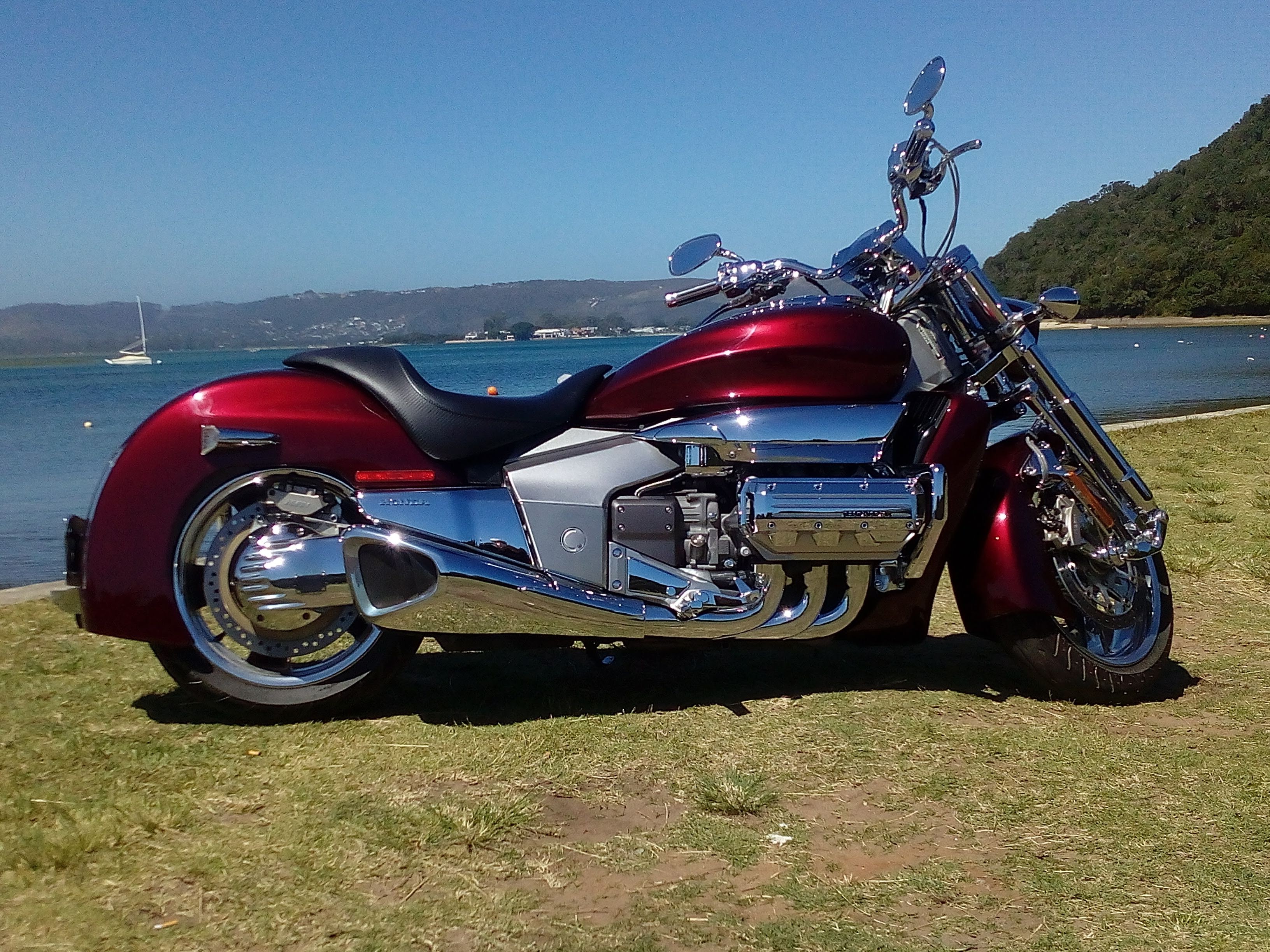
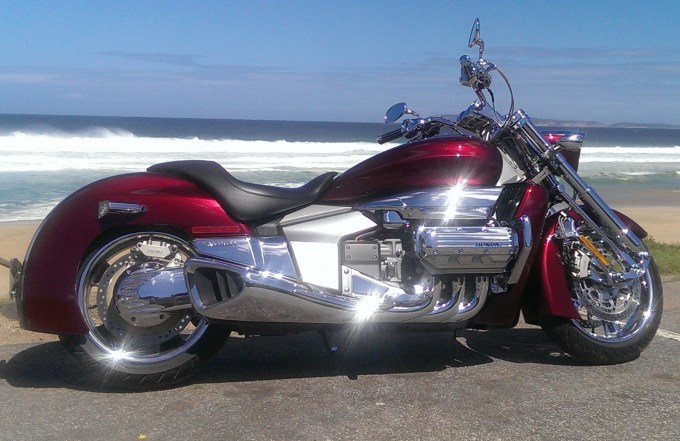
The Rune couldn’t be more different. Take the unburstable (and low-maintenance, by contrast) 1800 Gold Wing engine, tweak it a little, and dress it in one of the funkiest outfits ever to grace a production motorcycle, and you have a unique bike. It weighs 368 kg dry, 398 kg wet, and is fully eight feet long. It has presence. I was reminded of its considerable heft when I had to manoeuvre it into our newly prepared garage, which is approached by a short and slightly downward sloping driveway. Riding it in nose-first was not an option: no way was I ever going to reverse it out again. The trick is to ride it down the drive, turn hard right on to our neighbour’s drive, and perform a four-point turn to reverse it the last few metres into the garage. It takes all the strength in my shoulders and legs to keep the beast upright in those manoeuvres.

Out on the road, it’s wheeled emollient (a phrase I borrow with due credit from Car magazine’s description of the V12 Jaguar Series III XJ6 back in the late ‘80s, and eminently appropriate for both vehicles). The exhaust emits a pleasant burble that becomes a growl on acceleration but never gets raucous. The engine is about as smooth as they come. It develops 118 horsepower at 5500 rpm and 167 Nm of torque at 4000 rpm (or 123 ft lb in old money). That’s enough to move the machine down the road with impressive urgency, with a 12-second standing quarter time, made all the more satisfying by the total absence of vibration. It’s said to be capable of 123 mph or so, but the riding position means it hits a real sweet spot at about 60. That means you can chill out, savour the moment, and overtake pretty much any normal traffic with a flick of the wrist, all safe in the knowledge that you’re not likely to fall foul of speed cameras outside built-up areas. Its slightly outrageous appearance turns heads, for sure, but that’s not why I bought it – it just needs to turn my head, and it does that every time.

Sadly, turning my head is all either bike will be doing for a while yet. My attempts to register them as UK bikes have failed so far. Both applications have been rejected by the DVLA. In the case of the Rune, the issue was lack of proof of year of manufacture; with the Ducati, it was the absence of the original certificate of first registration in South Africa.

This Ducati rejection was a bit galling, because I had sent the original UK registration certificate from 2008 with my application. The same bike had merely travelled to Dubai, Abu Dhabi and South Africa before coming home again. However, the DVLA gave me the option of explaining by letter why I didn’t have the certificate of first registration from South Africa (it’s lying in a filing drawer in our house down there, still inaccessible due to Covid travel rules), so I’ve done that and sent everything  back to Swansea. The year of manufacture thing with the Rune was a bit galling too, because the Rune was made only in one year, 2004, although I believe some were made in 2005. If I said it was 2004, that should be good enough, in my book! If it were a 2005 bike, why would I claim it as 2004? The VIN plate on the headstock even proclaims 2004 in large numbers. The DVLA helpfully said they would accept a letter from Honda confirming the year of manufacture. A call to Honda’s UK HQ quickly confirmed that such a letter was indeed possible, for a fee of £30, but it would take up to six weeks. Five weeks later, I’ve just received a note to say the letter is ready and will arrive shortly. Then I can send off all the paperwork to Swansea again. First World problems…

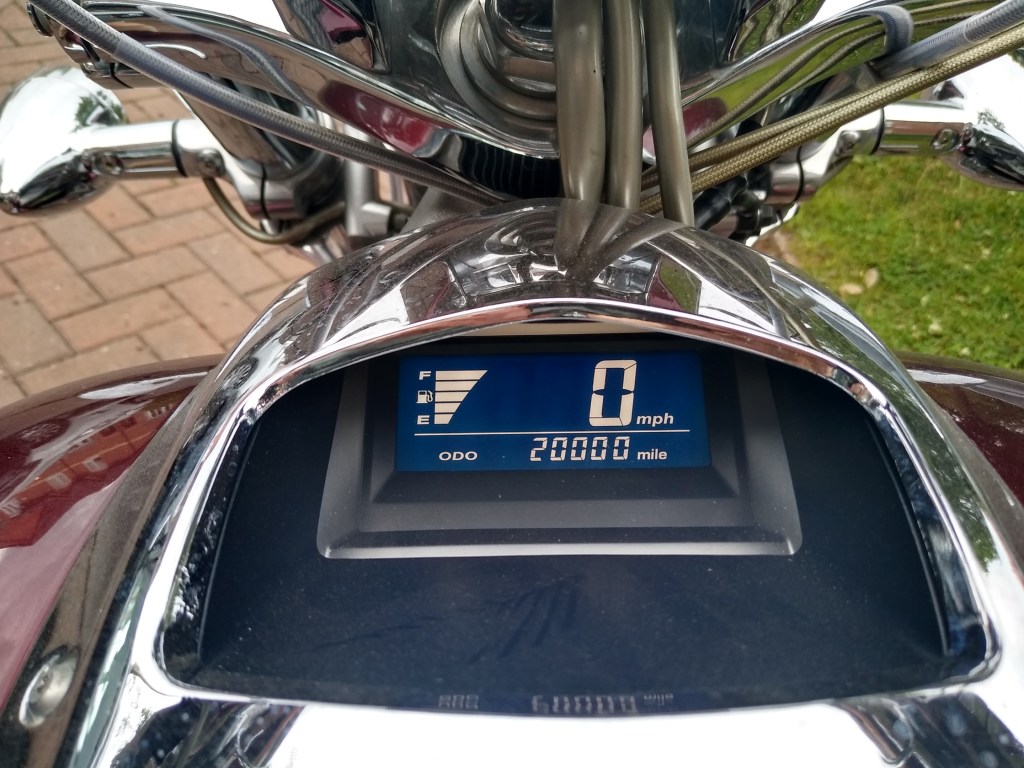
When the Rune arrived on my driveway, straight off the boat, I changed the settings from kilometres to miles and was greeted by this number

Dream bikes arrive – just don’t plan on riding them anytime soon!

I’m 67 years old but I’ve been feeling a bit like a child counting the days to Christmas. For me, the long-awaited presents are my Honda Rune and Ducati Sport Classic, due to arrive in Middlewich after a journey that began 11 weeks ago on the Garden Route of South Africa’s Western Cape.

Regular readers will be aware of the ups and downs of the process, but my concerns over the arrival of the bikes didn’t end when the ship finally docked at London Gateway, the port on the Thames Estuary in Essex. Oh no.

First comes the tracker confirmation that the ship has actually berthed alongside the quay. Yay! I wait patiently for about 24 hours to give the shipper time to get the cargo off. The ship sets sail again about 10 hours later. The shipper confirms that the container is off the ship and that the bikes have been cleared through Customs. Double yay!

I’m thinking, ports are super-efficient, and the constant throughput of containers means they can’t have my bikes laying around there for long, so they’ll probably be on the road tomorrow – or, worst case, the day after. Hah! Not so fast. It seems that someone else’s cargo inside the same container hasn’t yet cleared Customs, so unloading the container has to wait until that has cleared, too. That takes eight days. Then the shipper says they can’t get a haulier to move the bikes the 200-odd miles from Essex to Cheshire until 5 July – which is a further 10 days away!

Look, freight isn’t really my field, although I did a stint in that industry as a PR adviser about 20 years ago, but I would have thought a shipper would know what was coming through and when, and have the requisite vehicles on hand to move the goods onward. A friend tells me there’s a shortage of HGV drivers in the UK right now, so maybe there’s a shortage of large van drivers too – thanks, Amazon, for creaming off the talent!

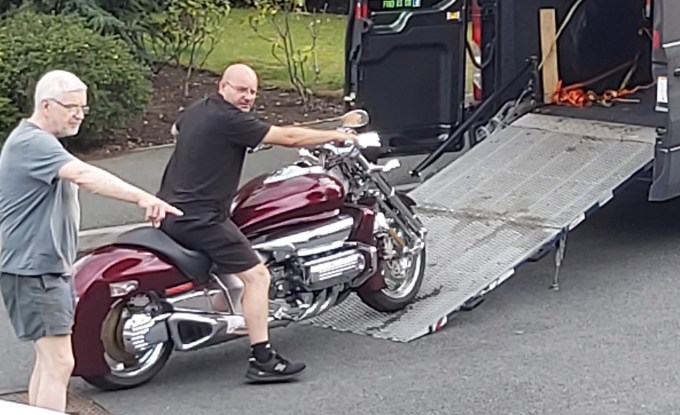
A driver and van is eventually found and booked, and now he’s delivered the bikes to our driveway. He specialises in motorcycle transport, which is a relief, and it takes him no time to unload the machines. I’m delighted, of course – I haven’t even seen these bikes since the start of the Covid lockdown in March 2020, when we had to cut short a trip to South Africa and high-tail it back to Blighty. And I haven’t ridden them since June 2019, due to such diverse factors as my health and the unrideable state of the dirt road to our house down there.

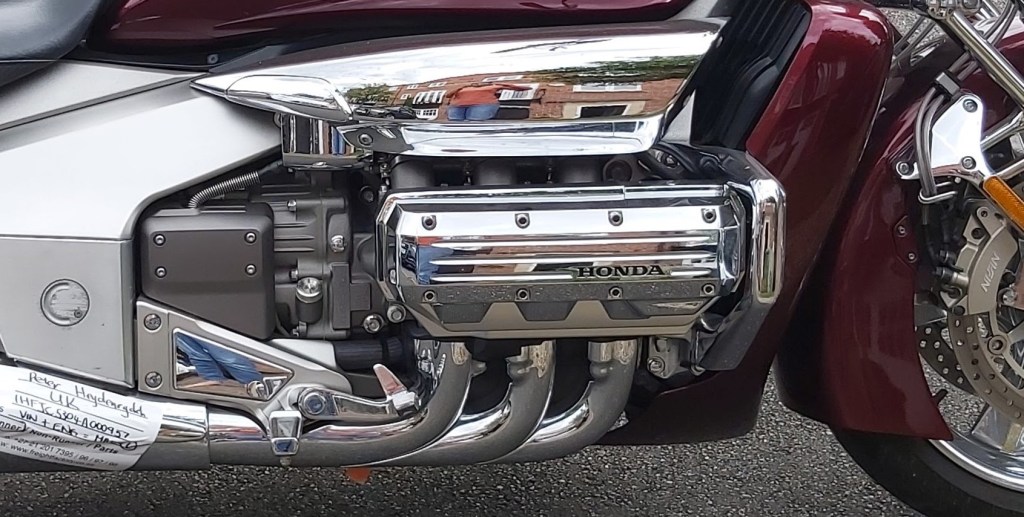
Anyway, here they are. I scrutinise every inch to check for shipping damage. The Ducati looks flawless but the battery is flat, so I connect a charger. The Honda actually fires up at the touch of the button, and the mellifluous sound of the 1,832cc flat six bellows out of those two massive exhaust pipes – awesome! There’s a very small new scratch on the rear mudguard, and the brushed aluminium pivot cover down near the right footrest has scratches that weren’t there before. Apart from these, though, it too looks unaffected by its long journey. Tyre pressure are low all round, but that’s easily put right.

I spend many hours washing and then polishing both bikes. The Ducati is easy, having little in the way of bodywork; the Rune takes the bulk of the time, because the weeks sitting on docks or in the container have made all that chrome look a bit dull – but that’s why God invented Autosol! That Honda gets polished better than I’ve ever cleaned a bike before, hard-to-reach spots and all, and ends up looking truly magnificent. The Autosol tube ends up almost empty.

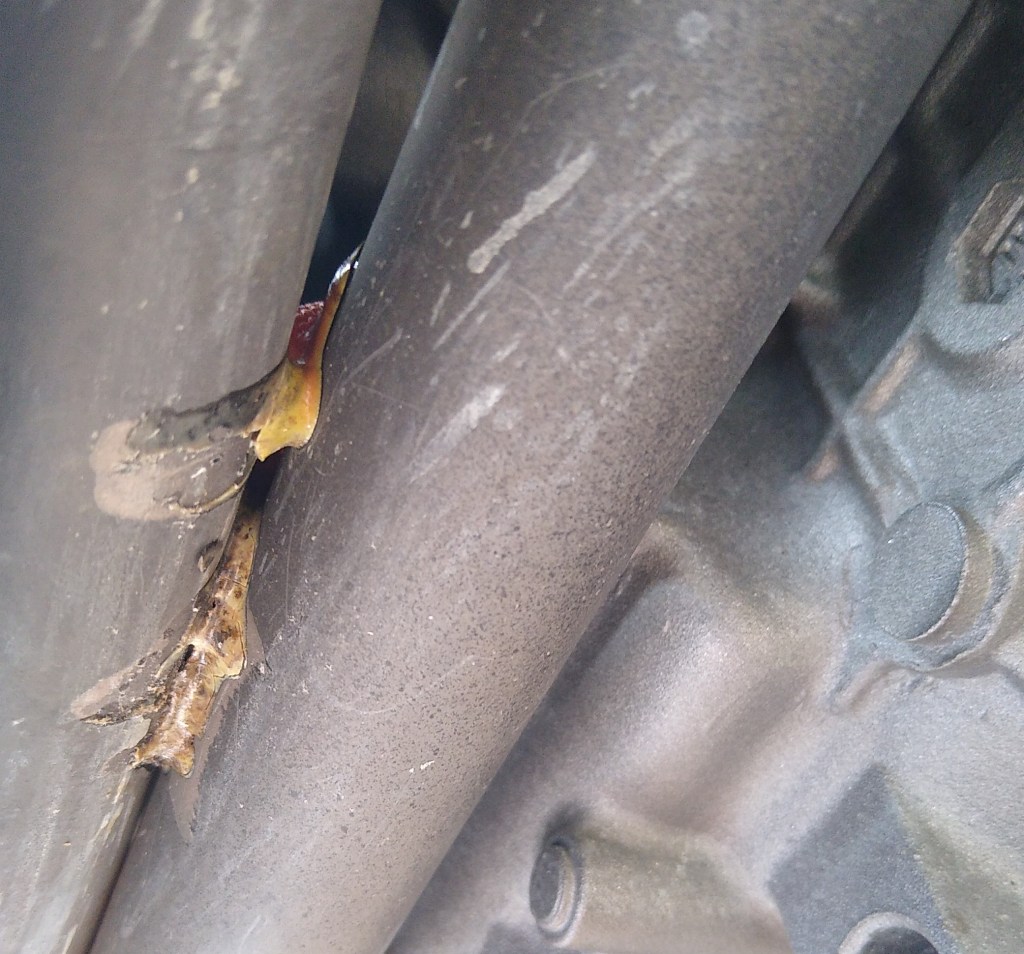
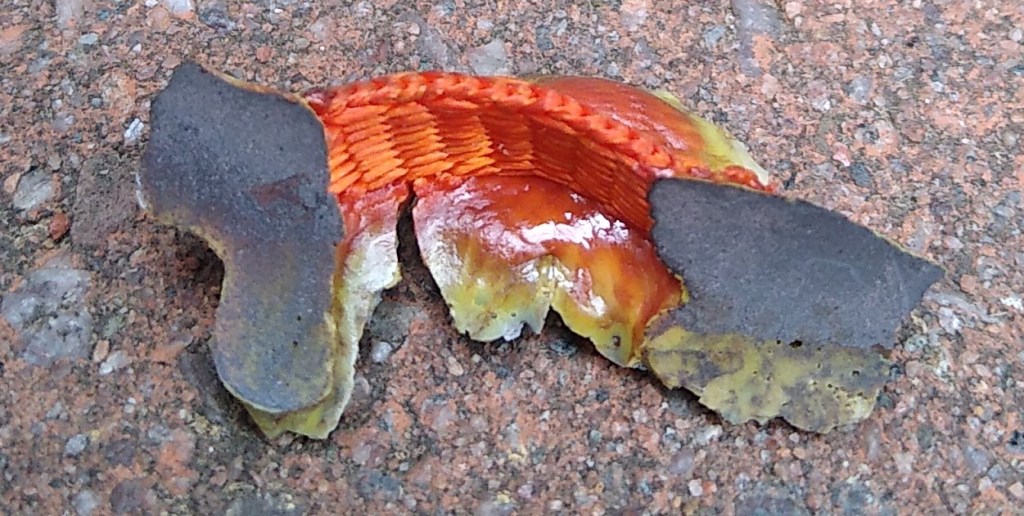
There’s a bizarre-looking piece of bright orange webbed strap hanging between the header pipes on the right-hand side. The only possible explanation for its presence is that it had been used to tie down the bike at some point in its travels, although there’s no logic to its placement. Tying down the bike through that area makes no sense at all. Someone clearly couldn’t get the strap off again and so has cut it with a knife just below the pipes. Closer investigation shows that the material has in fact melted into the headers, and it takes some careful poking and scraping to detach it completely. Fortunately the point of melting is behind the headers, and they’re hidden in turn behind bolt-on chrome covers.

I’ve managed to get the two bikes insured on my Valkyrie policy using just the VIN numbers, thanks to a really helpful agent named Nathan at Carole Nash. However, they would be insured only for a trip to and from a pre-booked MOT test. It’s very tempting and totally legal to book them in for the tests some 50 miles away and enjoy the ride there and back, but the weather forecast is for rain showers and I don’t want to spoil all that gleaming chrome and paintwork, so I wuss out and book them into a great MOT centre, DC Lomas, just two miles from my house. They both pass with flying colours – the tester described them as perfect – and they make it home without catching a speck of dirt or water.

You’d think I could now apply to have them registered, but no. Again, not so fast! I have to wait until Her Majesty’s Revenue & Customs (HMRC) issue a thing called a NOVA certificate for each bike. The bikes were landed and processed on 15 June; the NOVA certificates were issued on 15 July. You wouldn’t want to be in a hurry! Anyhow, with all the paperwork now to hand, I send everything off to the DVLA in Swansea. Not being able to ride the machines again until the DVLA issues their registration numbers is a pain: I’ve already paid in full for their insurance, MOTs, registration fees and 12 months’ road tax. It’s not like anybody is missing out financially, and the MOT engineer says the bikes are in perfect shape. Oh, and we have a mini heatwave… I’ll just have to be good and ride the Valkyrie!

Anticipation is everything

As I write, my cherished Honda Rune and Ducati Sport Classic are just over six hours away from arriving on British soil. Maybe. I know they left Cape Town on 31 May, about five days late and on a different ship. But I know from a helpful note from my shipper that they were due to arrive on MSC Argos at London Gateway port at 01:45 – two days ago.

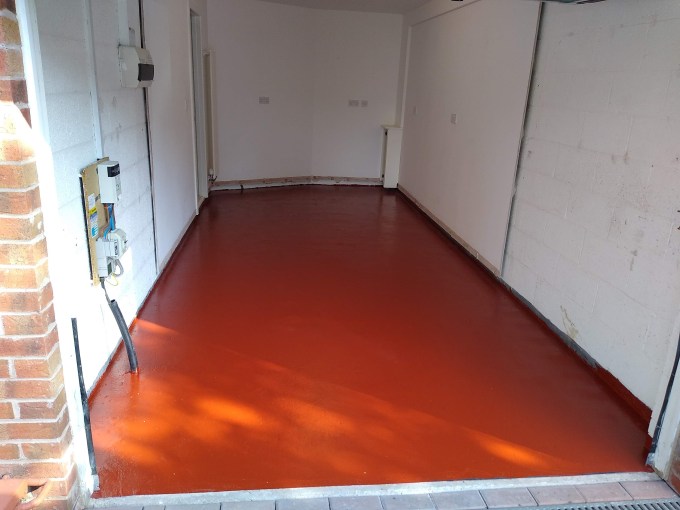
An update last week from the UK shipping agent told me they were now due to arrive yesterday and would be transported by road to our house in Stockport (near Manchester). No! Wait! Did I not tell the South African shipper weeks ago that I’d be moving to Middlewich? Of course I did. I gave the new address to the UK agent and was assured that the bikes would be brought to my door. As you can see above, the garage is freshly painted, ready and waiting (a story in itself).

I’d been tracking the bikes on their journey, after a fashion. There are tracking apps out there that can pinpoint any ship anywhere on the planet, so I dipped into that world a few times. (This may come as a shock to a certain gentleman’s barber in Middlewich, into whose emporium I stuck my masked face a few days ago. “Do you take walk-ins?” I asked, the haircut being a spur-of-the-moment thing. “No, bookings only,” came the reply from the barber, an aging hipster with a full grey beard. “Can you use an app?” he asked, pointing at a sticker on his door advertising a service called Booksy. I assured him politely that I could, and left. Can I use an app?!!! Cheek! What age did he think I was? I found a friendly Middle Eastern barber shop a bit farther down the street and had an excellent haircut for a tenner, without having to declare my IT prowess. But I digress.)

It seems as though there are indeed services that can track ships in real time if you register and, I imagine, pay. I didn’t fancy the payment bit – this shipping process was already costing enough. One site suggested the MSC Argos was cruising around the Caribbean, which didn’t sound right, somehow. More detailed digging found that there was indeed a sailboat called Argos hanging around the sunkissed islands, but it was not my Argos. Another site told me that my Argos was heading for Las Palmas but was currently off the west coast of South Africa, steaming North at 18.2 knots. Given that it had supposedly left Cape Town a couple of days earlier, it certainly hadn’t got very far. Then I spotted a little note saying that data may be up to five days old.

Not being a total luddite (aging hipsters take note), I looked up London Gateway’s website and found a detailed schedule of all arrivals and departures. And there, on the list, was my ship! It was due to dock on the morning of 15 June at 02:00 from Rotterdam – a day later than the agent had most recently suggested, but close enough. Almost time to pop the champagne cork. A subsequent check yesterday told of a further delay; it was now not arriving till 14:45. Sounded like they’d missed the tide, or something technical like that. Thought I’d see whether Rotterdam has a similar schedule and, naturally, it does. This morning it shows 101 ships in residence and 168 recently departed. Bizarrely, the MSC Argos is not on either list. Hmmm.

When I worked in Hong Kong back in 2000, I had a client called LINE that specialised in optimising global cargo transport. I know from those happy days that container ships don’t alter their schedules or ports of call on a whim. It’s a hugely precise business. LINE even had software to optimise loading, telling crane operators where to plonk (a technical term) each container to ensure its ready accessibility for speedy removal at its destination. Clever stuff. So, knowing that businesses all over the UK and Europe are awaiting eagerly their just-in-time deliveries of rooibos tea, biltong, Stellenbosch wines and BMW 3-Series parts, I shall assume that the good ship Argos will indeed be berthing at London Gateway at 14:45 this afternoon. Then it’s a simple matter of the shipping agent processing the paperwork with HM Customs, a forklift driver loading the bikes very carefully on to a truck, and the Rune and Ducati should be here sometime tomorrow-ish. Oh, the joy of anticipation!

Shipping bikes around the world is no walk in the park

As I write this on a cold, grey, day with hail showers in Stockport, two of my favourite bikes are being loaded on to a trailer 6,000 miles away in South Africa. I know it’s happening right now, because I’m in contact with Hendrik the transport guy via WhatsApp and he’s having problems.

I decided to ship our Honda Rune and Ducati Sport Classic to the UK for a variety of reasons. First, we spend more of our time in the UK than in South Africa – 100% since the advent of Covid. Secondly, the 1.3km of dirt road that connects our house down there to the nearest tarred road has long been a challenge for both bikes and I’m told is now worse than ever, so even if we were down there the bikes wouldn’t get ridden much. Thirdly, as a person transferring her residence to the UK, my wife (in whose name both bikes are actually registered) can import them here free of duty and VAT.

Finding a company to ship the bikes hasn’t been easy. The first one I tried seemed to be an expert but shipped only by the 20-foot container load, and that was going to work out at £5,400 with insurance. I could have shipped more bikes that way if I’d wanted, and bringing back the Suzuki TL1000S was tempting but didn’t make sense financially. The next company quoted far less (about £750 per bike uncrated) but got itself into a web of confusion when asked to crate the bikes. Their local ZA shipper wanted to know why we wanted them crated, and eventually stopped replying to emails.

A third company seemed competitive but went quiet for weeks at a time. Just as it was all coming together, they asked me to confirm that we had an “exporter’s code”, which opened up a whole new can of worms. It turned out that export rules required all kinds of stuff to be done, including security micro-dotting the bikes, getting police clearance and the necessary export code. The shipper couldn’t do this for me. Finally I found salvation in The Freight Factory, which not only offered a competitive price but could also handle all the local ZA admin.

Yesterday was the designated day for collecting the bikes from our house. Our neighbours kindly disconnected the trickle chargers, replaced the seats, dug out the registration documents, found the keys and agreed to be on standby to let Hendrik in to get the bikes. Only Hendrik didn’t show up. He was wending his way all the way from Durban via East London and Port Elizabeth en route to Cape Town, and arrived about 09:00 local time today instead.

He was towing a 23-foot trailer behind his pick-up truck, already loaded with three other bikes. Our South African house down a steep, 190-metre driveway, and I told him I didn’t rate his chances of turning that ensemble around once down there. Perhaps it might be better to ride each bike up the driveway and load them up on the dirt road? Turned out he reckoned it would be hard to load the bikes on to the trailer up there, so the next I heard he was down by the house and didn’t have the power to reverse uphill to turn the rig around. A call to another neighbour, Aubrey, brought him to the rescue in a more powerful 4×4 pick-up, which did the trick. I breathed a sigh of relief and left them to it – until just now, when Hendrik called via WhatsApp video to say the Rune is too low to load on to the trailer without scaping the underside.

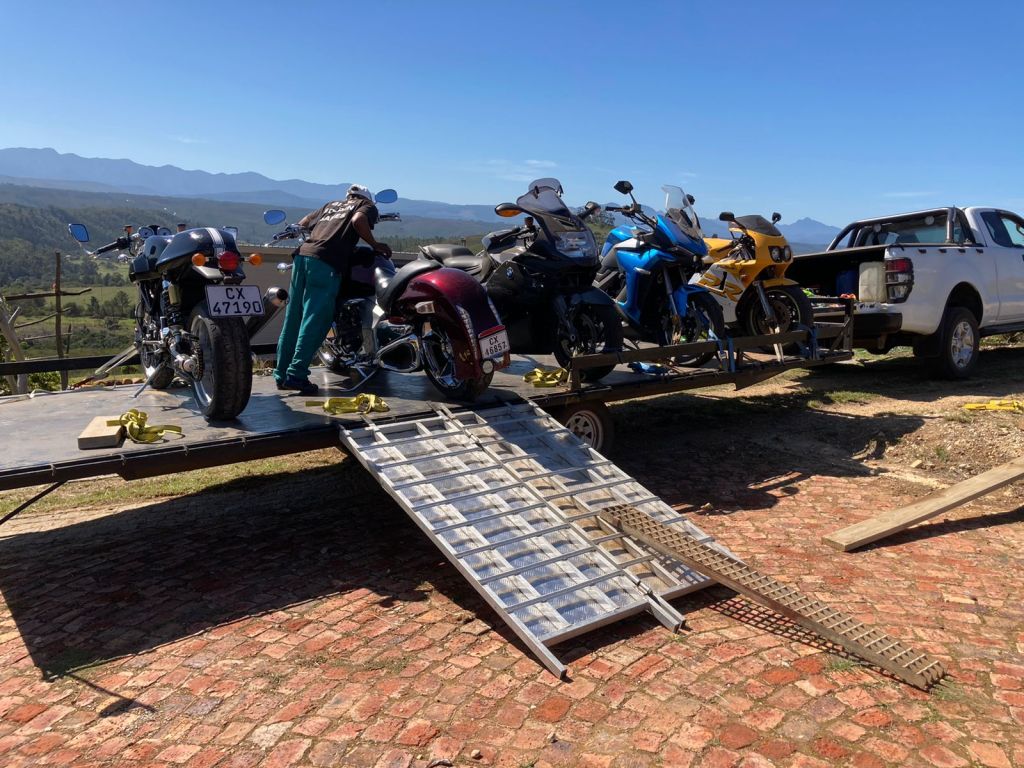
It was good to see both bikes gleaming under the blue skies and bright sunshine, at least, on the video call (gotta love technology). Hendrik’s plan was to bring back Aubrey with few of his guys who would then lift the rear end up in the air to complete the loading. The Rune weights 888 lb, however, and lifting the back might be difficult or might even damage the bike. I’ve remembered that there are a few short pieces of scaffolding plank tucked away in the garage and suggested that they ride the bike on to those to create the ground clearance. That’s how I change the oil, too. So right now that’s what they’re doing. The hail here has stopped and the sun has come out, so things are looking up. Hopefully the Rune is up, too.

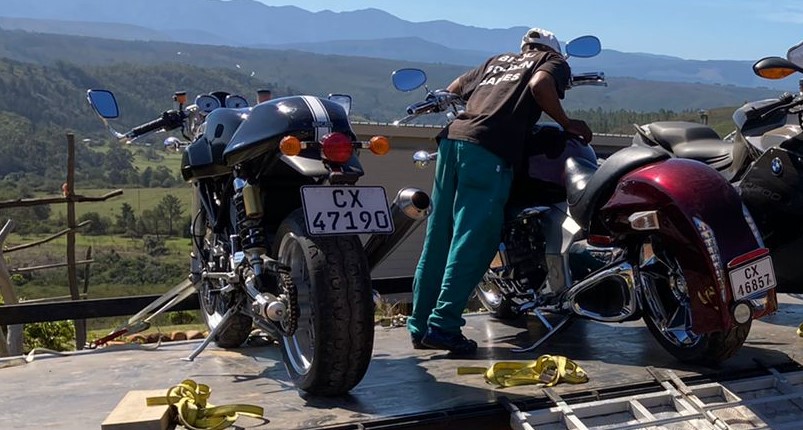
Hendrik just sent me this photo to show me both bikes successfully loaded on to the trailer and about to embark on their five-or-six-hour road trip to Cape Town. Turns out the plank trick didn’t work but muscle power did. Next, it’s a few days to get the micro-dotting and other documentation done, and maybe a week or two more while the shipper waits to fill his container, a mere 16 days on the high seas to London, perhaps a day or two in British Customs, and a final day to Stockport. It’s quite a palaver, but air freight was at least twice the cost – and good things are worth waiting for.