Zak and rain – but no pain

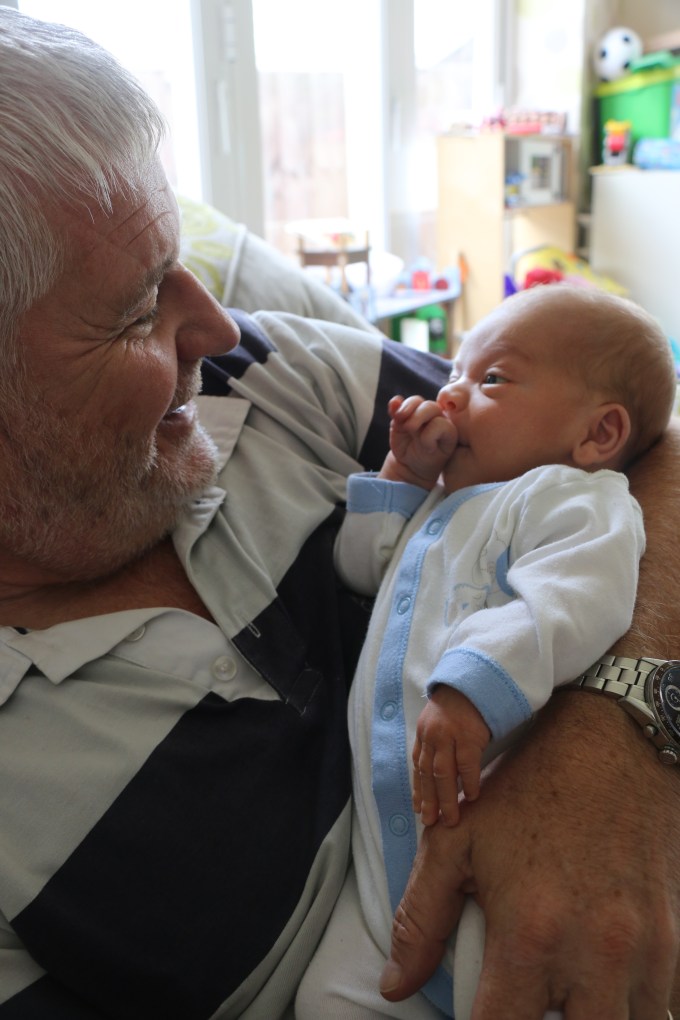
We spent Sunday as planned visiting our daughter and three-week-old grandson Zak Paul Xanthidis in south-east London before staring the journey proper on Monday.

The first leg involved an early-morning dash to catch the Eurotunnel train at Folkestone for the 35-minute journey under the English Channel to Calais involved rain. Not a lot of rain, but enough to remind us that we were in Britain and it was June.

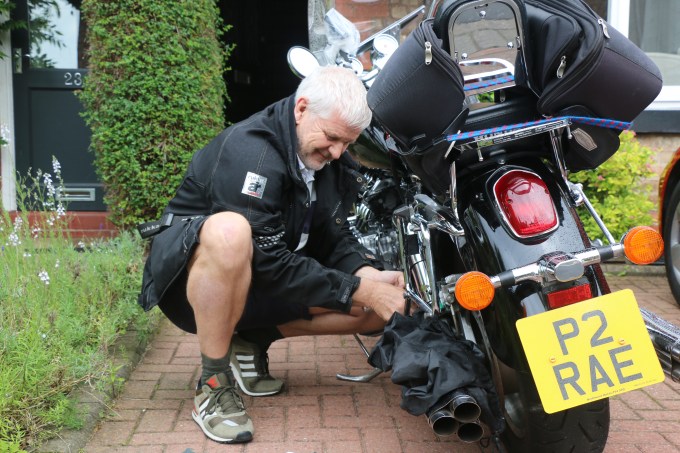
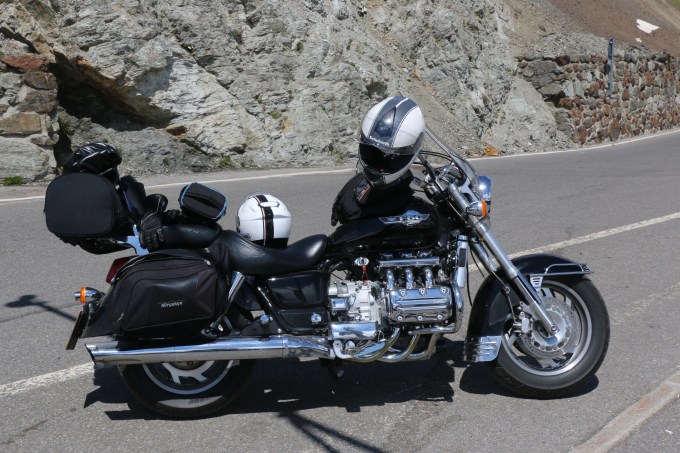
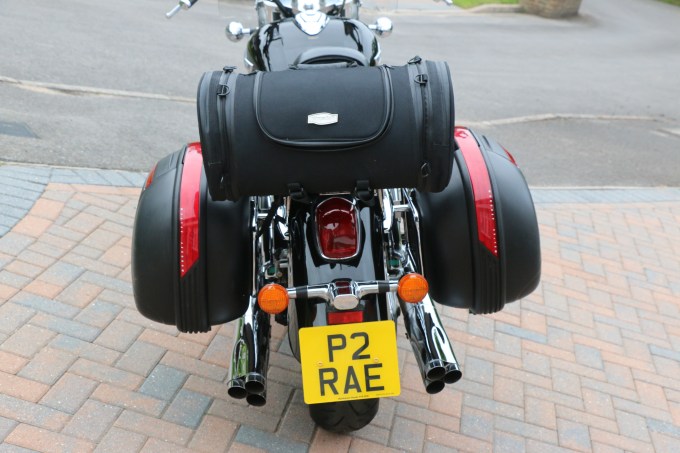
The Kuryakyn luggage isn’t waterproof in any way but comes with separate nylon covers for the panniers and a plastic cover for the top case. They’re fiddly and billow madly in the wind, look like they’ll burn on the exhaust pipes but never do, but stuff stays more or less dry. The top case cover is secured by a slip-cord, but the seams around the cord had split early on it its life and so it was even more difficult to secure.

That’s probably why it was no longer there by the time we reached the Eurotunnel terminal, having presumably flown away en route. Not a big deal, we figured. A bigger deal was our decision to nip inside the terminal for a warming coffee and porridge, because we were ahead of schedule. We then headed for UK passport control in good time and got through without delay – with my wife’s South African passport, you can never be too sure.

French passport control, however, was much slower, with long queues, and when we eventually got through we’d missed our train’s loading time by minutes. Eurotunnel had thoughtfully laid on an extra service 20 minutes later, which spat us out into a drizzly Calais still more or less on schedule.

We’d decided to use the autoroute to cover as much ground as possible on day one, and it was a doddle. This was our first time using our new Garmin sat-nav in France, and it worked a treat as we headed east through the patchy rain, stopping for petrol every 120 miles or so. By lunchtime, the rain was largely behind us and we could feel the air getting warmer.

There were also two things I couldn’t feel: pain in my butt and pain in my back. For the past few years, I’ve had a sharp pain just below my left shoulder blade after about an hour on any bike. Peter was used to massaging it with her fingers, but it invariably came back. Not this day! No back pain. No idea why, but it was great news. What’s more, it stayed away for the entire trip.

Even better was the fact that my backside was also pain-free. For longer than I care to remember, I could pretty much guarantee that I would be squirming in my seat within two hours. I’d move about a bit and seek a more comfortable position, but it was never quite right – regardless of the bike I was riding.

But this day I felt fine, even after three hours. Then I realised that my new ISX Desert summer riding trousers had no seams on the bottom, whereas I’d always worn jeans or cargo pants in the past and their pocket seams had dug into my backside. I’ve criticised a lot of motorcycle seats over the years and now it seems that the problem was probably me, not the bike. Anyway, if you experience bum ache, try a seam-free pair of trousers. It would be the afternoon of day three before I felt the slightest twinge, and that was a one-off.

Our route took us past Arras and Reims to Chalons-en-Champagne, where we left the motorway and moved on to the slower but much more enjoyable routes nationale. By day’s end we’d reached Moyenmoutier in the Vosges region and found a really nice campsite there for the princely sum of €15. They served wonderfully cold beer but no food, saying that the nearby town had so many restaurants that there was no demand for food at the camp.

So we walked the 15 minutes in to the town, only to discover that there were indeed quite a few restaurants, although the majority were selling pizza and kebabs. What ever happened to French cuisine? The only other problem was that it was Monday, and almost all the restaurants were closed on Mondays!

We settled in for a one-hour wait at one of only two open pizza places in the area; fortunately, the pizza was great. But nowhere was open to serve alcohol and by the time we’d hiked back up the hill to the campsite the bar there was closed. Admittedly, their summer season was still a week or two away. So if you’re in the area, the Camping Vosgina campsite is really great, the nearby town less so, at least on Mondays.
 

Ever take too much stuff on tour?

I guess we all have an idea of what we need to take on a motorcycle tour, and that idea evolves over time until we have the whole subject nailed down -or think we do. We probably start out by packing far too much stuff and then realise we didn’t use some of it, so next trip we pare it down and try again.

I took my first truly long-distance trip on a bike – a Yamaha YR5 350cc two-stroke – 40 years ago and completed the journey from London to Rome in two days. Crazy, I realise now, but I was young, foolish and intrepid. I don’t remember what I packed back then, but I do remember enjoying every minute. I stayed in small hotels, negating the need for camping gear, which is what takes up most of the space.

These days my wife and I tend to pack about 60 lbs of gear for a 10-day tour. I’d love to get this weight way down, so if anyone out there has some suggestions I’d like to hear them.

The core item is a two-man tent I bought from Halford’s for about £50 about 12 years ago. It takes about 15 minutes to erect and packs into a manageable size to fit inside our Kuryakyn tour pack on the rear rack. It works just fine, has never let in a drop of rain and is only now beginning to show its age, with one of the glass fibre stay segments splitting. It probably weighs a few kilos, and no doubt a lighter option is out there somewhere, maybe saving a kilo or so.

We used a thick, blow-up double mattress until this year. It was quite heavy, quite bulky and needed a lot of pumping, but it was comfortable. This year we switched to a couple of backpacker’s mattress that self-inflate to about half strength and need a little lung power to finish the job. They are about an inch and a half thick in use, very comfortable and insulate you nicely from the ground temperature. The much lower height also creates more space inside the tent.

Then there are two simple blow-up pillows and two single, standard-shape sleeping bags. Together, this lot takes up a lot of space. The mattresses go inside a plastic waterproof sausage-shaped bag, and that gets strapped atop the Kuryakyn tail bag, which in turn takes the tent and sleeping bags.

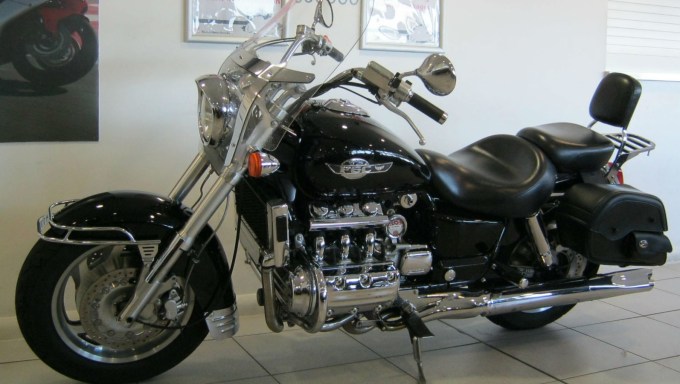
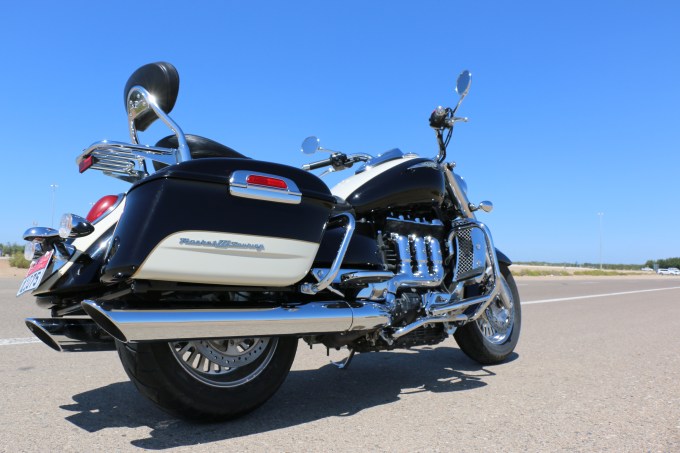
That leaves us with the two Kuryakyn fabric panniers for clothes and a magnetic Oxford tank bag for odds and sods. The panniers are sort of okay. Our last two bikes came with factory-fitted hard panniers (Triumph Rocket III Touring and Honda Valkyrie Touring) which had their own flaws but at least were secure and looked better. However, the current Valkyrie came with ridiculously small Highwayman bags, and the options for finding hard bags were limited. You either pay a fortune for original Valkyrie bags from the Touring model ($1,000 if you can find them) or some modern lookalikes that all look a bit out of place or are pretty expensive, or both.

So replacing the Kuryakyns this summer with second-hand Givis may be the ultimate compromise. I didn’t manage to get the right bolts to fit them until after our Rome trip was over, but the end result looks promising. Okay, they’re not as sleek or cool as I’d like, but they do detach from the bike in seconds, seem waterproof, are lockable, and hold a full-face helmet each. I can’t wait to try them out on tour.

IMG_7619

The Kuryakyns and the Givis are said to hold 35 litres apiece, but I think the Kuryakyns might be a bit smaller than that, even with the expansion zips deployed. What goes inside, then? This is where we could probably save some space and some weight. I tend to pack about five pairs of underwear and socks, five T-shirts, two pairs of shorts, two pairs of cargo pants, flip-flops, running shoes, two running shirts, running shorts, three pairs of running socks. Just typing this makes it look silly, and I already plan to remove a few of those items from the list next time out.

My wife’s clothing list is similar, but a little smaller. It’s a balance between going minimalist and washing your clothes every couple of days, or taking enough stuff to get you through four or five days before having to wash anything. Oh, and we also pack a small washbag and two microfibre camping towels, which take up almost no space and are great.

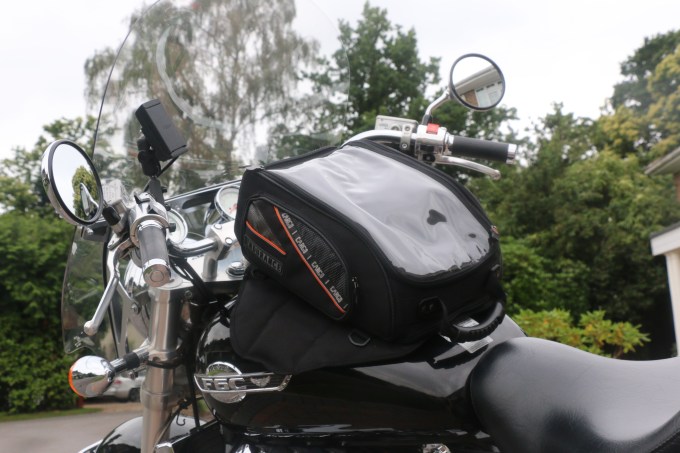
The Oxford tank bag is a godsend and a nuisance at the same time. It holds sunscreen, contact lenses, reading glasses, a helmet lock, two Kindles, maps, passports, mobile phones, a phone charger, insect repellent, and our tent light. On the downside, the magnets make it heavy and it has to be shifted every time you fill up, which with the Valkyrie is typically every 130 miles.

IMG_7622

All of this means that there’s no room for, say, rain suits, so we compromise on what riding gear we wear. In summer, Peter wears Kevlar jeans, TCX boots, leather jacket and leather gloves, and reckons that if it rains she’ll eventually dry out.

I hate getting wet so opt for waterproof boots and trousers, a choice of waterproof or plain leather gloves, and a non-waterproof jacket, trusting to luck that summer in Europe won’t get too wet. Mostly, it works out that way.

For winter trips, I go the full Rukka waterproof route and Peter wears a one-piece Oxford waterproof sack-like thing that she hates, but concedes that it does keep her dry. We rode back from Manchester to London in torrential rain recently and she welcomed its contribution.

One friend with a Gold Wing solved the “what to bring” problem by adding a trailer, which is a solution that I can understand totally but would never want to try. Others try to manage without mattresses, or go solo which simply requires less gear. Others go for exotic gear like titanium tent pegs to save weight. And lots of people skip the whole camping thing and stay in hotels. There’s probably no single ideal solution, but I’d like to hear yours!

Boots, bags, bolts and gloves: what could possibly go wrong?

The plan was pretty straightforward and had been carried through in various forms so many times before, going right back to 1975. We’d fly into Heathrow, pick up the Valkyrie from my cousin Tony’s garage in Woking, fit new panniers and head off to Rome. What could possibly go wrong?

For reasons to do with work and family, my wife and I divide our time between Dubai, the UK and South Africa. We keep bits of kit in each location to save humping too much stuff on and off planes. So the day before we left Dubai for London, we tried to remember what was where.

Summer riding gloves? Inside my helmet with the Valkyrie in the UK. Sleeping bags? My wife, who is also called Peter, sorted through a pile of about six and asked me which ones we needed to take. None, I replied confidently, since they too were with the bike. Then I came across my trusty waterproof riding boots and wondered why they were in Dubai. Surely I’d left them in the UK? No, I decided, last time I was there I’d used my short summer boots, so they were still there with the bike, helmet, gloves, Rukka riding suit and sleeping bags.

Twenty-four hours later, after the taxi had disgorged us at Tony’s house, the serious tour prep began. The Valkyrie was wheeled out into the sunshine and I rooted through the gear surrounding it. Out came the tent, the new air mattresses, inflatable pillows and… that was it. No sign of sleeping bags or boots, tall or short. The first smidgen of doubt crept in.

I unzipped the two Kuryakyn soft panniers and found the Rukka jacket and trousers; opening the matching carrier-top bag yielded my helmet – but no gloves. Further searching proved fruitless. Obviously for some bizarre reason I’d brought the sleeping bags, boots and gloves back to Dubai after the last trip. It was now mid-morning Friday, and we were due to set off first thing Sunday morning. Bugger!

Before we went shopping for gear we already had – but not in the right country – I turned my attention to fitting the second-hand Givi hard panniers I’d bought a few months earlier from another Valkyrie rider on an owner’s forum. He’d kindly delivered them to Tony’s house to await my arrival.

A quick inspection showed them to be in very good condition and the brackets looked like a bolt-on fit, so I removed the Kuryakyns (not an instant task, as you have to unbolt the pillion seat first) and their supporting brackets. Offering up the Givi brackets showed them to be indeed a near-perfect fit; this shouldn’t take long.

But, of course, the bolts that held on the old brackets were too long to suit the Givi ones, and I had nothing suitable to hand, so the Kuryakyns had to go straight back on: the bike had a 2 pm appointment for its annual MOT test (roadworthiness check). As expected, the Honda breezed through the test, and we set off in search of boots.

The nearest dealer had some unattractive boots for sale at prices northwards of £150, and that seemed too much for an emergency replacement. On, then, to Halfords, every UK biker or motorist’s default port of call for nuts and bolts. Nope, they didn’t have the bolts I needed, but they did have sleeping bags on sale at half price, so we filed that away for comparison purposes and would resume the enforced shopping spree on Saturday.

There’s a very cool online motorcycle clothing specialist in the UK called Motolegends that has an actual shop in nearby Guildford, and a quick look at their website showed several types of boots on sale at around £90. More than I’d hoped to pay, to be honest, but hey – needs must. So we set off for Guildford on Saturday morning in bright sunshine to beat the heavy rain forecast for that afternoon (this being Britain, we didn’t succeed in that, of course).

As luck would have it, all the £90 boots weren’t in stock at that particular warehouse, so I tried on three other pairs at prices nudging toward £200. When did bike boots get so expensive? Obviously, sometime after I bought my last pair. Unfortunately, none of these boots fitted me well enough.

The helpful salesman suggested I try a short Daytona boot, which of course fitted me like a glove – a £275 glove! Peter and I decided that they were an investment and would last forever (they have that reputation), so we sprung for the boots. A pair of waterproof, summer-weight riding gloves set us back a further £50. Thanks, Motolegends – great gear and no more expensive than the norm; it was just that I already owned all this stuff…

A trip to the camping store Milletts revealed a wider range of sleeping bags than at Halfords, and they were also on sale, although at slightly higher prices. We bought two for about £15 each, but drew the line at paying £18 for the only other item we seemed to have forgotten – a European electric two-pin adapter for our standard UK three-pin plugs. £18? Seriously, Milletts?

Newvalkyrie

We had no further luck with bolts, so we returned to Tony’s where the black Valkyrie was duly washed and polished, in the hopes of better weather tomorrow; I never start a touring trip with a dirty motorcycle. The Givis were put reluctantly to one side and we packed the gleaming bike for Sunday’s early start, about £360 poorer but, maybe, a little wiser.

Ups and downs of a motorcycle road-tester

Suzuki X7

For eight wonderful years in the late ‘70s to early ‘80s I had the good fortune to work as a professional motorcycle road-tester. It wasn’t a full-time job, because it didn’t pay well enough, but a part-time role supplementing a full-time job. Truth be told, I’d have done it for free!

I got to ride the largest, newest, most expensive bikes on the market, at a time when I couldn’t possibly have afforded to buy most of them. On one memorable occasion, I had four of the latest, most exotic bikes available sitting in my carport at the same time (a Honda CBX, Yamaha XS1100, Laverda Jota and MV Agusta 850 race replica). The only problem was finding time to ride them while holding down that day job. It was a busy week, but oh what a week!

Unlike big-name car testers, back then we motorcycle testers didn’t get the bikes delivered to our doors and collected afterward. You had to make your own way across London or even farther afield to the headquarters of the various importers to pick up the test bike, then retrace your steps by train or Tube at the end of the test, helmet in hand. But typically you got to keep the bike for at least a week, often two, and that was worth the effort.

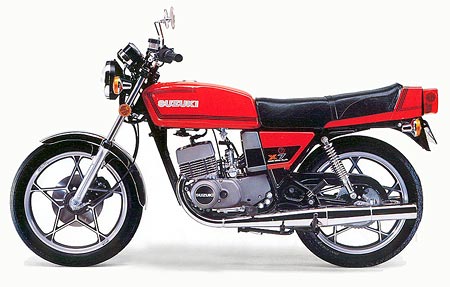
As a freelance, writing for four magazines, two of which I edited, I had some say in which bikes I tested. At 6’ 2” and weighing about 90kg, I tended to avoid the 125s and 250s if I could. Living 30 miles from the office, some of that on high-speed roads, I wanted more oomph to make the journey fun. I recall testing a Honda CG125 at one point and battling to keep up with the traffic into a headwind on the A2 in Kent. That was my only 125, happily, and the 250s were few: I recall the Suzuki X7, Honda CB250, Kawasaki 250 and the Puch 250.

The Puch was the one that got me into trouble. Not road trouble – political trouble. I was never one to be overly rude about a bike, but neither was I one to skirt around the issues: if I bike handled badly, had poor brakes, terrible tyres, mediocre suspension, rotten headlights, harsh ride, insufficient power or a hideous seat, then the reader deserved to be told. And back in the ‘70s, a lot of bikes suffered from at least one of those faults, sometimes several.

The Puch was an old-fashioned two-stroke twin (I think – I’ve tried to blot out all memory of it, and even an Internet search doesn’t reveal much) that had been tarted up with a BMW R90S-style bikini fairing and positioned as a sports bike. I think it was a UK-only special. It used a petroil mix, rather than the separate petrol and oil tanks that the Japanese had been using for years at that point. So you had to buy a small can of two-stroke oil or carry one with you, put some petrol in the tank and then add the oil, and shake the bike about a bit, which was hugely inconvenient and felt like stone-age technology in the late ‘70s.

The other “feature” was a very odd foot-operated clutch, in addition to the usual handlebar lever. I’s been riding bikes since I was 13 and never come across, let alone heard of, such a thing. I had some very clunky winter riding boots back then, sturdy thick leather things that didn’t transmit much to the foot within. So I found myself on several occasions, in busy London traffic, with what felt like a slipping clutch and no forward progress. I eventually tracked this down to the fact that the sole of my left boot was touching the gear lever and activating the clutch. Once I worked that out, the thing worked well enough, but not well enough to earn a good test report.

It was more economical than a contemporary Japanese 250, but way behind them in performance, convenience, quality of finish and value for money. So I said so, and was duly given a tongue-lashing by the MD of the UK importer, who sneered and called me an amateur journalist. As it happened, I was a full-time professional and fully qualified journalist working for a respected UK magazine; the truth was that the Puch was a crap bike by the standards of its peers.

Other bikes that failed to impress were the Harley-Davidson Electra Glide and the Harley XLCR1000 café racer. I rode them both on a test track in Surrey, with speed banking, in heavy rain and have rarely been so frightened in my life. The brakes didn’t work in the wet, and neither did the tyres, and it took a massive effort to complete a few laps without falling off. Neither bike felt that fast, luckily, compared with the Suzukis, Kawasakis, Yamahas and Hondas I rode that same day. The XLCR1000 was a handsome beast, all in black, but was let down by its chassis, tyres, brakes, suspension and engine. Not much more to say, really.

There were other scary moments, but not many. I recall taking a BMW R100S to Ireland to test it over the wonderful twisting back roads there and being a little concerned by the state of its front tyre, which seemed to be upsetting the handling. I took it to Ireland’s only BMW specialist at the time, who found that the steering head nut was loose! He also replaced the front tyre, and normal service was resumed.

That was one of the things about test bikes: they were usually new, sometimes brand new, and were usually given a thorough check by a factory mechanic before being loaned to the press. The last thing you expected were loose nuts and bolts on crucial components.

Happy days, despite the few duds. More on the good times soon.

The head-turner that makes me smile


I had a couple of months back in South Africa for work, mid-March to mid-May, which meant I got to ride some of my bikes on those relatively deserted roads of the Western Cape once again. Living as we do one kilometre down a dirt road, getting out was dependent on the state of that road. To start with, it was bad – really bad. Deep ridges across the road, potholes everywhere, courtesy of the massive logging trucks that use it as a shortcut.

The V-Strom could cope, just – even the rugged double-cab Nissan N300 bakkie protested at times. The two sports bikes really didn’t want to know; their suspension just wasn’t designed for that sort of treatment. Neither, for that matter, was the Rune, its rear end sensitive as it is to even poorly surfaced Tarmac roads. I was even more worried about stone chips damaging its largely unblemished paintwork.

Then, after a few days, the guys with the road graders came and smoothed out the worst of the bumps, the sun was shining, and suddenly all the bikes were viable. Guess which one got ridden, almost exclusively? The Honda Rune. It just feels so right.

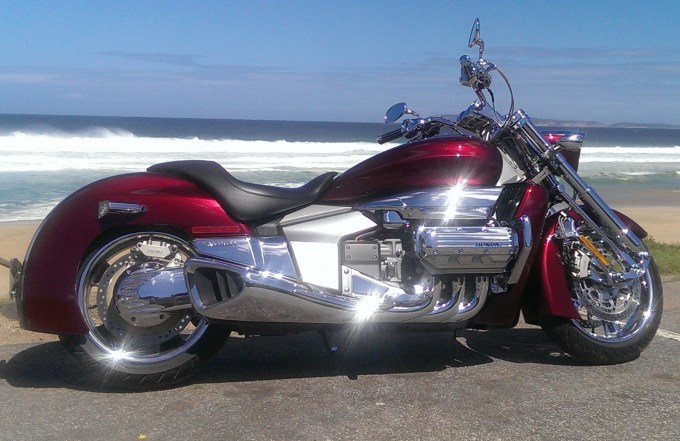
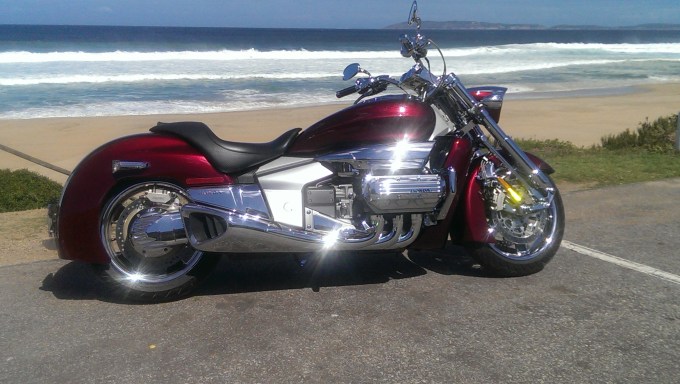
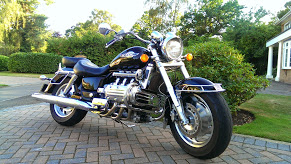
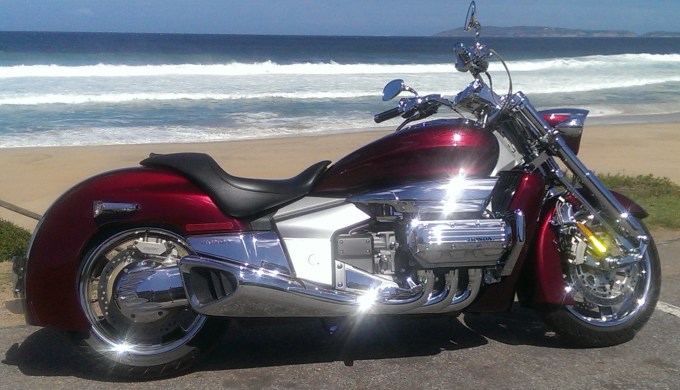
The engine is far from the largest on a modern bike, and very far from the most powerful. Yet it’s powerful enough, it’s wonderfully smooth, and it sounds great. The riding position is very relaxed, and the view from the saddle is unique: that long tank, the intense, deep chrome of the handlebars and instruments and switchgear, and the beautifully crafted chrome headlight poking forward four feet in front you.

The fact that 100 kph (62 mph) feels like a supremely comfortable cruising speed may be a turn-off for many riders. There may have been a time when I too would have dismissed as “past it” any other rider who felt that 100 kph was a satisfactory rate of progress. But it has the advantage of reducing your chance of speeding tickets and on the Rune it just feels good. So does 120 and 130, so all is not lost.

I recently placed this custom flat six at the top of my list of all-time favourite bikes, and riding it in recent weeks merely conformed that status. If you ever have a hankering after a really relaxing cruiser that impresses the hell out of you every time you lay eyes on it, then try a Rune. If you like Valkyries, you’ll love it.

The fact that it turns heads everywhere you go could be deeply irritating after a while, but so far, for me, it isn’t. I got stopped in one of the frequent, random police roadside licence checks that are part of life in South Africa, and the young female officer asked me to park the bike and walk home so she could have it. Police officers who crack jokes! Then she walked around it slowly, came back and said “I love your bike – but I hate your number plate” (it might be just a tad smaller than regulation size).

An old guy (well, about my age) walked over another time and asked if he could take a picture for his son, who owned a Panigale. Two women, probably in their early 40s, saw me walking toward it in a DIY store car park and asked: “Is that your bike?” Since it was the only bike in the place and I was wearing a bike jacket and carrying a helmet, it seemed a silly question, but that’s the Rune for you – a conversation piece.

Time for a special mention for Star Panelbeaters in Knysna. They did an excellent job respraying my black Ducati SportClassic after its tank-slapper incident last year – the final step in restoring it to virtually as-new condition. I asked them if they could try to polish out some very small surface scratches visible in the top coat of the Rune’s tank. Not sure how they got there – they may have been there before I bought it. Star said they’d give it a shot. They set to with the finest wet-and-dry emery paper I’ve ever seen, then added a thin white paste to the area and buffed it with a power polisher. The result was amazing: scratches gone and the tank immaculate once more. Thanks, guys!

The only casualty of that wretched dirt road – apart from the small truck that rolled off it and on to its side in the ditch near our house – was the Ducati. There has been a hairline crack for a while in the plastic left rear indicator stem, where it joins the tail-light assembly, and in just one trip down that dirt road on the way back from the spray shop the crack simply broke right through, leaving the flasher dangling by its electrical wire. Annoying rather than disastrous, but indicative of how rough that dirt road can be. Happily, it’s scheduled to be tarred next January.

Next planned road trip is the Valkyrie through the UK and across to Austria in July. Can’t wait!

Why do we ride?

There’s nothing like eight solid days of painting walls and doors to set the mind wandering. My mind wandered to motorcycling, as it so often does. Not because I’ve been riding this past week, because I haven’t. The dirt road that runs for the last kilometre to our house gets churned into a washboard by heavy logging trucks, making the V-Strom the only bike that can comfortably use it right now. When you’re lugging tins of paint and making random stops for new mixer taps, 5kg bags of tile grout and extractor fans, the double-cab bakkie (pick-up truck) is just more practical.

So as I applied no fewer than four coats of white paint to cover the previous owners’ taste in yucky green walls at a rental apartment we’re trying to make rentable again, I eased the tedium by pondering the question of why we motorcyclists ride our bikes. I came up with some answers, for me at least.

Obviously, most of us ride ‘cos it’s fun. I grew up in Ireland in the ‘50s and ‘60s when motorcycles were relatively uncommon and often ridden for reasons of affordability: some people just couldn’t afford cars, and bikes provided independent personal transport. But we live, in the developed world at least, in more prosperous times now where a car can be obtained quite cheaply, if that’s what you want.

So it’s not just about meeting basic transport needs. It’s so much more than that. When we ride, the sensations we experience come directly from inputs we provide with our hands, our fingers, our toes, our knees and our backsides. There’s a wonderful precision required between eyes, brain and the aforementioned extremities. Usually there are nuances based on our judgement calls: just a tad more throttle here, a feathering of the front brake there, maybe a quick down-change for optimum drive out of the next corner; a few millimetres of counter-steer, a bit of extra pressure on the tank from a knee, a roll of the throttle. We’re totally involved in the act of riding.

Then there are the sensations we experience as a result of those inputs: the sheer thrust of full-throttle acceleration in a straight line, with the attendant sense of being pushed backward while your arms strain to hold on; the sense you get with some bikes that you are being picked up by an unseen force and hurled at the horizon. Different bikes do it in different ways: the two-strokes of old would emit a banshee wail and shriek their way to the redline so fast that you really had to focus to change up in time; the relentless, gutsy urge of a powerful V-twin (I’m thinking Ducati rather than Harley here, but they both do it) that seems to grasp your very entrails and drag you forwards in a wall of sound and torque; the wide array of modern fours that combine a frenetic buzz with a smooth progression to uncanny speeds in the bat of an eye.

Of course, this isn’t happening in one dimension: the laws of physics put you and the bike in a state of balance whereby your brain can dial in just the right amount of lean to negotiate the next corner at the speed you’ve chosen. Then there’s the sensation of grip (hopefully!) as you literally feel this two small contact patches between rubber and road deliver the line you’ve selected. If your riding skills are at the far end of the expert spectrum, there’s the added thrill of feeling one or both tyres start to lose a little grip and you then controlling it all, right there on the edge.

Then you have to throw in a bunch of other factors that may be enhancing the experience: spectacular countryside, the warmth of the sun softening your leathers, the smell of newly mown grass, fresh air in your nostrils, the mesmeric flow of a series of bends that allow you to flick the bike this way and that, hitting your apexes and mastering that road. Oh, and the sound, the glorious sound that you’ve spent serious money to create: the thunderous snarl of a V-twin through a racing pipe, the race-track scream of a high-revving four, the solidity of a triple.

Your brain becomes your own personal mixing desk, dialling in precisely the blend of acceleration, lean, grip, speed, sound and cornering line, making tiny adjustments in real time and feeling the satisfaction of instant feedback every time. And you get to do that every few seconds, every corner of your ride. Your whole body joins in the fun: you feel the engine alive beneath you. Some riders even enjoy the vibration of some models as proof that the engine is working – I’m torn between the pleasant and mild vibes of my Ducati SportClassic and Suzuki TL1000S and the silky smoothness of my Valkyrie and Rune, but there’s never any doubt with any of them that there’s an engine down there doing its stuff.

IMAG0586_BURST002

Riding position is another factor: flat bars or clip-ons generally put you in a more controlling stance, but a more upright position can still deliver plenty of feedback. My Valkyrie is a case in point. Very high bars and the sort of ape-hangers favoured by the Mayans on Sons of Anarchy detract from the amount of precision you can exercise at critical cornering moments, in my opinion, but you still get to enjoy the rest of the experience.

Then there’s the whole sense of being out there, actually in the scene rather than observing it from behind a windscreen; smelling the countryside directly through your nostrils rather than inhaling the filtered air from a car or coach’s aircon. The degree to which this is a benefit depends on where you live, how hardy you feel and your tolerance for being cold and wet. I’ve done cold and wet for most of my riding life, and I’ve done warm and dry, and warm and dry is better. It’s a matter of personal taste – and geography.

So your mind is doing this mixing desk control thing: observing, sensing, directing. Your body is feeling the horsepower and torque through every contact point. Your hands, fingers and toes are dancing endlessly, making it all happen. The chances are you’re riding a bike you’ve chosen, one that means something to you, and that adds a whole other dimension of pleasure: the familiar sight, sound and feel of a bike you love.

The fact that the bike may be taking you somewhere you need to be is almost coincidental; that you can probably park free of charge within a few yards or metres of your destination likewise; it’s all way beyond practicality. It’s one of life’s ultimate thrills, and it’s available on tap any time we choose.

My top 10 favourite motorcycles: part 3

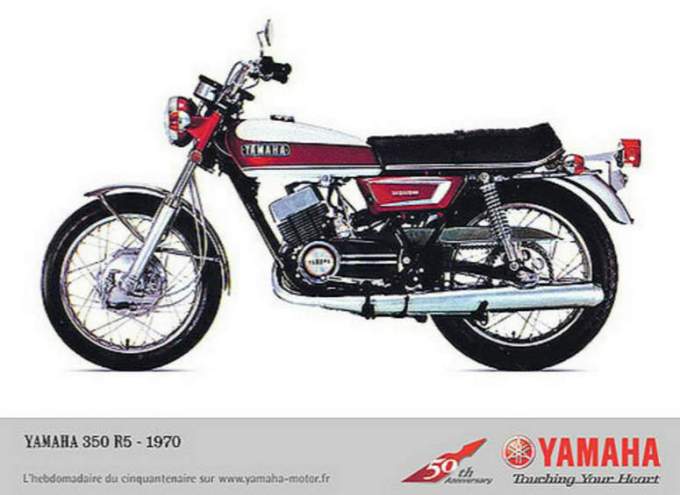
We’ve covered the top nine bikes, leaving only tenth and the mysterious second spot to cover here in Part 3. Tenth place goes to perhaps an unexpected choice: a purple and white 1972 Yamaha YR5 350. I had just come back from my first trip to the US that summer, working as so many students do on a J-1 visa, and I’d saved some money for my next year’s university fees. My mother kindly said she’d cover those, and I happened upon this Yamaha in the showroom of Gem Motorcycles in Ranelagh, Dublin. It had just 200 miles on the clock from new and the previous owner had crashed it. The damage had all been repaired and it looked like new. I paid £350 for it (about $850 at the exchange rate in 1972) and it was awesome!

The 350cc two-stroke accelerated like a bat out of hell compared with many of the bikes on Irish roads at the time: Honda CB250s, Yamaha 125s, Bridgestone 175s and a fair number of British twins. My friend John Giblin was the very proud owner of a Triumph 500 and was flabbergasted when the YR5 left him for dead at the lights, not once but every time. People were still coming to terms with the fact that smaller, lighter and peppier Japanese two-strokes were the new game in town.

The Yamaha took me from Dublin to London and back for a summer job in 1973, and when I graduated and moved to England to take up my first job in 1974, I bought another one, in orange and black, and rode it from London to Rome in two days in 1975, a journey of about 1,200 miles (1,900 km). It was a joy to ride through the mountain passes along the way, and while these days the basic seat and minimal fuel range would make me think twice, I was 21 and all I knew was that I wanted to do the trip. Ah, the folly of youth!

That completes my personal top 10 – almost. I need to give one bike an honourable mention. During my time as a motorcycle magazine journalist, I went to the British motorcycle industry annual test day at the Military Vehicle Engineering Establishment at Chobham in Surrey. This comprise an oval track with a little bit of banking where you could really use the engine performance of 1970s superbikes. The attending journalists could try pretty much every bike available in the UK, and this particular day I did just that: Harleys, Yamahas, Hondas, Suzukis, Kawasakis. The event was almost over and I’d had my fill of the latest one-litre machines when I bumped into a really nice guy I knew, Mike Jackson from Norton. “Have you tried our bikes?” he asked. I hadn’t, I admitted. “The track is empty – take one out now,” he offered, and I did.

The Norton Commando Interstate 850 that I took out, resplendent in its black livery with gold pinstriping, was an utter revelation. The infield of the circuit included a section of hilly, twisty road called the Snake River Pas, or something like that, and it was an excellent test of any bike’s handling. The Commando lapped it up, flicking from side to side like a 250, accelerating with gusto, braking perfectly and generally giving me 15 minutes of sheer joy.

I handed the bike back with profuse thanks and told Mike it was the best bike I’d ridden all day, including the XS1100, GS1000, CBX and many others. “Would you please tell everyone else,” was his parting request. I did, indeed, although I couldn’t help feeling that this was a factory bike, fettled by factory engineers, its swinging arm expertly shimmed, oil leaks banished by official edict. Ownership might be a bit more problematic. But it was a hell of a bike. If you get a chance, try a good one. Even the new 2016 version, though pricey, looks the biz.

So what is the mysterious second-place bike in my personal top 10? Those five bikes that tied for joint third spot gave it a hard time, but for me there was only one choice: the original Honda Valkyrie. I saw one parked in a London street shortly after it came out and was instantly impressed. Here was the natural successor to all those unfaired Gold Wings I’d loved, only with a 1,500cc flat six engine and a mild custom-bike look and feel. I first sat on one at the BMF Rally in Peterborough, which I visited in May 2000 with my daughter Charlotte. It felt plush and looked great, and I resolved to buy one.

Newvalkyrie


The opportunity arose a few months later in Hong Kong, where I was working for a couple of years. Hong Kong ain’t all that big but I rode pretty much every inch of it on that ’97 red-and-white Valkyrie, many times over, and never tired of it. Every time I fired it up it felt like an occasion. So as soon as I landed a job back in the UK two years later, an almost-new 2000 model in black became my regular ride. It took me around the UK, to the west of Ireland and down to Rome, and every journey felt special, even though the custom seat never felt as comfortable as I’d have liked.

New Valkyrie 2 (2) (2014_05_08 03_36_25 UTC)

My wife sat on the back across some pretty bumpy roads between Dublin and Galway and commented that the seat and suspension weren’t as comfortable as they could be. In the queue for the car ferry back to Holyhead in North Wales, I saw a new Suzuki M109 and a Triumph Rocket III. Both riders professed themselves delighted with their respective steeds, so after five years of owning the black Valk, I traded it in for a Rocket III Touring.

IMG_0275 (2014_05_08 03_36_25 UTC)

On a test ride it felt spacious, comfortable and very torquey, and I was up for a change. The Triumph took my wife and me across Europe and acquitted itself reasonably well, laden with 59 pounds of clothes and camping gear, but I didn’t bond with it the way I had with my Valkyries. The 2,300cc triple felt and sounded a bit rough, especially at low speed; vibration would numb the outer three fingers on my right hand; and the fuel gauge was useless. Yet when we rode two-up down the via Appia Antica in Rome and the tarmac suddenly gave way to the boulders that had clearly formed the original road in Roman times, the Rocket didn’t complain. What I needed was a trials bike, or at least a motocrosser, but the 348 kg (dry) Triumph handled it all with amazing aplomb. And it rarely failed to attract admiring glances due to its vast size. People would ask about the engine and whistle when told it was 2.3 litres.

We shipped it to Abu Dhabi when work took us there but ultimately I felt that a Valkyrie was essential, so I sold the Rocket and bought my third Valk, a 2002 model, in black, with just 10,000 miles on the clock. It felt like putting on a pair of favourite old boots. It took us around the Peak District two years ago and down to the south of France last summer, and this year it’ll take us to Austria.

What’s the big appeal? It’s roomy for my 6 foot 2 frame; reasonably comfortable in the seat department; handles like a bike 200 pounds lighter; and the engine makes any speed feel effortless. Winding it up through the gears produces turbine-like smoothness, accompanied by a cross between a whistle and a wail. It also looks like a large naked motorcycle should look, following traditional lines with smooth curves. I’m not a fan of the angular look of the 2015 Valkyrie and its ilk.

So the black Valk will take us around the UK and Europe until I get too old to manoeuvre it, and the Rune will probably stay in the family for ever, as much a work of art as it is a form of transport: two worthy holders of the first and second places in my all-time top 10.

My top 10 favourite motorcycles: part 2

In deciding on my favourite bikes (ones I’ve actually owned or road-tested over a decent distance), I’ve placed the Honda Rune at the top of the tree.  Five bikes are joint ties for third place (see Part 1), so I need to name my number 2 choice for second place, plus eighth, ninth and tenth.

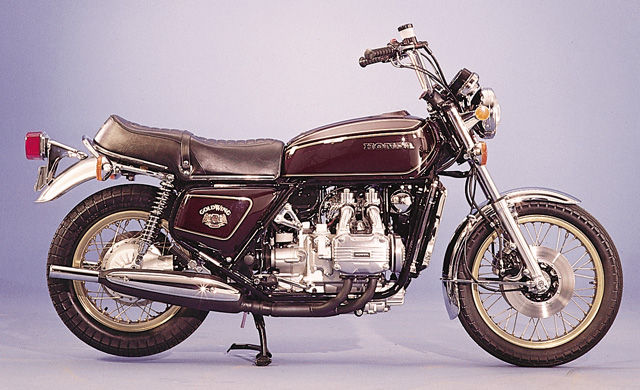
I’ll return to second place later, but what comes eighth? That’s easy: the Honda GL1000 K2, for a particular reason, but also all the variations that came afterwards, right up to the current Gold Wing 1800. My own photo library is in Dubai and I’m in South Africa right now, so I’m a bit limited in the copyright-free photos I can access, so the photo here is (I reckon) a US-spec K1 model, but very similar visually to the K2.

Honda Gold Wing K1

Why the K2? Well, I tested one about two days after I laid down my own hard cash for a brand new BMW R100 “autumn special” with the S handlebar fairing and in that rather nice metallic green. That purchase, on 1 August 1979, was based on the enormous fun I’d had riding the new 1979 BMW range with seven other European journalists in California and the American south-west in February that year.

It was clearly a case of the scenery and the luxury of the whole trip influencing my judgement. We’d stayed a night in the Beverly Hilton, ridden the whole range of new Beemers for more than a week through California to Tucson, Arizona, with a brief side-trip into Mexico at Nogales for myself and Cyril Ayton of Motorcycle Sport. We stayed at a dude ranch, flew down the Grand Canyon just below the rim in a light aircraft and then out over the rim in a helicopter. We’d set off in the morning and ride at our own pace, keeping an eye out for the vast Winnebago motorhome that would have set off earlier and be ready ti serve barbecued steak and a cold beer at lunchtime. To this 25-year-old Irishman, it was exotic. The BMWs did feel wonderful, too, and I grew particularly fond of the RT and the T. I decided I’d buy one as soon as I could afford it, and the R100 autumn special was just within my reach by late July.

The Gold Wing K2, though, proved more to my liking. It was smoother, quieter mechanically, had more power and a better power delivery, and generally felt more civilised in every way. Adding insult to injury, it was £20 ($30) cheaper than my new BMW. I rode it back to my house in Singlewell, Kent, late one night from central London and remember writing that I had to fight the urge to keep on going to Dover, catch some hypothetical late-night ferry and ride on to greet the sunrise in France. That’s the effect it had on me. Sadly, it also meant that the BMW lost its allure overnight and never really regained it; I sold it within two years.

The Gold Wing (from memory, 36 years later) handled acceptably. I’ve ridden sharper-handling bikes, obviously, and no one would mistake it for a sports bike even by the standards of the day, but it handled well enough to meet my needs. I recall that it exhibited a slight weave at speeds over 120 mph, but so did almost all the heavy superbikes of that era. But in real-world use, it felt so right. So did the subsequent K3, and the GL1100 that followed. I always preferred the naked versions, but the fully faired Aspencade that I borrowed for a memorable ride from Los Angeles to Steamboat Springs was a pleasure to ride. In the desert heat of Nevada, however, the fairing merely directed all the engine heat on to my legs and made me year for the unfaired model again.

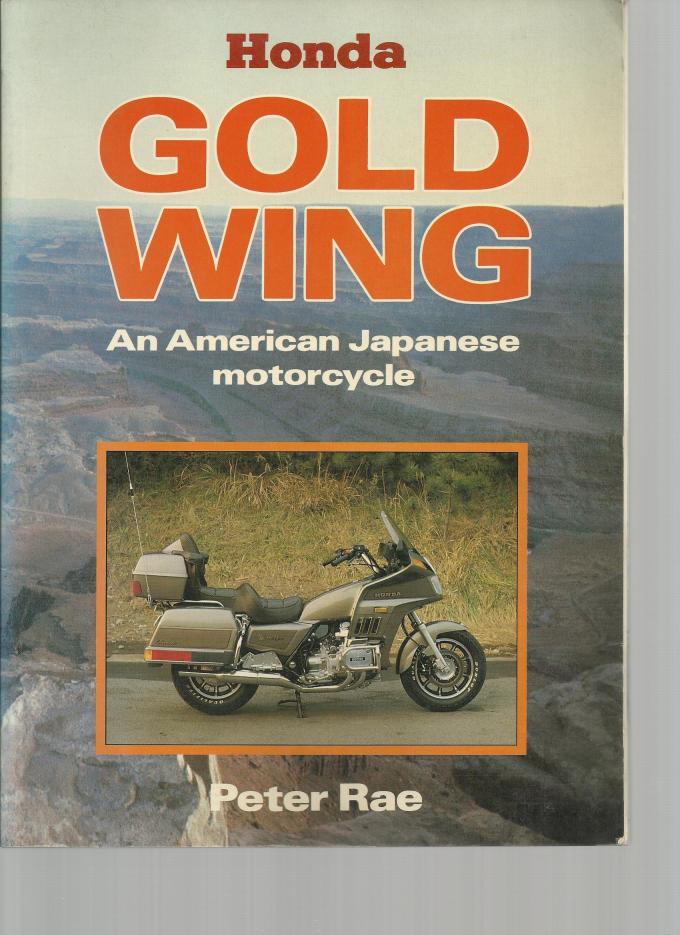
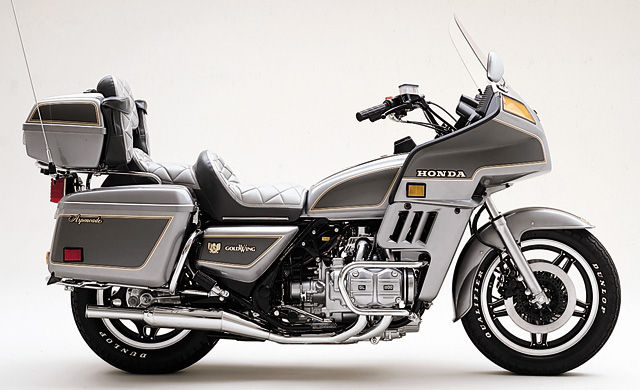
That 1982 trip was to research my book, called Gold Wing. Honda US kindly loaned me a brand new Aspencade, in a sort of brown/gold/bronze combination.Here’s a silver version.

Honda Gold Wing Aspencade

I remember reading that it was available with a radio and a cassette player. I hoped I’d get the one with the radio-cassette, and brought an Eagles tape with me to play en route, but was disappointed to find mine had a radio only. That’s the sort of thing that gets referred to these days as a First World problem!

I remember reaching my destination, the annual Gold Wing Road Riders’ Association rally known as Wing Ding, in the ski resort of Steamboat Springs, Colorado. It was summer now, and the town was wall-to-wall Gold Wings. I went to the hotel complex used as the event headquarters and was directed to the second floor of a multi-storey car park, as the ground floor was already full. The second floor was virtually empty, and I parked randomly in its vast expanse. When I returned to the bike that evening, I was amazed to find it surrounded by about 20 or 30 other Aspencades, all identical! The model was so new to the market that almost no one had had time yet to customise theirs, as is the norm for most Wing owners. Mine being a loaner, I had no idea what the licence plate number was, so the only way I could find mine was to insert the key in the ignition switches of several bike in the general vicinity: after trying about four or five, I finally found mine!

So yes, I have a soft spot for Gold Wings, always have, always will. The fact that the bike only made it into eighth place speaks volumes for all the others higher up the table, although the Rune is probably the ultimate Wing and it is in top slot, so justice is served.

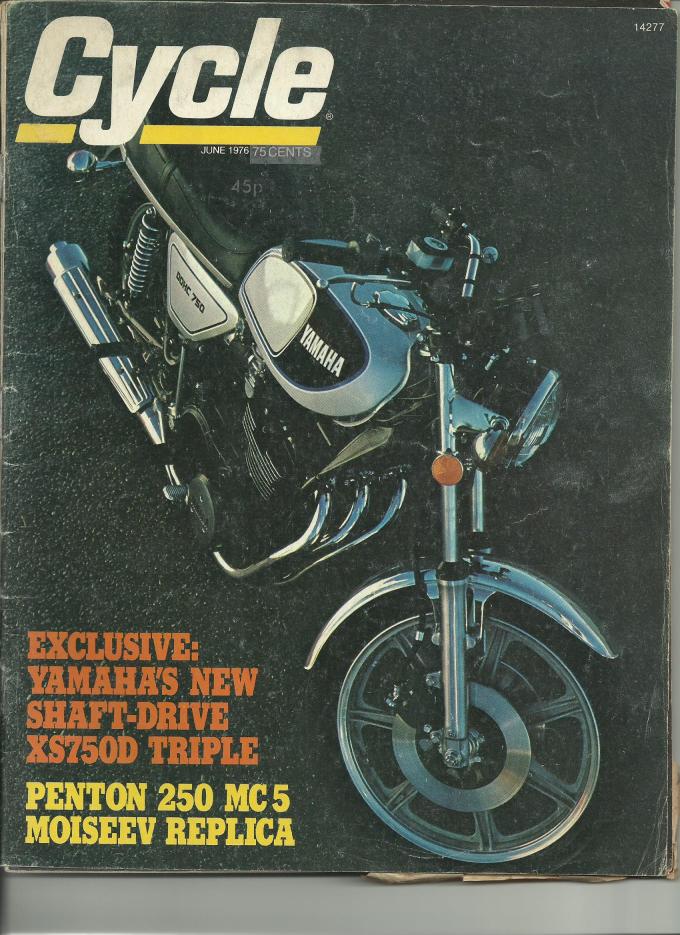
Ninth place? The 1977 Yamaha XS750 triple. I’d read all the road test reports and decided that this was my ideal bike, two years before I’d ridden my first Gold Wing. Powerful enough for its day with 69 bhp, shaft drive, affordable, and with that special feel that only triples can deliver.

Cycle cover 001

I loved that bike. It took me two-up to France, Switzerland, Italy, Ireland and served as daily transport in the UK for a couple of years. It was fun to ride, handled adequately for my needs and was comfortable by the standards of the late ‘70s. It was my first shaft-drive bike and I loved the hassle-free nature of no chain. Mine was in silver and blue and I remember being envious of my friend Keith’s larger model which was in a fetching shade of red. But during the time I owned it I was testing a lot of larger, 1,000cc bikes, and I knew I wanted the power and performance they offered. That led to the green Beemer.

What comes tenth, and what’s in second place? Read part 3, coming soon.

My all-time favourite motorcycles: part 1

I was out riding the Rune today on a glorious sunny day here on South Africa’s Garden Route, counting my blessings. South Africa is like biking heaven for someone like me who has spent so many years riding in the rain, sleet, snow and ice of the UK and Ireland, endured some horrendous wet weather in unexpected places like France, Italy and Nevada (really!), and feeling the blood almost boil in my brain in the 47-degree heat of Dubai.

Petrol is cheaper than in the UK (okay, that’s not saying much), the roads are relatively empty and there are vast areas of the country that are sparsely populated, which is how I like it. My V-Strom is too heavy to tackle the countless dirt roads that can quickly turn from dirt to rock, but it’s also a wonderful country for off-road riding. Maybe a lightweight trail bike lies somewhere in my future.

I stopped for a while at Keurboomstrand (above) and watched the surf crash on the deserted sandy beach, and my mind turned to the best bikes I’ve ridden and in some cases owned over the past 49 years. Is there a Top 10 in there somewhere?

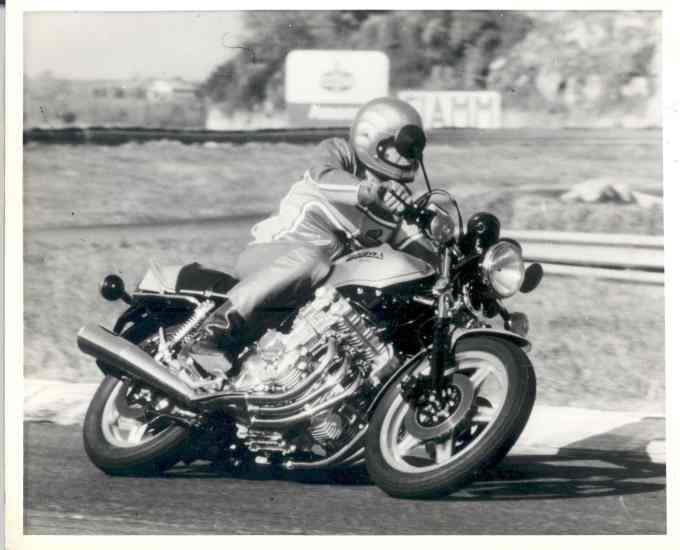
I decided that the Rune tops the list, even though I’ve only owned it for six weeks. It just ticks all my boxes, period: looks, power, feel. Second place is tough, though. The Honda CBX 1000 was probably the most thrilling of the bikes I rode in my road-testing days, because it looked awesome for its time and felt and sounded so right. Traffic would pull over on motorways without being flashed because that wide engine and six pipes clearly suggested I was in a hurry – even if I wasn’t.

CBX launch (2014_05_08 03_36_25 UTC).jpg

But then there was also the Laverda Jota 1000 triple that I rode back in the late ‘70s; I can still remember the grin that lit up my face when I picked it up from my friend and fellow journalist Bruce Preston’s house and pressed the starter button. The engine was part guttural roar, part howl, and the bike flew like a scalded cat. I recall one scary day when the throttle cable broke in the middle of nowhere, on greasy English country roads, in torrential rain. I had to wrap the broken inner cable around the gloved fingers of my right hand and engage it very gingerly, while steering with my left hand. It was a fierce, quick-action throttle and it took every ounce of effort to ride that bike about 20 miles to a village where an agricultural workshop kindly soldered a new nipple back on to the cable, and the fun could resume.

And there was the outrageous MV Agusta 850 Boxer, a fully faired exotic bike that cost an unbelievable £4,500 (about $7,000) in the 1970s and did a genuine 140 mph, just like the Jota. Only this was an MV, which was rarer than hens’ teeth back in those days. Resplendent in red, white and blue livery, it looked like a million dollars. Fire it up and the sound was out of this world as air was sucked in through four open bellmouths and pumped out through four chrome baffle-less exhausts.

I remember riding it to collect my wife from work one evening in East London (the UK one – there’s another in South Africa). She worked a few floors up in an old building down a long road in an industrial estate, yet she was waiting for my, all booted and suited, outside – she’d heard the bike from a long, long way off! As with many exotic bikes of that era, however, it wasn’t perfect: the clutch cable snapped about 10 metres into the infamous Blackwall Tunnel in East London. The traffic was stopped in the early morning rush hour, and I was faced with making a U-turn and pushing the MV back out to the tunnel entrance, probably earning my own mention on that morning’s traffic bulletins.

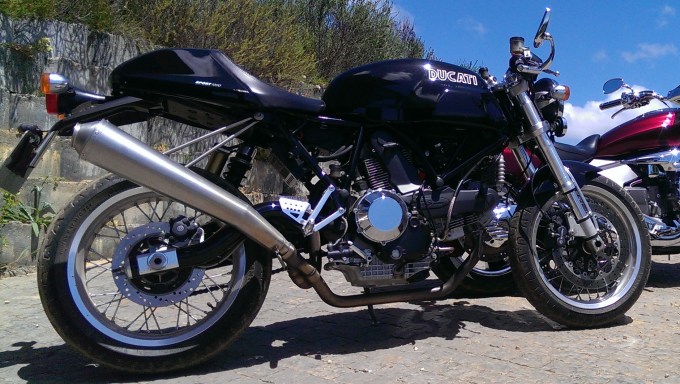
And of course there’s the beautiful Ducati SportClassic 1000, which has graced my garage for the past eight years and remains one of my all-time favourite rides. It looks just right, sounds terrific with its Termignoni two-into-one racing exhaust, and is a sheer joy to ride. I say this despite the fact that it spat me off at 120 km/h a year ago, almost to the day, courtesy of an unexpected and unexplained straight-line tank-slapper. I rebuilt myself and the bike and we’re both as good as new, thankfully. I’ve heard that the bike may have been built down to a price and that the wheels are too heavy for the sporty steering geometry, and that replacing them with lighter after-market wheels helps, as does replacing the front forks and rear suspension, but I’m not the sort of person who splashes the cash so willingly. It’s still an awesome bike.

IMAG0532_BURST002_COVER (2).jpg


Right up there with the CBX, the Jota, the MV and the Ducati is the Suzuki TL1000S, which sits alongside the SportClassic in my garage. I’ve owned this 1997 model, in green, since 2005 and I bought it in honour of another I’d owned in Hong Kong for all of 24 hours in 2000. That red TL had put a broad smile on my face and boasted the creamiest, silkiest gearbox I’ve ever sampled, not to mention a fabulous sound from its Yoshimura exhausts, but it was totally impractical for my daily use in the bustling traffic of Hong Kong, and so I traded it for a more practical Yamaha XJ1300 and then traded that a month later for a Honda Valkyrie.

The current green TL’s handling has been tamed by a Maxton rear suspension system and has never given me a scary moment, even though ’97 TLs were notorious for, yes, tank-slappers. But here is a bike that is faster than either a Jota or a ‘70s MV and can beat the acceleration of a CBX. If they are your benchmarks (and they have been mine over the years) then the Suzuki beats them all. If you’re used to riding a Hayabusa or a Yamaha R1 or a Firebird, then all of this will seem rather tame. But it’s exciting to me, always was and always will be. I rode mine at 150 mph (240 km/h) once on a deserted highway in the Middle East and it felt smooth and steady as a rock, although there were consequences: the wind opened the three zippers on the rucksack I was wearing on my back, unbeknown to me at the time, and out flew my chequebook and my passport. Losing your passport is not something you want to do while living in a foreign country, believe me. The only good news was that the £10,000 (about $16,000 back then) I’d just withdrawn from the bank to buy a car was safely tucked inside my leather jacket…

So there are five candidates for second place in my top 10, all of them worthy, all of them hugely desirable, and maybe not-so-coincidentally all of them now enormously valuable or appreciating rapidly. But, in truth, second place doesn’t go to any of them. To find out what bike pips them, albeit narrowly, read part 2 – coming soon.

Found: that 1906 Indian

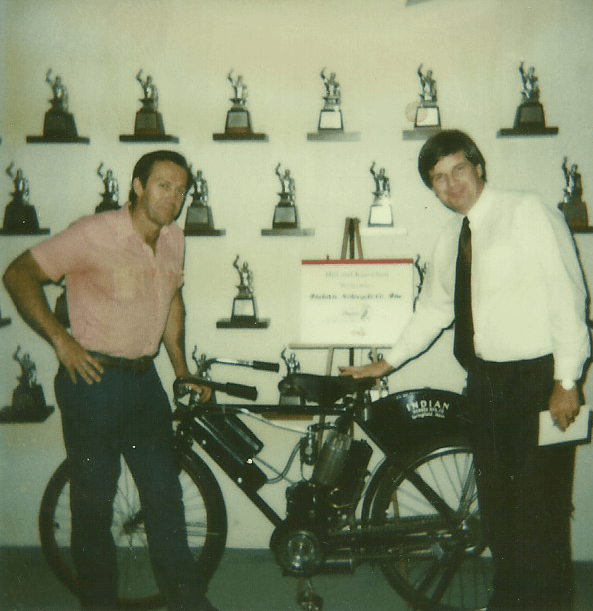
Moving house ain’t the easiest time when it comes to finding things like shoes, important documents or old photos. However, a week after mentioning this Indian in my blog, I found the photo I’d been looking for. That’s the 1906 Indian we rented from the owner (left), standing in front of all the Silver Anvil awards at the New York headquarters of the PR agency Hill and Knowlton. Yours truly is on the right. If you read the blog, you’ll know already that all the creativity and effort were wasted.