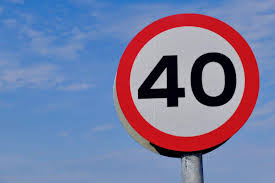
Believe it or not, there is one technical motoring offence considered to be 10 times more serious than breaking the speed limit. No, it’s failure to disclose the identity of a driver or rider alleged to have been speeding.
I found this out to my cost when I returned home from a very enjoyable seven-and-a-half-month trip to the Middle East and South Africa. The sun was shining, the weather was dry, and all my trickle chargers had kept my bikes and car alive. Joy!
Next morning, however, was a vastly different story. I started opening the mountains of mail that had piled up in my absence. One of the first envelopes contained a notice from a company called Marstons Recovery saying I owed them £1,089 in unpaid fines. For what?! A scam, surely. I continued to open the envelopes and the story slowly unfolded.
Apparently I’d been caught by a speed camera doing 47 mph in a 40 mph zone two days before I left on my long odyssey. I found that odd, because I’m always careful these days not to exceed the posted limit, but I had indeed ridden the route indicated that day and so I guess the information was correct. So be it: a fair cop, and all that.
The problems began with all the stuff that happens afterwards. You have 10 days to inform the police who was riding the bike at the time of the offence, but obviously I didn’t – I knew nothing about it, because all the letters arrived after I’d flown overseas. So I didn’t see the reminder, threatening a £1,000 fine and six licence points if I refused to provide the information demanded. Of course, I couldn’t respond to that, either.
Then came a letter from the court saying that I’d been fined £1,014 and given six points on my licence, which helped explain the letter from Marstons Recovery telling me I owed them that money – plus their own collection fee of £75. Ye gods!
Needless to say, I spent some time over the next two days investigating my options. Calling the number on the Cheshire Magistrates’ Court letter resulted in a voice message saying that my call couldn’t be taken at this time. I called five times and got the same message. I then emailed the court and received a reply advising me to contact Marstons and a body called the Single Justice Service, which I duly did. At least this time I was put into a queue system – a 25-minute queue but an improvement, nonetheless. A helpful lady said she’d email me a link to an online form I could fill in and submit to have my case reviewed in light of my circumstances. She said that Marstons would be informed about my request and that they might consider putting the bailiffs on ice while the matter was reviewed – but suggested I call them too.
I did, and another very polite lady said that they were acting in compliance with a court order and couldn’t withdraw their demand. However, they could offer me a payment plan and they would repay the amount in full if the court review found in my favour. I was pretty confident that it would because it turns out there’s a statutory obligation to take into account the defendant not being aware of the charges, the hearing or the court date. It happens quite a lot, it seems – mainly when someone moves house and fails to inform the DVLA of their new address. I took the payment plan, figuring that I might get the whole mess sorted out before I had to pay the second or third instalments.
Having submitted my reasoning for having the case reviewed in court, including a copy of my airline ticket to show I’d been out of the country, I was surprised to find that the response came by email, not regular post. If only the police had been required to notify me by email, perhaps in addition to snail mail, then the whole crazy situation would not have arisen. The second surprise was that I now had a court date less than two weeks away where I could plead my case.
I wasn’t particularly nervous about appearing in a magistrates’ court and was fairly confident that I could present my case articulately. However, I was unprepared for the daunting scene that awaited me inside the court doors. The usher led me in and pointed to the dock, a raised platform surrounded by three tall panels where I was told to stand. In front of me were three magistrates, sitting on a tall dais way higher than the clerk of the court, who himself sat on a dais above four court officials working away at computer terminals. And there was little ol’ me.
The clerk of the court was a star. He asked me some basic questions, read out the details of my case, asked me to confirm that they were correct, and reiterated to the judges that I was out of the country when all the paperwork started flying and so was incapable of responding. I saw a copy of my flight details pop up on one of the magistrate’s screens. The judges looked at each other, spoke quietly, nodded among themselves, and told me that the original court conviction for not identifying the driver would be quashed, and with it the original sentence. A wave of relief swept over me, helped on its way by the very real feeling that I was standing in a dock like a criminal.
The lead magistrate then asked me how I would now plead to the original charge of exceeding the speed limit. Guilty was my only realistic option. They conferred some more and said that I’d be fined £100 plus costs of £40, including a compulsory “victims’ surcharge”, and would get three points on my licence. Never has receiving a speeding fine brought such a sense of relief!
The issue for me is that this whole episode caused a lot of expense, inconvenience, worry and wasted time. Had the police been required to notify me electronically of the offence at the outset, I could and would have ‘fessed-up to being the rider and paid the fine on the spot. Ah, you ask, but did they have my email address? In theory yes, because I always supply it and my mobile number when taxing my vehicles with the DVLA, which is where they went to get my postal address. Providing your email address is voluntary, but I do it anyway. It’s 2025, and I reckon the majority of drivers and riders have an email address. Those who haven’t could still be reached by post. Eliminating the postal delivery for all others would have the country a whole bunch of money, too.
It also raises the question of the logic behind imposing a fine of £1,014 for not informing the police who was riding. The reason has to be that it allows the penalty points to be allocated to the appropriate person: unfair to award them automatically to the registered owner if someone else was riding. The question must be whether the allocation of penalty points has made a significant difference to road fatalities? If it has not, then there’s a whole slew of admin involved that could be eliminated by copying countries that impose only a simple fine for speeding.
Adding insult to injury, the whole case hinged essentially around a single mile per hour. I did 47 mph in a 40 zone; at 46 (10% plus 2 mph) the police would not have prosecuted. I know there has to be a cut-off point somewhere, but this just made the episode even more frustrating.
If you see a Gold Wing or a Rune pottering around this summer at a few mph under the posted limit, that’ll be me!

 roadriderblog
So nice of you to give the police something to do, stop them getting bored 😉
LikeLike