By now, my love affair with the traffic-free Norwegian roads was losing its ardour. Yes, the roads are excellent and yes, they are a rider’s dream, but oh! The speed limits! And the drivers! The speed limit on most stretches of country road is 80 kph, or 50 mph. My speedo is in mph and the Garmin is set to mph, converting from metric, so I mostly thought in miles. The most a Norwegian driver seems willing to hit on those roads is 48 mph, with many opting for 45 or lower. And each time you enter a village with a posted lower limit you can see the brake lights come on as they brake just before the actual sign. Maybe that’s the correct way to drive, the way all right-thinking people drive, but I’m used to people driving at just over the limit – maybe 8-10% above. And easing off on the throttle when entering a lower-limit stretch, letting the engine braking take you down to the required speed. But these guys observe all the limits with a religious fervour. And since the roads often lack obvious, safe stretches for overtaking, you’re stuck behind a procession of camper vans for far longer than seems good. It can get a bit frustrating.
Given the terrain, it’s no surprise that Norway has its share of tunnels, some of them quite long. One even came with a large roundabout in the middle, with roads leading off it in two different directions. Now that was a first! They’re still building new tunnels, it seems, or at least improving the existing ones: on a couple of occasions, we had to join single-file processions along long, freshly tarred diversions to avoid major roadworks. It slowed progress a bit, up there on the snowline, but it was impressive to see the planning and effort behind the whole project.
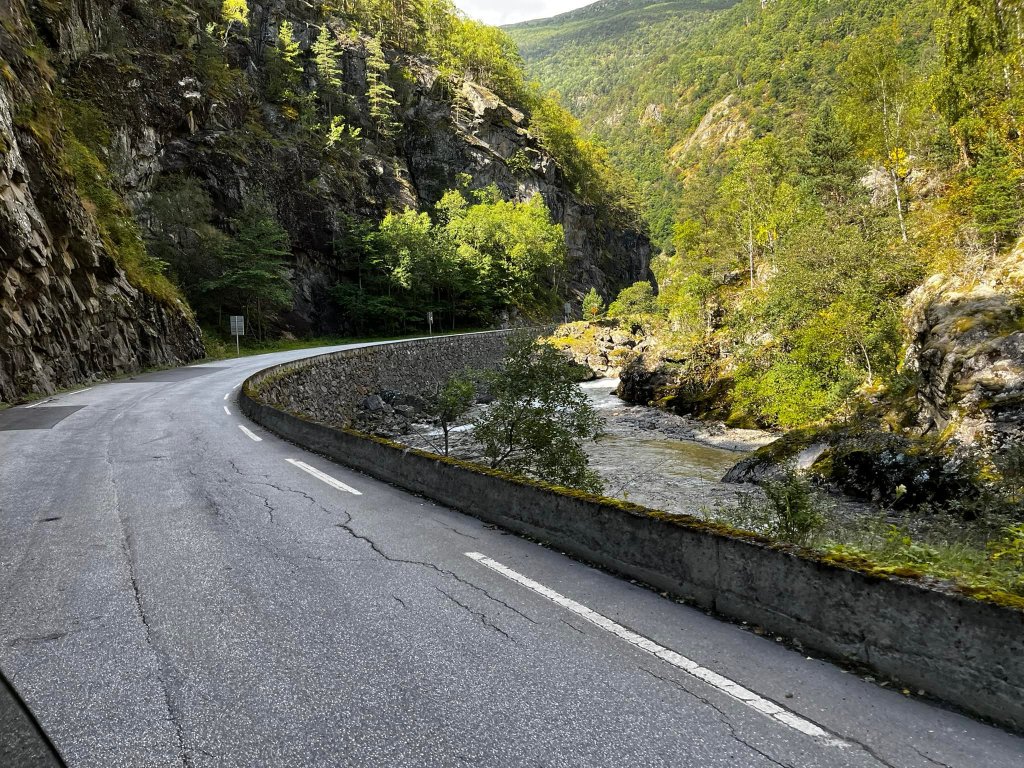
The Røldal campsite was conveniently situated on our route and unpretentious, with great mountain views. Unlike so many campsites we’ve used in France and Italy, this one had no restaurant but we dined on locally procured beer and sandwiches in the reception area, which allowed us to charge our intercoms, phones and Kindles. Campsite pitches with electricity are all very well, but they don’t take a normal plug adapter, so reception areas and washrooms became our go-to places for recharging. The Kindles last for about 14 hours, which gives us five days’ use or more, but the phones needed charging every two days at least. The Sena headsets built into the Shoei helmets work really well and their batteries lasted about a day and a half, but we found that if we spoke less often we could make them stretch to two days, which we could live with.
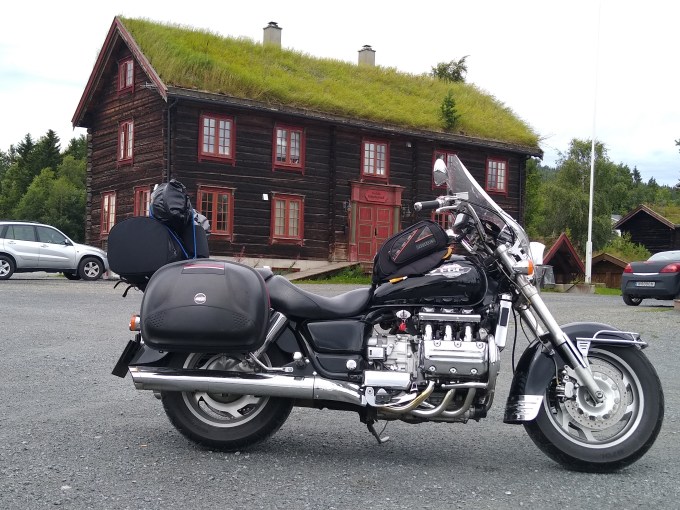
That night’s campsite was at Smedsmo in Vågåvegen, about halfway to Trondheim, the next waypoint on our route to the Arctic Circle. It was unmemorable (as in neither one of us can remember anything about it, apart from the fact that it yet again required a tent-side meal of supermarket-bought supper) but it gave us a chance to have a fresh check on the weather forecast. Rain was predicted for the following evening and the day after, so we decided to skip camping and booked ourselves into a hotel in Trondheim. Along the way, we saw vast numbers of those typically Norwegian red wooden houses, with the cladding panels placed vertically rather than horizontally. With their white wooden trim, they’re wonderfully picturesque. Now, however, we were seeing more and more with turf on their roofs, many even with small trees and bushes growing out of them. One assumes that the earth provides great insulation.
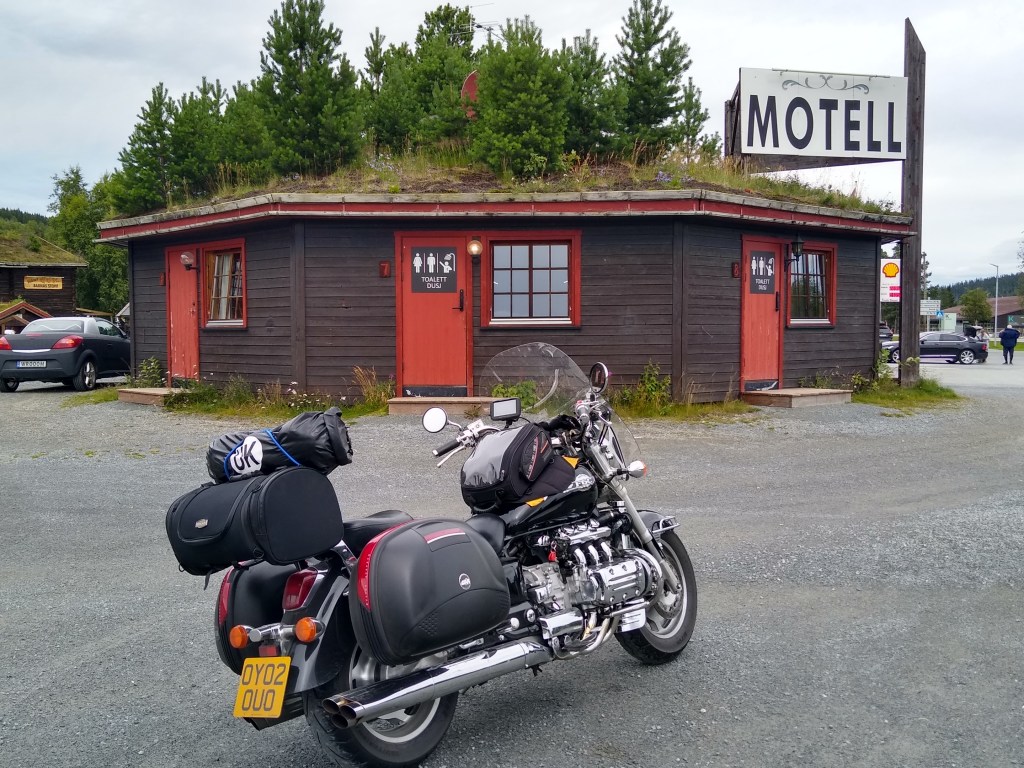
The road from Vågåvegen to Trondheim was light on traffic, especially when we moved on to the motorway section, and got us into the city by late afternoon in time to play tourist. The Chesterfield Hotel is unpretentious, clean, comfortable, central, and cost £103 for two, including an excellent breakfast – we can heartily recommend it. Okay, the bar across the street was playing We Will Rock You loudly at 03:25, but we were both so tired we soon got back to sleep.
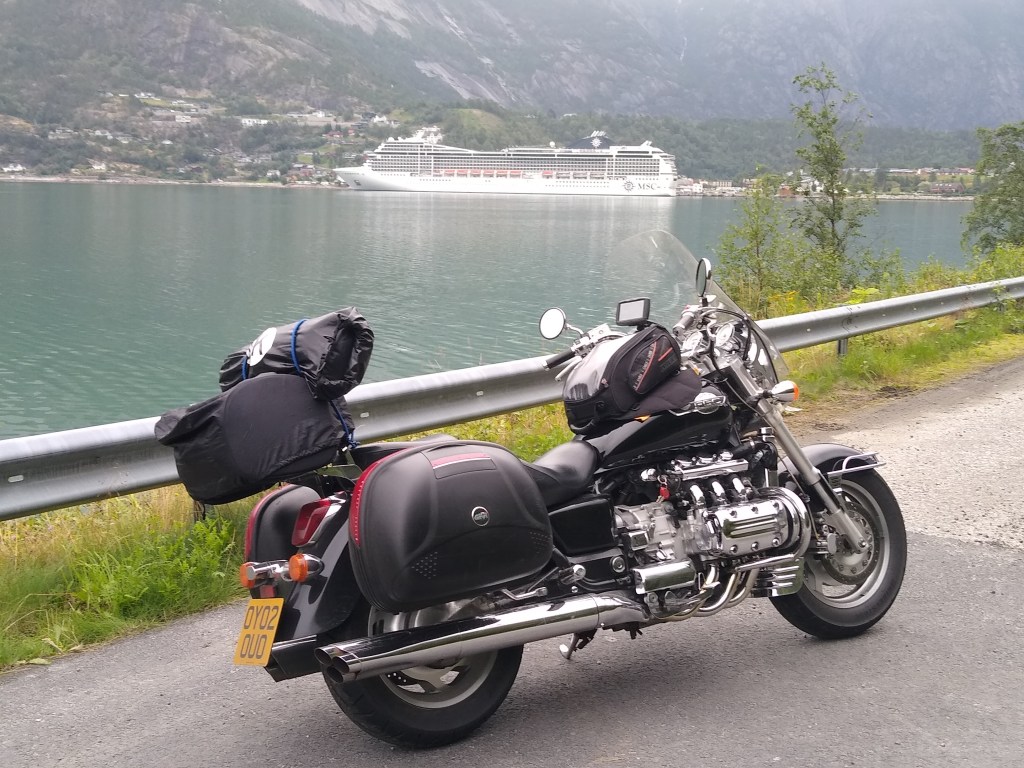
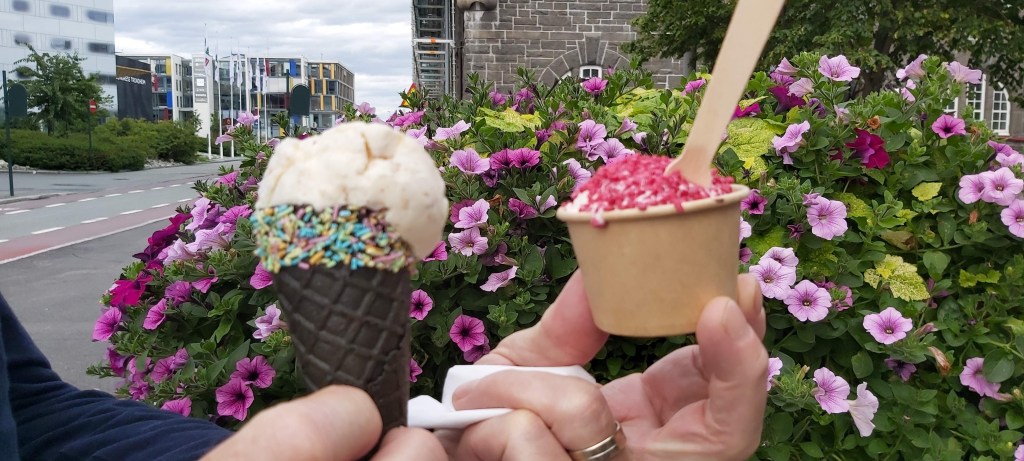
Trondheim is a fabulous city with great architecture and lots to see, including an impressive cathedral and a beautiful fjord. The centre abounds in chic eateries, shops and bars, busy but not over-crowded with happy revellers. A stroll by the harbour introduced us to our first-ever £5 ice-cream cone, which was topped later that evening by a wonderful but horrendously expensive Thai dinner (more than £100 for two, albeit with a glass of beer and a glass of wine apiece).
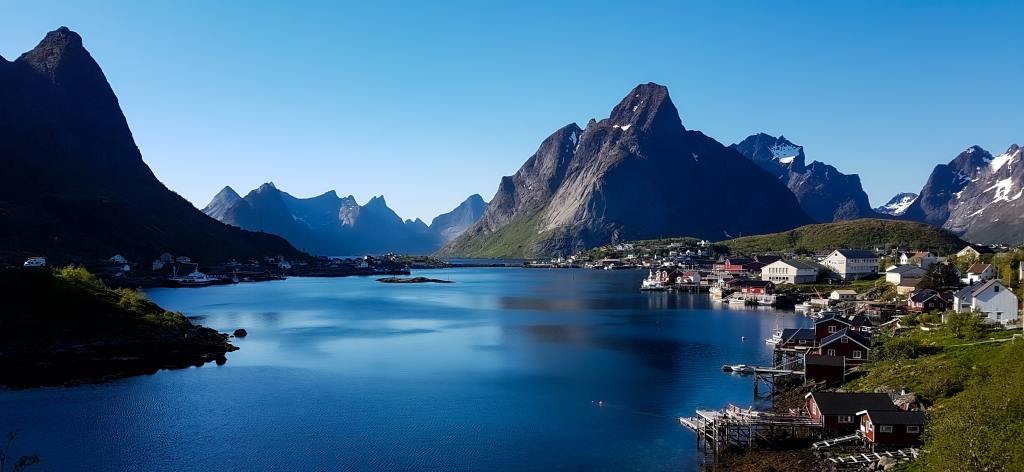
Over supper we looked at the 32-hour round-trip that still lay ahead to get us to and from the Lofoten Islands, plus the 350km trip across the islands themselves. We checked the weather for the area and found only rain for the next 10 days. Peter is a master of forecast-checking and she found that if we headed east into Sweden instead of north, we’d find ourselves in warm, sunny weather for the foreseeable future. Much though we wanted to see and experience the stunning islands for ourselves, the prospect of riding 2,000+ kilometres in rain for that privilege held no appeal. With deep regret, we messaged Per Arne Olsen of VRCC Norway, who had offered to give us some pointers on must-see places, and explained the change of plan. He replied to say he totally understood: the winds there were already howling at 35 knots, it was raining, and he planned to leave shortly anyway to escape the weather! Thus reassured, we headed for Sweden and some sunshine. It was a pity, given that the Lofoten Islands had been our target, but it pays to be flexible.
 roadriderblog